
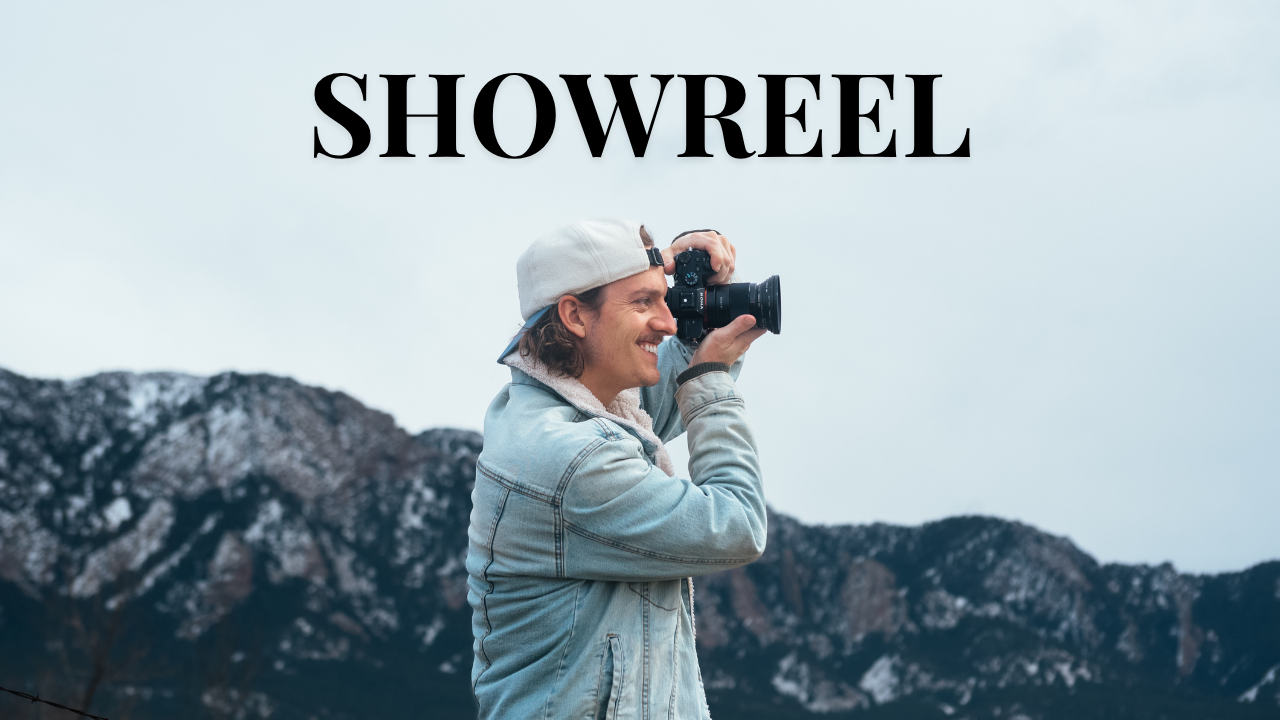
Most mornings in Boulder start the same way for me, and I mean that in the best possible sense. The light comes in early here even before I’ve fully woken up, my living room is already touched by sun. Colorado has that kind of brightness that makes even ordinary things feel a little more alive. The sidewalk outside, the dry air, the first breeze moving through the leaves. My dog waiting by the door like the day has already started without me.
I clip on her leash and we head out for a twenty-minute walk.
That walk matters more than it probably looks from the outside. It would be easy to call it a habit or a way to ease into the day, but it’s also part of how I make films. I spend a lot of my life trying to notice things. The smallest shifts in light. The way someone carries themselves before a run. The feeling of anticipation before movement starts. The look of the road at 7:30 in the morning when the sun is still low and everything has a little shape to it.
When people think of a running filmmaker, they usually picture the obvious part of the job. Cameras. Athletes. Trails. Maybe a gimbal shot moving beside someone during golden hour. That part is real, and I love it, but the work begins earlier than that. It starts in attention. It starts in having a life that keeps me observant.
Living in Boulder, Colorado helps with that. This town has a way of pulling you outside, even when you planned to stay in. The weather changes fast. The light changes even faster. There are elite runners here, weekend runners, dog walkers, cyclists, students, people heading to the trail before work, people squeezing in movement between calls. It all creates this culture where motion feels woven into daily life instead of staged for the camera.
That has shaped me a lot as a filmmaker in Boulder. My films do not feel separate from my days. They come out of the same streets, the same trails, the same sun, the same need to get out of my head and into the world before I can make anything worth keeping.
The First Four Hours - Deep Work
Once I’m back home, I usually grab some water and sit down for four hours of deep computer work. This is the part of filmmaking that people do not always see, but it is probably the part that matters most.
A lot of filmmaking is sitting still.
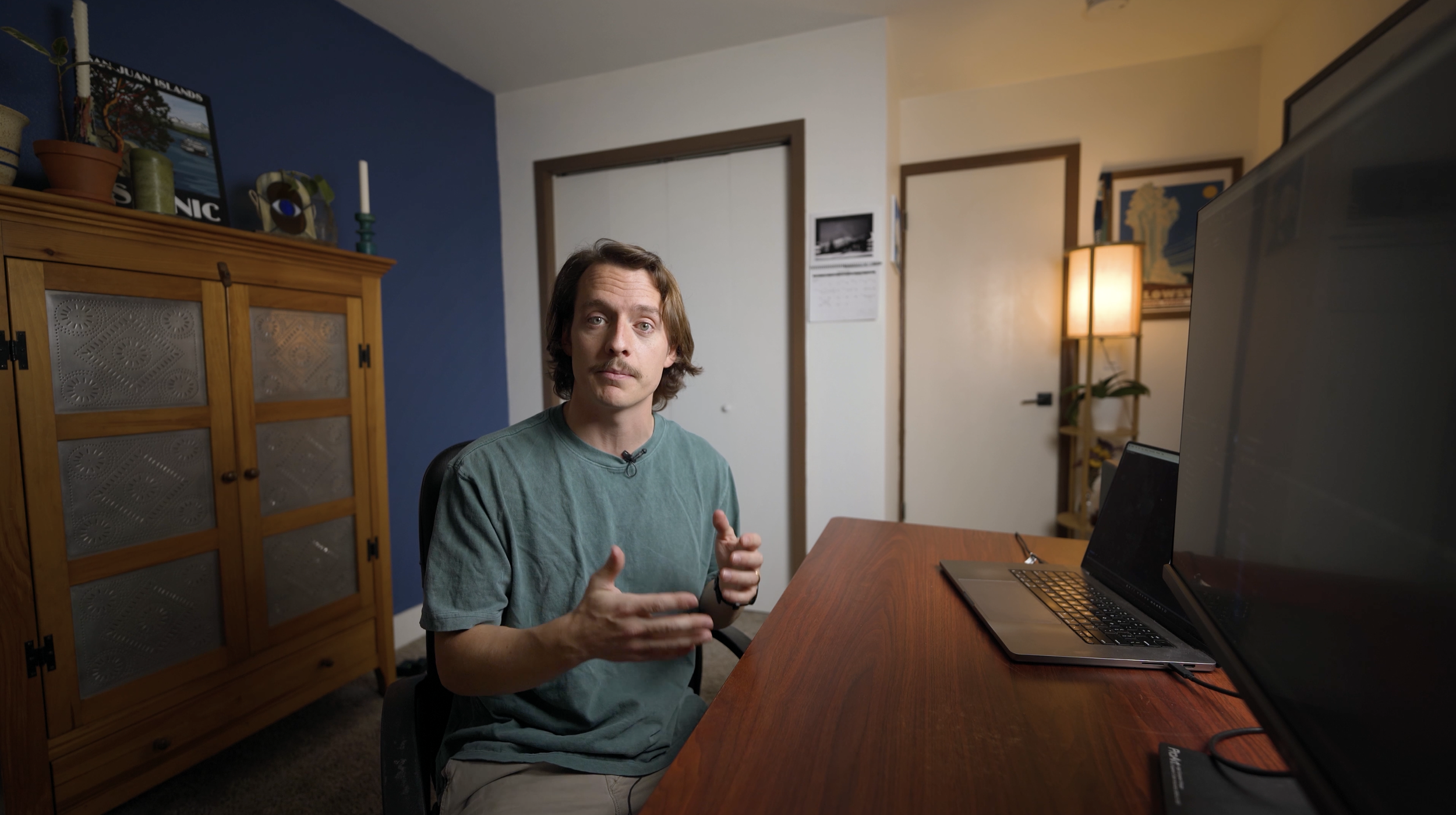
Editing. Writing. Sorting footage. Building treatments. Making outlines. Working on creative briefs. Pulling together pitch decks. Thinking through the emotional shape of a film before it exists. Trying to figure out what a story is really saying underneath the obvious version of it.
That is a huge part of my job as a running filmmaker and director. I’m not just capturing movement. I’m trying to understand what the movement means.
Editing, especially, is where that starts to reveal itself. You can shoot beautiful footage all day, but if there is no real feeling in it, the beauty only goes so far. I spend a lot of time looking for what actually has weight. A glance. A pause. A line from an interview that says more than it seems to on first listen. The difference between footage that looks cool and footage that actually lets a viewer feel something.
That difference matters a lot to me.
There’s a kind of sports filmmaking that is all adrenaline, all polish, all speed. Some of it is great. Some of it feels empty. I’ve always been more interested in the human side of performance. The person under the ambition. The tension between strength and uncertainty. The way a place can shape the emotional tone of a scene. The small moments before and after the effort, not just the effort itself.
That approach carries into almost everything I make. Whether it’s a running film, a branded documentary, or a larger campaign for a client, I’m usually chasing the same thing: work that feels lived in. Work that does not treat people like props inside a cool visual world. Work that lets atmosphere, effort, vulnerability, and environment all sit in the frame together.
That kind of storytelling takes time. It also takes a willingness to throw away things that are technically good but emotionally flat. Some shots are beautiful and still do nothing. Some sequences are impressive and still feel false. The desk hours are where I get honest with myself. They are where I ask whether a film is becoming what it needs to become, or whether I’m just decorating it.
Boulder shapes this part of the process too. Even when I’m inside, the town has a presence. The mountains are out there. The trails are out there. People are moving through the day. It keeps me connected to physical life in a way that I think is really important, especially when so much creative work now happens through screens. I never want my films to feel like they were made by someone who only experiences the world through a timeline and a keyboard.
Midday Reset: Running in Winter, Swimming in Summer
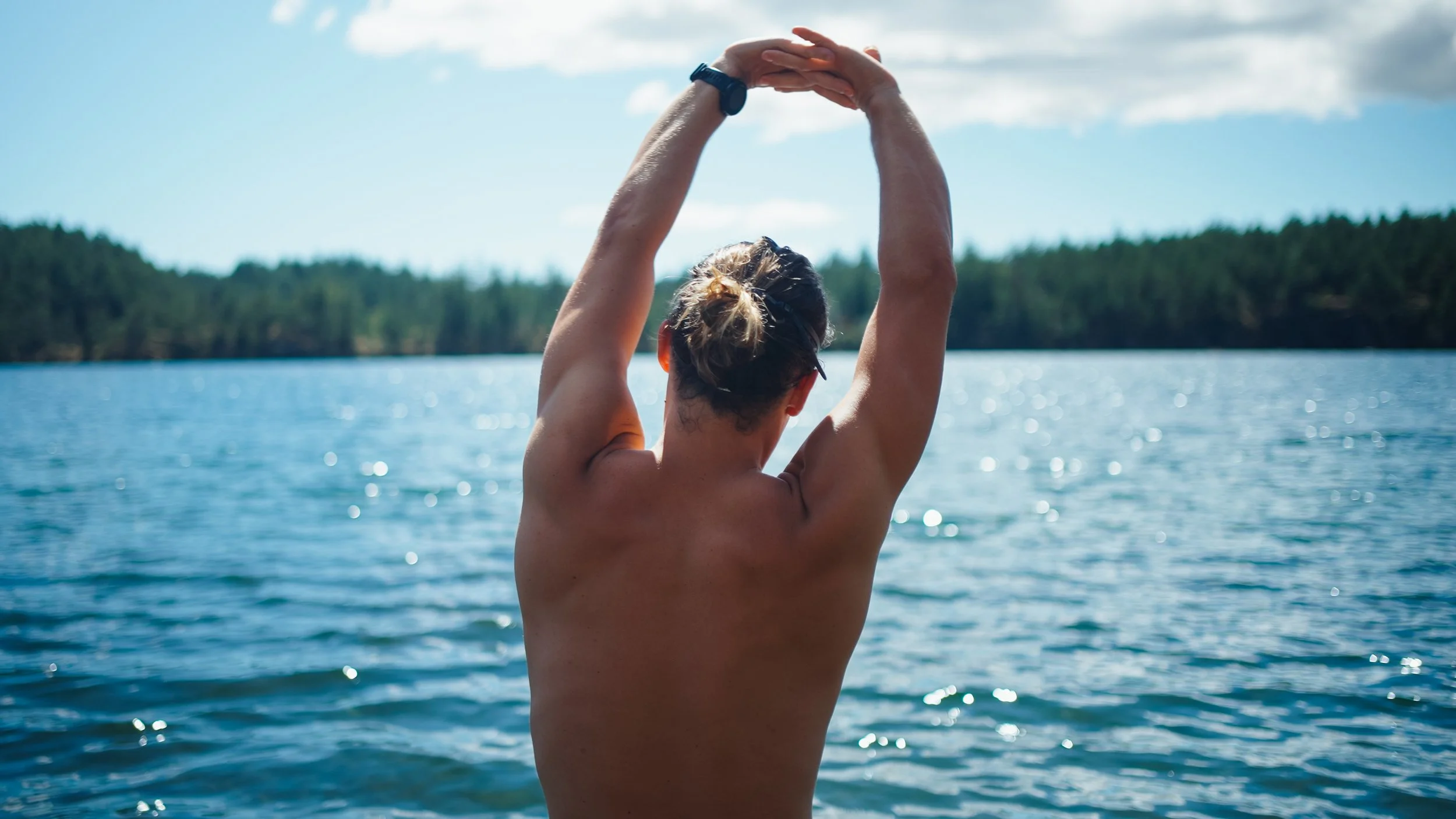
Me swimming at one of my favorite lakes in my hometown on Orcas Island, Washington
By midday, I usually need a break from the screen.
In the winter, that break is almost always a trail run from my house. One of the things I love most here is how quickly Boulder lets you leave the day behind. You can go from your desk to dirt in no time. The air is cold, the sun is low, the trail might be dry in one section and frozen in the next. Running then feels like a reset in the truest sense. It gets me out of the mental fog that can build after hours of editing and puts me back in my body.
In the summer, I usually swim instead.
There’s something really nice about the contrast. I’ll go from a morning spent making tiny story decisions on a computer to bright water, full sun, and the simple repetition of laps. It clears me out. It gives my mind a break without making the middle of the day feel idle.
I think this matters a lot to the work. One reason many running films fall flat is that they only understand running from the outside. They know what it looks like, but not what it feels like. They can film motion, but they do not always carry the inner texture of effort.
It matters to me that I know that feeling from the inside. The drag in your legs on a climb. The strange calm that can show up twenty minutes into a run. The way cold air hits your chest in winter. The way summer heat changes the mood of a session before you even start. When I’m filming runners, I’m not only thinking like a director. I’m also drawing from my own life in motion. That helps me make running films that feel less like performance content and more like something real.
The Afternoon: Filmmaking in Practice
After that midday break, I usually come back for another four hours of filmmaking.
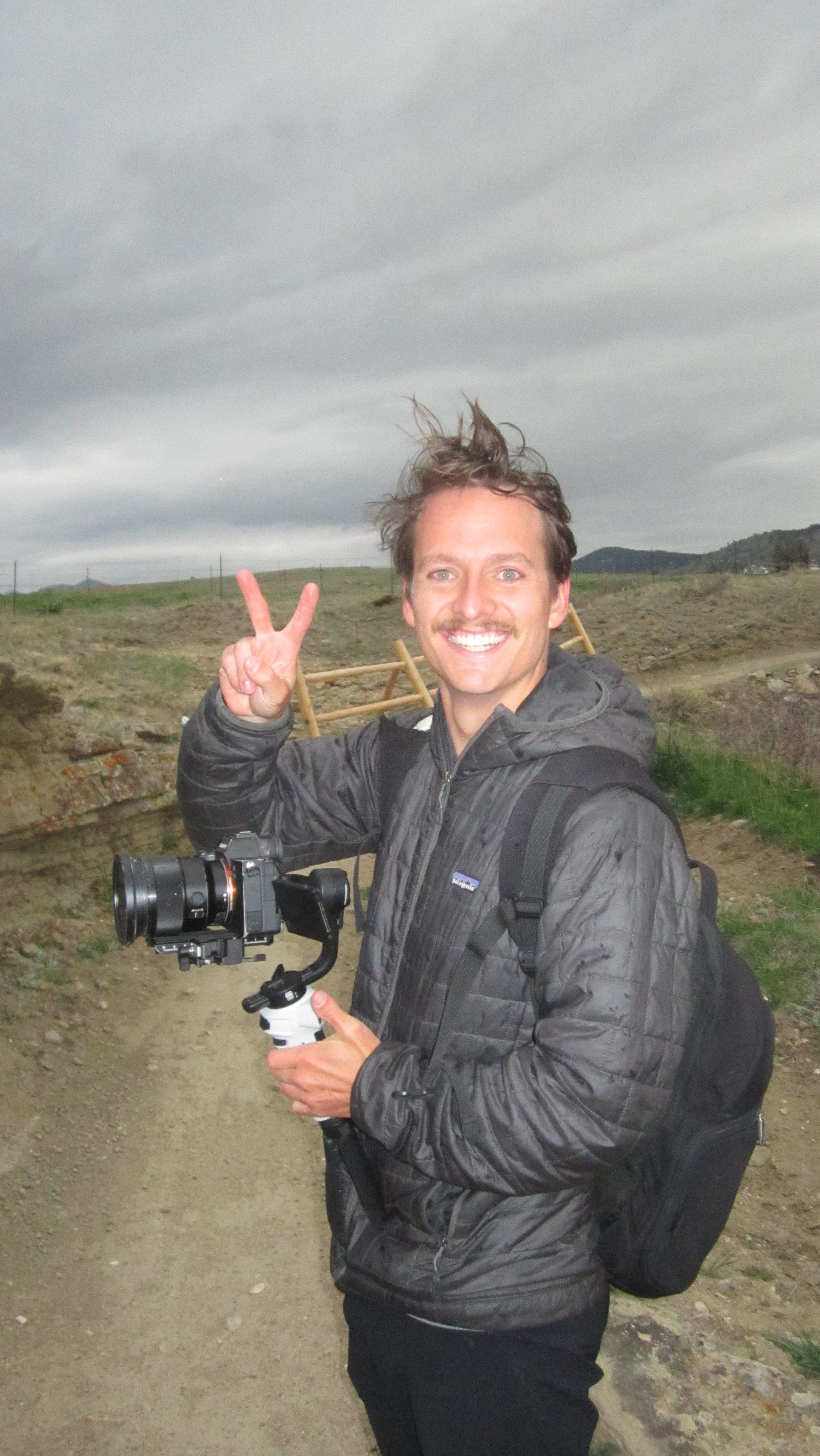
This is often where the day turns outward. The morning is more internal. Editing, writing, shaping ideas. The afternoon is where those ideas start getting built in a more physical way. Sometimes that means filming. Sometimes it means packing gear, scouting locations, reviewing selects, prepping for a client shoot, sending notes, refining interview questions, or working on sound and sequencing in a cut. It depends on the season and the projects in front of me, but it almost always feels more active than the first half of the day.
This is also where I think a lot about my approach to storytelling around running.
Filming runners is not just pointing a camera at speed and hoping the movement does the work for you. That is usually the first trap. Running is naturally visual, which can make people lazy. A nice lens, nice light, a little slow motion, a little dust kicked up on a trail, and suddenly you have something that looks decent. The problem is that decent is not memorable. Plenty of running content looks good. Very little of it stays with you.
The running films I’m most interested in making hold two things at once. They capture the athletic side of the sport, of course, but they also leave room for tenderness, strain, ritual, doubt, routine, weather, and the full life sitting underneath the workout. That’s usually where the real story is. Not in the split time. Not in the shoe close-up. In the person.
I want a running film to feel like it understands the runner as a human being first. That changes the kind of footage I’m drawn to. I care a lot about the moments before the effort starts. The way someone ties their shoes. The look on their face before a hard session. The body language of fatigue. The texture of breath. The sound of feet on dirt. Shadows moving across a road. The way the environment presses in on the whole thing.
That’s true whether I’m making something editorial, documentary-driven, or more commercial. Even when a project is for a brand, I still want it to feel human. I think that’s one of the reasons running brands, outdoor brands, and athletes come to me in the first place. They don’t just want polished performance footage. They want work that carries feeling. Work that lets the audience sense the life inside the motion.
Boulder is a big part of why I’ve developed that eye. This town is full of runners, but it never feels like running exists here only for content. It’s just part of life. You see elite athletes and everyday people sharing the same roads, the same paths, the same trailheads. You can leave a neighborhood and be in the foothills almost immediately. The backdrop is stunning, yes, but what I love most is that movement here feels normal. It doesn’t need to be over-explained. It doesn’t need to be turned into a brand identity every second of the day. It just exists.
That makes Boulder an incredible place to be a running filmmaker. It gives me access to the kind of world I want to film, but it also keeps me honest. Beautiful places do not automatically make beautiful films. Mountains do not replace story. Great light does not replace emotional depth. If anything, a place this photogenic raises the standard. It forces you to make sure the visuals are carrying something more than surface appeal.
Why I Keep Coming Back to Running Stories
I think I’m drawn to running stories because the sport strips people down.
It can be social, but there is also something deeply personal in it. Even when people run together, so much of the experience is interior. A runner can look composed from the outside and be having a full argument with themselves on the inside. The sport carries obsession, discipline, escape, identity, self-worth, healing, loneliness, and joy, sometimes all in the same week.
That is rich territory for film.
The best running stories are almost never just race stories. They are stories of people trying to become something, or return to something, or hold onto something. Running gives shape to those efforts. It reveals character. It makes people honest in ways that surprise them. That’s what I care most to capture.
I don’t really want to make running content that only celebrates the polished outer shell of the sport. I’m much more interested in the emotional life inside it. What gets a person out the door. What they are carrying. What they are chasing. What the sport gives them when the world feels too loud or too fast or too uncertain. That’s the kind of thing that makes a film land.
When brands or athletes watch my work, I want them to feel understood. Not flattered. Understood. I want them to feel that I see more than the obvious aesthetic layer of running. Because I do.
After 6 PM
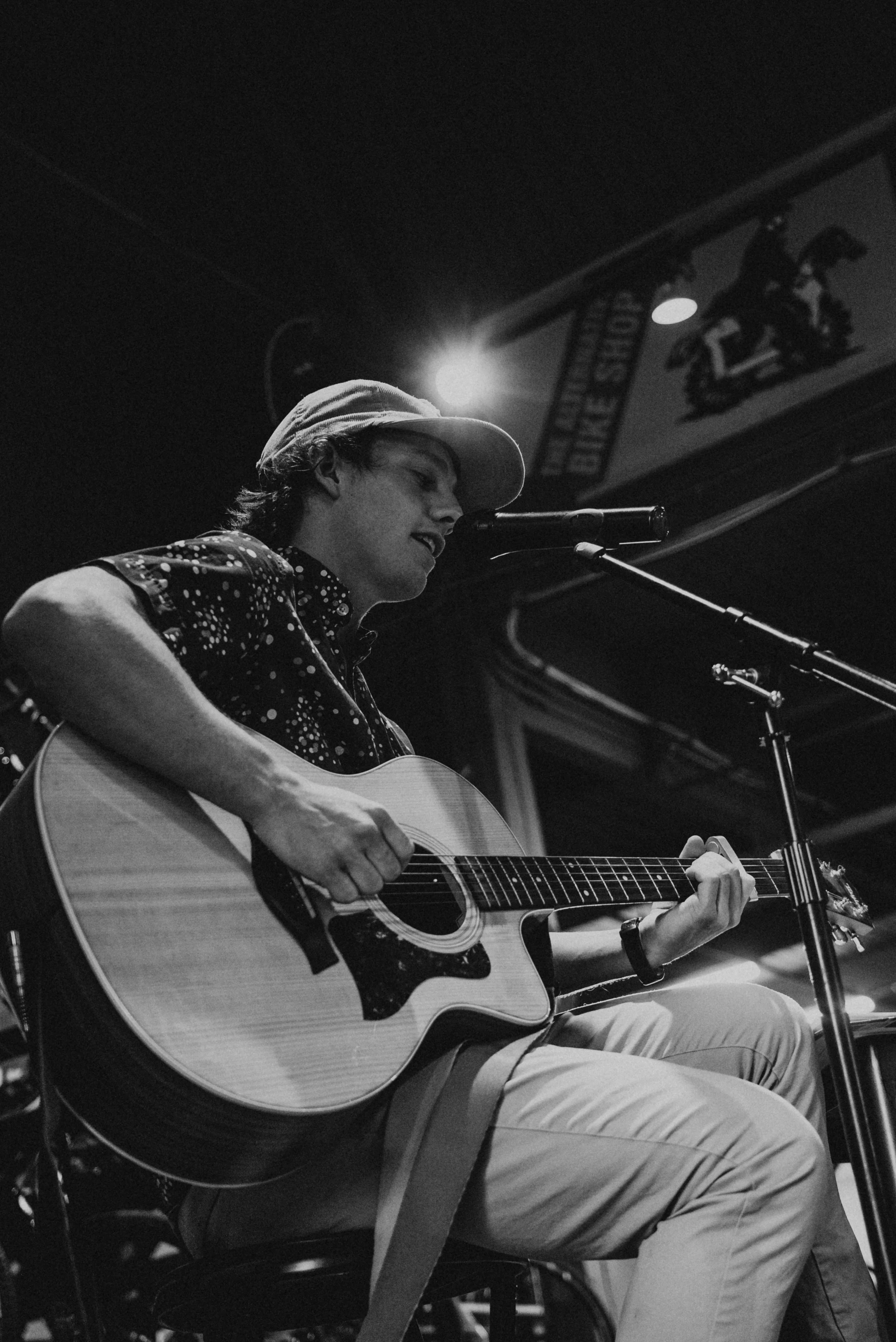
Around six, especially in the summer, I try to get away from screens again
This matters a lot to me. If I spend the entire day producing, consuming, editing, posting, exporting, and answering emails, I can feel my mind flatten out. I start losing the texture that makes the work worth doing in the first place.
So I go do something else.
Sometimes I meet up with friends for a run. Sometimes I work in the garden. Sometimes it’s a bike ride. Sometimes I play music, write, or read. The specific thing changes, but the point is the same. I need a part of the day that is not trying to become content. I need to remember what life feels like when it is not being organized into clips, deadlines, and deliverables.
That makes the work better. I believe that pretty deeply. If all you do is produce, eventually the work starts to feel hollow. You need boredom. You need weather. You need conversation. You need dirt on your hands and sweat on your neck and a little time where nobody is asking you to make anything. Otherwise your films begin to feel like they were made by someone who only knows how to look at life through a screen.
How This Life Shapes My Work
When I step back and look at a full day, I can see how much my life shapes the running films I make.
Living in Boulder keeps me close to movement and landscape. My own running and swimming keep me connected to effort from the inside. The morning work gives the films shape. The afternoon gives them form. Time away from screens protects the part of me that still knows how to notice things.
That all ends up in the work whether I plan for it or not.
So yes, this is life as a running filmmaker in Boulder, Colorado. It’s dog walks in the morning sun, long stretches at the computer trying to build stories that mean something, midday movement, more filmmaking in the afternoon, then an evening spent somewhere away from the machine.
It’s not flashy most days. It’s just a life built with care and intention and for me, that’s where the best films come from.
If you’re a running brand, athlete, or company looking for a running filmmaker in Boulder, Colorado, I’d love to hear what you’re working on.
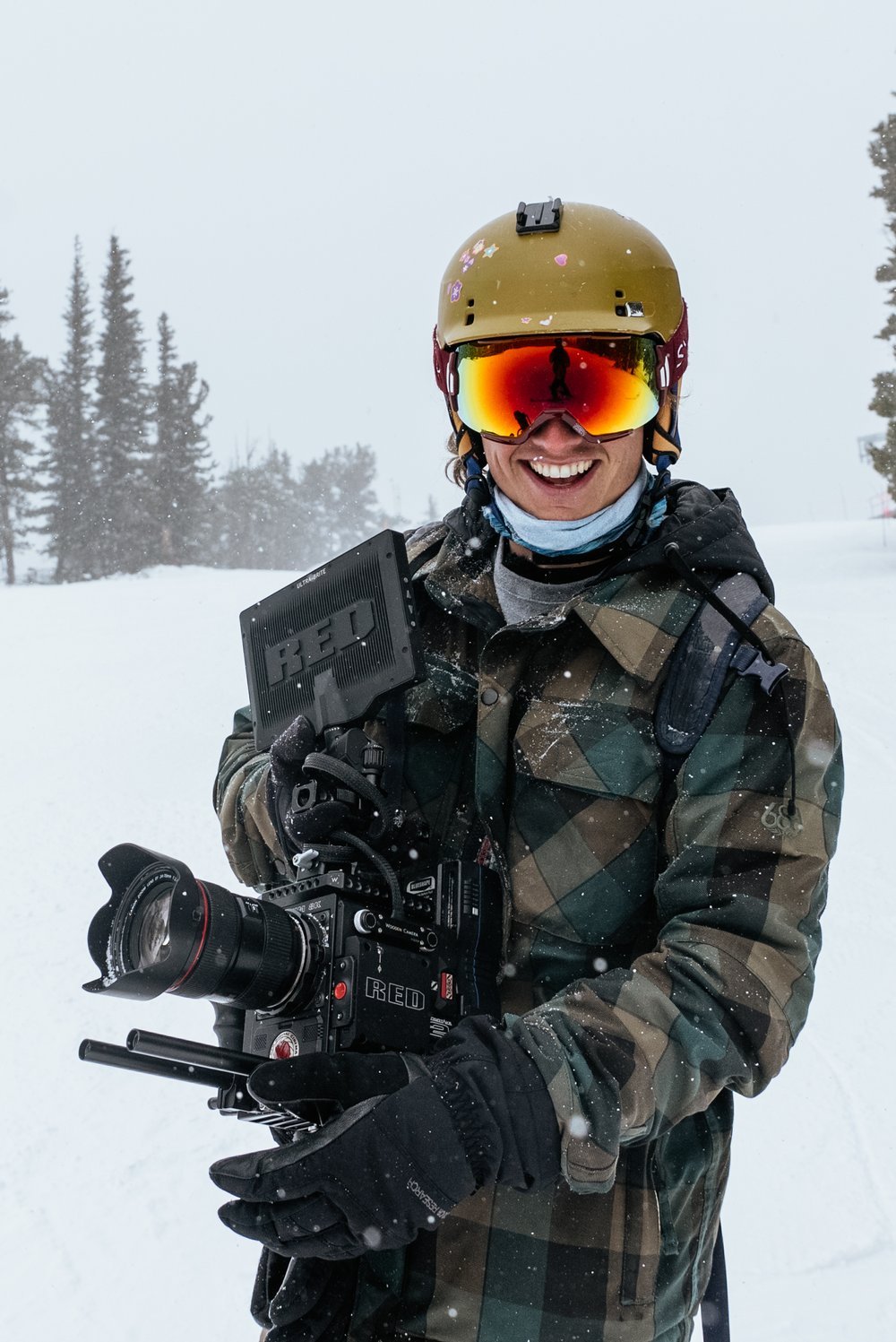
Why We Should Work Together…
When I’m not on this website rambling on about filmmaking, I’m actually out there making films. From crafting memorable branded documentaries to capturing stories and products that move people, I’ve got you covered. Need a filmmaker who can scale mountains, brave the surf, or just tell a dang good story? Let’s chat!
In case I haven’t convinced you, here are three reasons why it might be fun to work together…
I believe in stories that stick with you - like campfire smoke on your clothes. The kind that makes you laugh, cry, or immediately want to call your mom.
I’m just as comfortable at 14,000ft as I am in front of a timeline. You get me in the mountains, in the ocean and in the editing room, making sure the magic out there really shines in the final cut.
I’ve filmed in some pretty wild places, but the best stories are the ones that bring people together. It’s those shared moments -big or small - that remind me why I love what I do.

Let’s Connect
Roo is an Emmy nominated commercial/documentary filmmaker and photographer based in Boulder, Colorado but travels all around the world for his filmmaking career. He has directed documentaries for Patagonia in California, produced films for Outside Magazine throughout Europe and Africa, camera operated for Netflix in the Rocky Mountain West, photographed among indigenous communities in South America, and has received notable recognition in his hometown of Orcas Island in the outdoor industry for his work telling uplifting stories in the outdoor space.