
People often talk about storytelling like it’s some kind of formula. Start with a hook. Raise the stakes. Build tension. Land the ending. There’s truth in all of that, and structure matters a lot, but I’ve never been drawn to storytelling because it feels mechanical. I’ve been drawn to it because it feels like a way of paying attention.
That’s really where my approach starts.
I’m not interested in stories that only communicate information. I’m interested in stories that make someone feel seen, stories that leave a little residue, stories that linger for a second after they end because they carried something memorable inside them. That could be a documentary, a commercial, a brand film, a YouTube video, even a short scene that lasts ten seconds. The format changes but my goal doesn’t.
For me, storytelling is less about explaining and more about revealing.
I want to find the thing underneath the obvious version of the story. The part that usually takes a little longer to notice but it’s the instinct shapes almost everything I make. If I’m filming an athlete, I’m not just interested in performance. I’m interested in the person inside the performance. If I’m working with a founder, I’m not just trying to capture their vision statement. I’m trying to understand what they’re really building, what it costs them, what they care enough to keep doing even when it gets hard. If I’m making a branded documentary, I’m not trying to disguise an ad as a story. I’m trying to find the human center that makes the brand worth paying attention to in the first place.
That’s the kind of storytelling I believe in.
I Start With People, Not Messages
A lot of storytelling, especially in marketing, starts with a message. What are we trying to say? What is the takeaway? What are the key points? I understand why. Businesses want clarity. Brands want alignment. Campaigns need direction.
But if I start there, the work usually flattens out. I almost always start with the person instead.
Who are they when they’re not trying to sound polished? What are they carrying right now? What are they proud of? What are they afraid of? What in their life feels unresolved? What is shaping the way they move through the world? Even if none of those questions make it explicitly into the final film, the answers change how I direct, what I notice, and what I decide to include.
That’s because people rarely connect to messaging first. They connect to humanity first. You can feel when a story is built from the outside in. It feels arranged. It feels like it already knows what it wants you to think. The cleaner version of the story has been decided in advance, and the person inside it is there mostly to deliver the line. That kind of work may still function, but it rarely moves me.
I’d much rather build from the inside out. Find the person. Find the tension. Find the emotional truth and then shape the story around that.
That doesn’t mean the work becomes messy or unfocused. It just means the message has to earn its place. It has to grow naturally out of what is real instead of being dropped on top of the film like a slogan.
I’m Drawn to Tension
The stories that interest me most usually contain some kind of tension.
The athlete who looks strong but is full of doubt. The founder building something hopeful while carrying a lot of pressure. The outdoor campaign that wants to celebrate freedom while also reckoning with the realities of the place it’s filming in. The runner who seems disciplined and calm but is using the sport to process something much harder to name.
That’s where story starts to feel alive to me. If a piece only shows the polished surface of someone’s life, it may look nice, but it often won’t have much depth. I’m less interested in perfection than I am in contrast. Strength and vulnerability. Beauty and effort. Confidence and uncertainty. Stillness and ambition. The outer image and the inner reality.
That’s true in commercial work too. Especially in commercial work, honestly.
Brands often want films that feel aspirational, and I get that, but aspiration with no humanity gets boring fast. I think people respond more strongly when a film lets them sense the complexity inside the image. Not in a heavy-handed way. Just enough to feel that a real person is there.
A lot of my storytelling choices come down to that. I’m trying to preserve complexity without making the work feel cluttered.

I Don’t Want the Viewer to Feel Coerced
One thing I try hard to avoid is forcing the audience to feel a certain way.
I still want emotion, obviously. That matters to me a lot (clearly, watch some of my films here) but there’s a difference between creating the conditions for feeling and trying to drag someone toward it.
You can feel when a film is pushing too hard. The music swells too early. The pacing insists on meaning. The voiceover explains too much. Every shot seems desperate to prove that it matters. I understand the impulse. Everyone wants the work to land. But when a film overreaches emotionally, I think it usually gets smaller, not bigger.
I want to leave room for the audience to let them notice something on their own. Let them make the connection, understand a moment land without underlining it three times. I trust that restraint can be powerful too. That doesn’t mean being cold or distant. It just means I’d rather a film invite someone in than lecture them into caring.
Storytelling Is Mostly Choosing What Not to Include
This might be the biggest thing I’ve learned over time.
A lot of storytelling is subtraction.
It’s knowing which detail opens the story up and which one closes it down. Which beautiful shot is actually helping and which one is just showing off. Which line explains too much. Which moment needs more space. Which sequence belongs to an older, easier version of the film and needs to be cut even if it took work to capture. That discernment is a huge part of the craft for me.
The older I get, the less interested I am in cramming a film full of things just because I can. I want the work to feel distilled down to the core message.
I Direct People Gently
A big part of storytelling is knowing how to be with people.
That may sound soft and flowery, but I think it’s one of the most practical skills a director can have. If the person in front of the camera feels stiff, guarded, over-rehearsed, or slightly embarrassed to be there, the film is going to feel that way too. It does not matter how good the lens is or how nice the location looks. People can sense when someone is performing a version of themselves instead of actually showing up.

So my approach to directing is usually pretty simple. I try to lower the temperature.
I’m not trying to manufacture a perfect performance. I’m trying to create conditions where someone can stop performing. That often means talking less, not more. Asking better questions. Giving fewer instructions. Letting the moment breathe. Paying attention to when a person is trying to say the right thing and when they accidentally say the true thing.
If I’m interviewing an athlete, founder, or someone in a documentary-style piece, I’m listening for where the real life is hiding. The camera can pick up all kinds of things, but only if the environment allows for honesty.
I think of that as part of storytelling too. Not just the writing of the piece, but the emotional conditions of the piece because the best moments are usually a little unguarded.
I Edit for Feeling, Not Just Structure
Structure matters a lot to me since that’s what carries people through a story. I care deeply about pacing, sequence, progression, and all the invisible architecture that helps a film move with intention. But when I’m editing, I’m not only asking whether a scene works logically - I’m asking whether it carries feeling.
A scene can be useful and still be dead. A line can explain something and still not belong. A shot can be beautiful and still drain energy from the cut. The edit is where I get to be very honest with the material. Sometimes the footage tells me the story is not what I thought it was. Sometimes the story is there, but the tone needs to shift. Sometimes the strongest version of the film is smaller, stranger, or more restrained than the original concept.
I like that process.
Editing is where a film stops being an idea and starts becoming itself. It is also where your ego has to disappear a little. You have to be willing to cut the shot you loved getting, you have to be willing to admit that a sequence is too obvious, or too sentimental, or trying too hard. You have to be willing to let the film teach you how it wants to move.
I think a lot of storytelling problems are really editing problems. Not because the footage is bad, but because the cut does not yet trust what is already there. It compensates. It adds too much. It explains too much. It reaches too hard for meaning instead of allowing meaning to emerge and I try really hard to resist that.

I want the edit to feel intentional, but not over-handled. Clear, but not rigid. Emotional, but not manipulative. I want the film to move with confidence without feeling like it’s dragging the audience by the wrist.
I Believe Restraint Is a Strength
This has become more and more true for me over time. When I was younger, I think I was more likely to overprove things. More likely to want every shot to be beautiful, every moment to land hard, every sequence to feel cinematic in an obvious way. Some of that is just part of learning. You get excited by what film can do, and you want to use all of it.
Now I’m usually more interested in what happens when a story leaves a little space. Space in the cut, language, music and between what is shown and what is said.
That kind of restraint can be powerful because it respects the audience. It trusts them to notice. It trusts them to feel something without being instructed every second and it lets a scene keep some of its mystery.
I think that matters a lot in both documentary and branded storytelling. The moment a film starts shouting its meaning, it often loses the very thing that made it special. You can feel the machinery. You can feel the effort to be moving, or profound, or epic. The viewer becomes aware of the intention in a way that shrinks the impact. I’d rather a piece feel honest than impressive.
That does not mean I want it to be small. Some stories need scale while some scenes need lift. Some films should sweep you up a little. I love that when it’s earned and I just think scale lands harder when it grows out of something real instead of being imposed from the top down.
Brand Storytelling Often Goes Wrong in Predictable Ways
I work in a lot of brand storytelling, and I genuinely like that space. I think branded documentaries and human-centered commercial work can be incredibly moving when they’re done well. But I also think this is where storytelling goes wrong in some very predictable ways. The most common issue is that the brand starts with the conclusion.
It already knows what it wants the audience to think. It already knows the message, the positioning, the campaign line, the emotional target. Then it goes looking for a story to wrap around that. Sometimes that works fine but often it creates something that feels backwards.
The audience can tell when a story exists only to deliver a point. What I try to do instead is find a real center of gravity first. Often that’s a person but it can also be a relationship, a place, a tension and then I build outward from there. The brand, message and strategy still matter but the piece becomes much stronger when those things are built into the story instead of dropped on top of it.
Another thing brands sometimes get wrong is confusing polish with depth.
A beautiful image is great. Good production is important. Strong color, strong sound, strong pacing, strong locations, all of that makes a difference on the quality of the film. But none of it can replace perspective or specificity. If the film could belong to any company in the category, it probably is not deep enough yet.
The best brand storytelling feels particular. It feels rooted in an actual worldview, not just a mood board. That’s usually what I’m chasing when I work with clients. Not just good-looking work. Work with a pulse.
What I’m Actually Trying to Leave People With
At the end of the day, I think my approach to storytelling comes down to what I want a person to carry with them after the film ends.
Not just what they learned but what they felt.
Did they sense a real person there? Did the story make them see something differently? Did it create a little more empathy, curiosity, understanding, or recognition? Did it feel human enough to stay with them for a moment?
That’s what I care most about. I want my films to feel cinematic, for sure. I want them to be well-made and I want them to be visually strong and emotionally clear. But more than that, I want them to feel memorable and authentic. I want them to feel like they came from genuine care and attention instead of a formula. I want them to carry enough truth that even if the subject is far from the viewer’s own life, something in it still feels familiar.
That is my approach to storytelling. Start with people. Look for tension. Pay attention to the atmosphere. Direct gently. Edit with honesty. Cut what does not serve the deeper emotional life of the film. Resist cliché. Leave space. Trust that stories do not become powerful by saying more. They become powerful when they reveal the right thing at the right moment.
That’s true whether I’m making a documentary, a commercial, a brand film, or a short piece built around one scene and one person. The format changes but the aim stays pretty similar.
I’m trying to make work that feels true, work that notices and work that gives people something real to hold onto.
Why We Should Work Together…
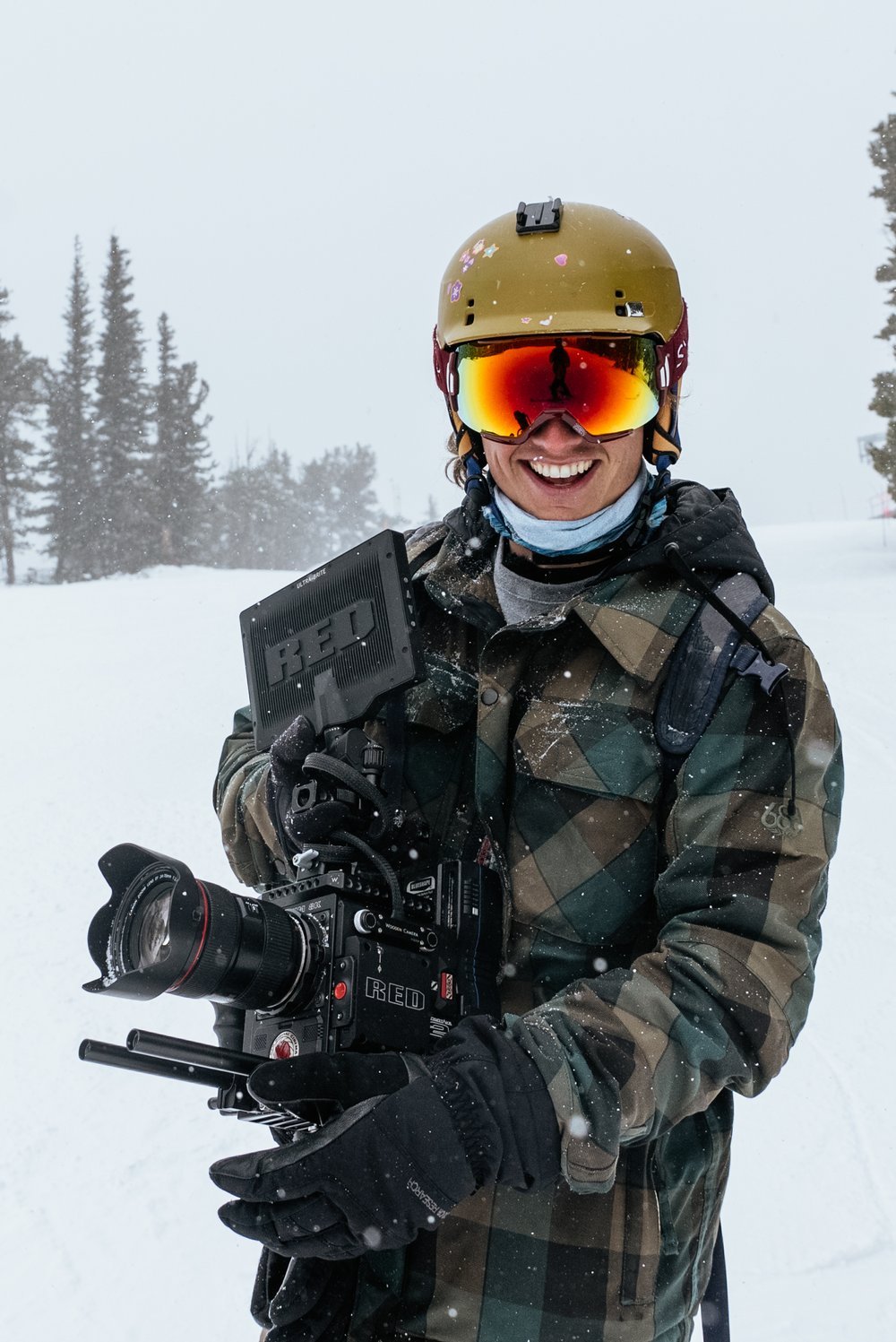
When I’m not on this website rambling on about filmmaking, I’m actually out there making films. From crafting memorable branded documentaries to capturing stories and products that move people, I’ve got you covered. Need a filmmaker who can scale mountains, brave the surf, or just tell a dang good story? Let’s chat!
In case I haven’t convinced you, here are three reasons why it might be fun to work together…
I believe in stories that stick with you - like campfire smoke on your clothes. The kind that makes you laugh, cry, or immediately want to call your mom.
I’m just as comfortable at 14,000ft as I am in front of a timeline. You get me in the mountains, in the ocean and in the editing room, making sure the magic out there really shines in the final cut.
I’ve filmed in some pretty wild places, but the best stories are the ones that bring people together. It’s those shared moments -big or small - that remind me why I love what I do.

Let’s Connect
Roo is an Emmy nominated commercial/documentary filmmaker and photographer based in Boulder, Colorado but travels all around the world for his filmmaking career. He has directed documentaries for Patagonia in California, produced films for Outside Magazine throughout Europe and Africa, camera operated for Netflix in the Rocky Mountain West, photographed among indigenous communities in South America, and has received notable recognition in the outdoor industry for his work telling uplifting stories in the outdoor space.