
How to Make More Money as an Outdoor Creative
Pricing is one of those subjects creative people tend to sidestep until it becomes unavoidable. It feels drier than the work itself, less romantic, less alive, and yet it has an extraordinary amount to do with whether the life you are building can actually remain sustainable.
In the outdoor world especially, it’s easy to assume that if the work is strong enough, the business will somehow take care of itself. Usually it does not. Usually the difference between a thriving creative career and a stressful, underpaid one lives in a set of decisions that have very little to do with talent and a great deal to do with value, scope, and the courage to price accordingly.
So, let’s chat about the business side, shall we?
I wanted to address this because I often joke to friends that I’m a business person with a film skillset. While that might undersell my creative desires and tendencies, it does explain some of the financial stability I’ve had over the years in this “unstable” career path.

I’ve made all of these pricing mistakes, if I’m being honest, which is what sparked me to write this. Somewhere in the middle of the less than stellar projects, usually late at night editing, I would realize I had not built myself a creative business. I had built myself a stressful job.
And I’ve watched variations of this happen to a lot of talented outdoor creatives. Some of the best filmmakers and photographers I know - people with remarkable creativity, people who see things I don’t, people whose work carries deep emotion - have struggled far more than less talented peers who understood one thing earlier…
Being good at the work is not the same as being good at pricing the work.
That can be a hard truth to sit with, especially in the outdoor world, where so many of us entered through passion before we entered through strategy. We came to this because we loved mountains, rivers, trails, snow, storms, surf, movement, weather, and the joy those places can bring out in a person. Most of us did not begin with spreadsheets in our hearts. We began with cameras and a feeling.
But creative idealism, while essential, does not protect you from bad business.
One of the most common pricing mistakes I see is also the most understandable: charging by the day, or by the hour, as though the only thing a client is buying is your time.
Time matters, of course. You should know your internal numbers and you should understand your costs. You should know what a day in the field takes out of you and what a week in the edit requires from your creative soul. But when time becomes the whole pricing model, you start reducing your own work to labor in the narrowest sense, and that is rarely how the client experiences its value.
A client may tell you they need “a one- or two-day shoot,” and if you are not careful, you will start doing math too quickly. One day filming, two days editing, maybe a little prep, maybe a little travel - fine, you think, maybe this is a $1,500 or $2,000 project.
Meanwhile the client may be thinking about something entirely different. They may be planning to use those assets across a website rebrand, paid ads, organic social and a product launch. They may be hoping those images or films help generate a six-figure return over the next several months from all their ads. They may be buying not a few days of your life, but a meaningful business outcome. You get $2,000. They get $200,000.
This is the gap where a lot of outdoor creatives can shoot themselves in the foot.
We price the effort. They benefit from the result.
The shift that changed things for me was simple to say and much harder to live by: stop thinking like a videographer for hire and start thinking like a creative partner
That phrase gets thrown around a lot now, and sometimes it sounds inflated, but the idea underneath it is pretty simple. If a client is hiring you merely to show up, press record, and hand over files, then yes, you are in a labor conversation where time might be the currency you deal with. But if they are hiring your judgment, your eye, your taste, your ability to shape a story, direct talent, understand brand goals, solve problems in the field, and make something that grows their business, then you are in a value conversation.
Value-based Pricing
Value-based pricing does not mean making up a big number and hoping the client salutes. It means understanding the real dimensions of the job before you say a price out loud.
The first of those dimensions is scope. Not only how many deliverables there are, but what kind of deliverables, and why they exist. Is this a small one-off social piece, or is it a broader campaign? Are you creating a hero film, five short-form cutdowns, a photo library, behind-the-scenes assets, stills for e-commerce, and material for a website refresh? Is the client trying to grow an audience, launch a product, reposition a brand, or tell a deeper story about identity and mission? A reel meant to juice social engagement is not the same project as a branded documentary meant to clarify who a company is. The number should reflect that value you create for them.
The second is complexity, which outdoor creatives in particular tend to discount because we’re so used to difficult conditions that we stop seeing them clearly. Travel costs time and money. Remote locations increase risk. Weather adds contingency. Pre-production expands when you need scouting, permits, talent coordination, interviews, story development, shot lists, safety planning, local crew, specialty gear, lighting support, transportation, and/or backup days. The more moving parts a project has, the less useful a simple day rate becomes. Complexity has a cost, even when it wears the costume of adventure.
The third is your role. This one matters more as budgets grow.
There is a huge difference between being hired as the person who shoots and edits, and being hired as the person who directs the work, produces the moving pieces, and assembles the right team around the vision. On larger projects ($100,000k and above), brands and agencies are rarely handing the entire budget to one person to carry every function alone. The money tends to open up when you can occupy a higher-leverage role - director, producer, creative director - and then bring in support where needed. That is not about ego but being where the value sits.
For me, this was one of the biggest mindset changes. I had to stop assuming the safest move was to keep myself small and indispensable in every task. Sometimes the better move is to lead more and personally execute less and that, in turn, changes how you quote.
These days I try not to say numbers first. I ask where the work will end up. Paid ads or organic? Website, email, retail, broadcast? What is the goal? Awareness, conversions, a launch, a rebrand, newsletter signups? What is the timeline? What is already decided, and what is still open? What kind of budget range are they working within? Clients do not always answer cleanly, but the questions themselves already begin to reposition the conversation. You are no longer reacting to a vague request, you are scoping a business problem and can price it fairly.
Project-based Pricing
I also build around project pricing rather than pretending every job can be reduced to a neat stack of day rates. Sometimes that means offering packages, sometimes it means presenting options. One thing that has worked well for me is tailoring the deliverables to the budgets they might have available. That way they don’t ever feel the need to spend more than they have but also you don’t have to discount your work. They take away money, you take away deliverables.
Just as important - I charge for the invisible work now.
Pre-production. Communication. Revisions. Travel days. Story development. The hours spent making the shoot possible before the shoot technically begins. These are not side notes and times for volunteering. They are a part of the job.
And perhaps hardest of all, I have gotten more comfortable losing some jobs.
That one never feels great in the moment. Undercharging can feel safe because it might win you the project, it might keep the conversation moving, or lets you avoid the discomfort of holding your ground. But cheap work has a way of getting expensive later. It costs you in time, energy, resentment, and in the opportunity cost of being tied up by the wrong client when a better one comes along.
These are huge reasons why I built The Business of Adventure Filmmaking workshopbecause I kept seeing the same pattern, in my own career and in the filmmakers I’ve mentored - people making strong work, attracting weak clients, pricing too low, and wondering why the business isn’t working as well as it should.
The course is my attempt to teach the less romantic side of this life - the side that actually makes the creative side sustainable. Although some other factors might influence you “quitting” this creative path, more often than not, it comes down to money. If you have six-months of expenses saved up, you can make it through those slow periods gracefully. How do you get more money saved? Create a better business.
This could be you this summer having a sick work/life balance - if you sign up for The Business of Adventure Filmmaking workshop :)
I believe that the more money you make, the longer you can stay in the creative field. So, if you need help with pricing, positioning, getting better clients, selling specific offers, and finding ways to work with better people click here. The course is only live until May 15th so sign up and let’s get you more creative freedom!
Because that is really what this comes down to.
You are not selling hours. Not really.
You are selling judgment, taste, strategy, execution. The ability to make something useful, memorable, and effective for someone else. The sooner you understand that, the sooner the business side of outdoor content stops feeling like an afterthought and starts becoming part of the craft.
Beautiful work is the goal and will always matter significantly.
But if you want to build a thriving business around that work - one that lets you have a work/life balance, gives you room to get better, attracts stronger clients instead of endless revisions and one-off gigs - you have to learn to price like someone who understands what they’re actually bringing to the table.
Why We Should Work Together…
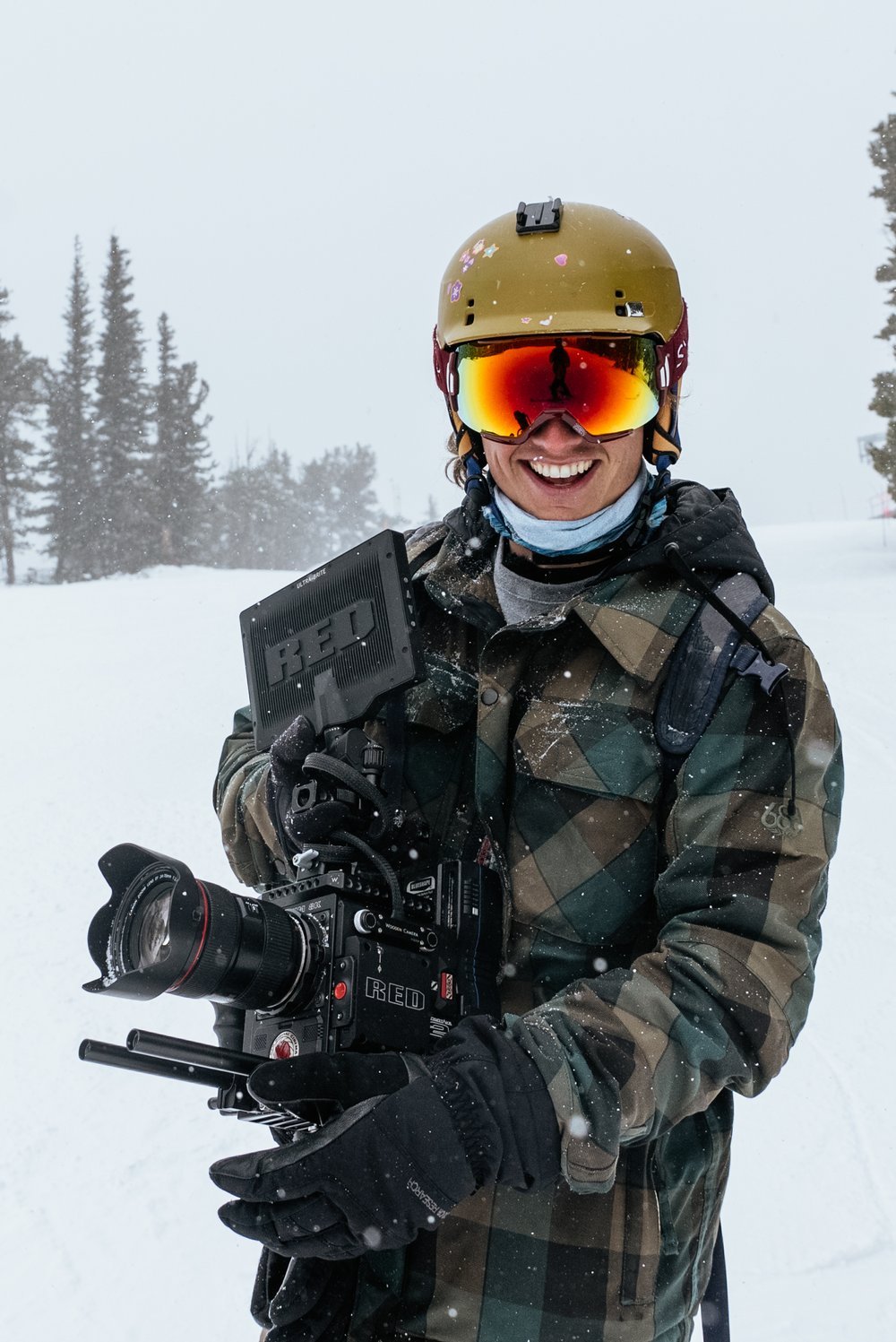
When I’m not on this website rambling on about filmmaking, I’m actually out there making films. From crafting memorable branded documentaries to capturing stories and products that move people, I’ve got you covered. Need a filmmaker who can scale mountains, brave the surf, or just tell a dang good story? Let’s chat!
In case I haven’t convinced you, here are three reasons why it might be fun to work together…
I believe in stories that stick with you - like campfire smoke on your clothes. The kind that makes you laugh, cry, or immediately want to call your mom.
I’m just as comfortable at 14,000ft as I am in front of a timeline. You get me in the mountains, in the ocean and in the editing room, making sure the magic out there really shines in the final cut.
I’ve filmed in some pretty wild places, but the best stories are the ones that bring people together. It’s those shared moments -big or small - that remind me why I love what I do.

Let’s Connect
Roo is an Emmy nominated commercial/documentary filmmaker and photographer based in Boulder, Colorado but travels all around the world for his filmmaking career. He has directed documentaries for Patagonia in California, produced films for Outside Magazine throughout Europe and Africa, camera operated for Netflix in the Rocky Mountain West, photographed among indigenous communities in South America, and has received notable recognition in his hometown of Orcas Island in the outdoor industry for his work telling uplifting stories in the outdoor space.