
A runner moves through a field of gold. A drone clears a ridge, somebody tightens a boot, and a voice with excellent lung capacity tells us to find what lies beyond. You can probably picture the edit without needing to know which brand paid for it.
There is a reason those images keep appearing. Running looks good on camera, landscapes communicate possibility quickly, and a person moving toward a distant summit gives a film an easy sense of direction. I enjoy making beautiful outdoor images, so this is hardly a campaign to ban the drone from the mountains.
The problem begins when those choices become the entire idea. A commercial can communicate the category perfectly while leaving the brand almost interchangeable with its neighbors. If a different logo could comfortably appear at the end, the work deserves a closer conversation before everyone starts booking flights.
Familiar images can be useful
The premise in the title is deliberately broad, and the examples below show why it cannot be taken literally. Outdoor brands already make funny, unsettling, intimate, and formally adventurous work. The more useful question is why a familiar set of visual habits remains so tempting, even when a team wants to create something distinctive.
Category cues help an audience understand what they are looking at. A trail, a pack, and a weathered jacket can establish the setting much faster than a paragraph of explanation. That efficiency matters in a short commercial, where there may be very little time to introduce a world before asking the audience to care about it.
A familiar image can also carry particular meaning when it belongs to a specific person. A runner’s return to a trail after an interruption is different from a runner included because the edit needs movement. The action may look similar in a shot list, yet the story gives the audience something different to notice.
The trouble with an unexamined reference folder
A mood board makes visual decisions easy to share, which is part of its value. It also makes those decisions easier to copy than the thinking that originally supported them. A team can inherit another film’s slow motion, color palette, and sweeping camera move while losing the particular reason those choices worked together.
I would describe that as a production risk rather than a moral failure of creativity. Familiar references reduce uncertainty, and a beautiful location can reassure a room quickly. The solution is to make the underlying intention just as concrete as the images, so a less familiar approach has something substantial to compete with.
Let the participant’s perspective change the camera
The North Face’s Discover Your Trail, created by SHARE Creative in 2022, is a useful example. Its agency account describes footage recorded by Explorer Team athletes across different cameras and devices, paired with a Strava challenge. The campaign’s invitation to participate has a relationship with the way the running is shown.
That approach offers more than a change in image texture. A camera carried through an activity has different access from a camera observing a carefully arranged performance. It can notice the interruptions, proximity, and awkwardness that a perfectly composed wide shot tends to smooth away.
I would be cautious about turning that into another formula in which a shaky frame automatically means authenticity. A participant can feel distant in phone footage, and a carefully lit portrait can feel extraordinarily close. What matters is whether the camera’s position helps the audience understand the person and the situation.
For a brand producer, the question is whether the planned coverage leaves room for that perspective. If every scheduled shot requires a clean performance, the film may never collect the moments that reveal a particular human being. Allowing some observational time can be a creative decision with as much consequence as choosing another lens package.
Give the product a sense of humor
Macpac’s Weather Anything, released in 2023, turns the product promise into a remarkably literal cliffhanger. Three hikers dangle from a cliff, with their predicament depending on outdoor gear. Directed by Damien Shatford through Sweetshop for The Monkeys Melbourne, the commercial combines an extreme situation with a wonderfully unhurried response.
The campaign’s awards entry identifies durability as the premise. The joke gives that promise a role in the action, so the audience has a reason to remember the equipment alongside the situation. This is exaggerated advertising, of course, and a jacket should not be mistaken for climbing protection.
Outdoor advertising can become solemn very quickly. A person tying their shoes does not always need to sound as though they are preparing to alter the course of civilization. Humor creates another emotional register, and it can make a technical benefit easier to remember because the audience has followed a situation rather than received a list.
The joke needs to survive the production plan
That does not mean adding a funny line to an otherwise unchanged montage. A comic idea affects casting, performance, coverage, and the amount of space the edit gives a reaction. If the production treats those decisions as incidental, the finished film can lose the very thing that made the script worth making.
A smaller brand can use the principle without attempting a cliffside stunt. Find a familiar frustration connected to the product and give it a clear, surprising consequence. The production then has something to protect when time becomes tight, because everyone knows where the audience’s enjoyment is supposed to come from.
Allow nature to become a playground for imagination
Kathmandu’s Summer Never Sleeps, released in 2022, approaches the outdoors through a playful dream world. Pillows become marshmallows and sheep count people, turning familiar bedtime associations inside out. The reversal gives the campaign a coherent comic logic that a collection of lovely camping shots would not provide.
In a 2022 interview about the work, the agency discusses its use of fantasy and surrealism. That intention gives the design and performance choices a shared direction instead of treating eccentric details as decoration.
The example opens a useful range of possibilities. Nature can be funny, comfortable, ordinary, confusing, or mysterious, as well as uplifting. A brand that chooses one of those less familiar feelings gives a director a different set of problems to solve, from how a prop should behave to what the audience should hear before it sees anything.
I would not suggest that every outdoor brand suddenly make dream sequences. Borrowing the surface of this work would create the same problem as borrowing a mountain montage. The useful move is to identify an emotional territory that belongs to the brand and then build a coherent film around it.
Make the unfamiliar idea easy to follow
Surreal work still benefits from a clear relationship between its surprises. If each new image seems to arrive from a different film, the audience has to keep starting again. A recognizable rule allows the production to become more adventurous while giving people something to follow through the strangeness.
That is a useful distinction when a team falls in love with an unconventional reference. The discussion should include what organizes the idea, which details are essential, and what could be simplified without losing its character. A treatment becomes much easier to evaluate when everyone can explain why the unusual choices belong together.
What would make the next film unmistakably yours?
I would begin with the details that are hardest for a competitor to borrow. Those might include a particular community, a product behavior, an attitude toward the sport, or a way the company acts when nobody is filming. The point is to identify something more specific than a shared enthusiasm for being outside.
Then I would test the proposed scenes against that detail. A sweeping landscape might be exactly right if its scale helps us understand the character’s decision. A close shot of a hand might carry more meaning if it reveals how a product is used. The camera choice becomes easier to defend when it is attached to something the audience needs to understand.
This also gives a team a better way to talk about slow motion and voiceover. Slowing an action can reveal something otherwise difficult to see, while a voice can offer perspective the image cannot supply. Both become less interesting when they are asked to manufacture importance around footage that has no particular story to tell.
A useful test before the treatment is approved
Imagine showing the proposed film to someone with the final logo covered. Consider what would still lead that person toward this brand, and which elements could just as comfortably belong to another company. This is a creative discussion tool, not a substitute for audience research, but it can expose a vague premise while changes are still relatively inexpensive.
I would also ask the team to name the moment they most want someone to remember. A specific interaction or consequence gives the production a clear priority. If the answer is simply the overall feeling, it may be worth spending another afternoon developing the situation that will create it.
These are the conversations I want inside my directing and production work, where the visual ambition and the reason for making the film can develop together. Beautiful outdoor imagery remains a wonderful resource. I want it to help a brand say something that still feels like its own when the next spectacular mountain arrives in the feed.
Why We Should Work Together…
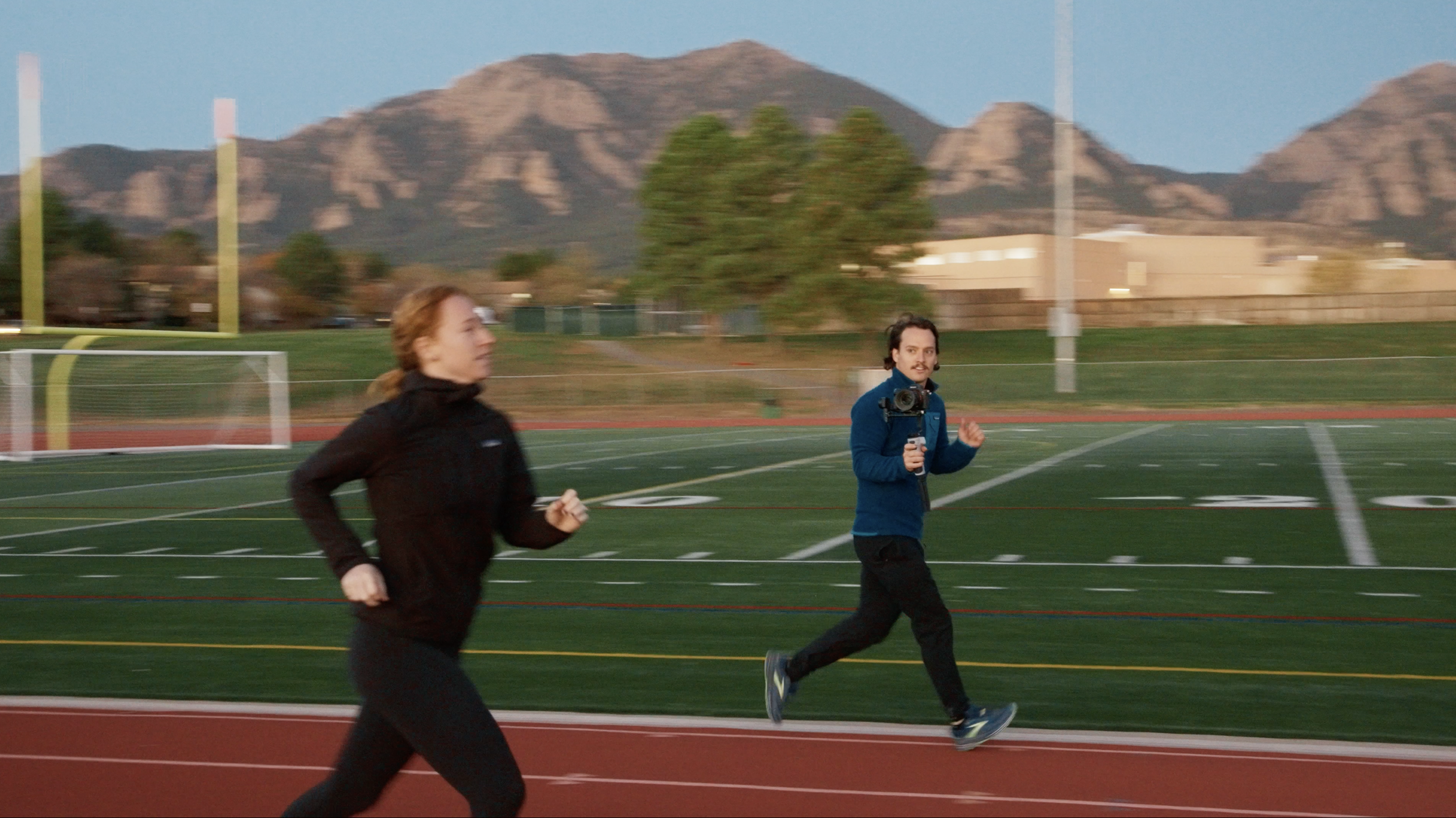
When I’m not on this website rambling on about filmmaking, I’m actually out there making films. From crafting memorable branded documentaries to directing and producing big commercials, I’ve got you covered. Need a filmmaker who can scale mountains or producer/director who can bring your $100k campaign to life? Let’s chat!

Let’s Connect
Roo is an Emmy nominated commercial/documentary filmmaker and photographer based in Boulder, Colorado but travels all around the world for his filmmaking career. He has directed documentaries for Patagonia in California, produced films for Outside Magazine throughout Europe and Africa, camera operated for Netflix in the Rocky Mountain West, photographed among indigenous communities in South America, and has received notable recognition in the outdoor industry for his work telling uplifting stories in the outdoor space.