
A jacket can appear in a film about repairing clothes, a conservation project, or a deliberately ridiculous product test. All three films might belong to the outdoor category, yet they give the audience completely different reasons to pay attention. That difference is what interested me in putting 25 outdoor brand campaigns beside one another.
The useful discoveries came from looking beyond the nicest frames. A campaign starts to become more interesting when you can identify what the brand is asking people to believe, what gives it permission to make that request, and where the audience can take the idea next. Sometimes the most consequential creative decision happens outside the film altogether.
What this review actually covers
This is a qualitative desk review of 25 campaigns, brand platforms, and participation projects, using publicly available films, launch announcements, agency case studies, and campaign pages accessed in November 2026. The selection spans outdoor equipment, outdoor retail, and adjacent running and active lifestyle brands. It is deliberately varied, rather than a random or representative sample of the industry.
For each case, I compared the central invitation, the role of the product, the creative device, and the documented route to an audience or activity. Those are editorial observations, not scores from an audience experiment. Public materials do not establish incremental sales, brand lift, or whether a particular production choice caused a commercial result.
The source register below identifies every case, including the specific execution when a larger platform is involved. Separate edits of the same campaign are not counted as separate entries. Dates refer to the campaign or the documented material being examined, and the YETI portfolio example is marked undated because the source does not establish its release year.
The invitation often matters more than the terrain
Decathlon’s Ready to Play makes an especially useful comparison with The North Face’s Question Madness. Decathlon’s 2024 brand platform emphasizes the enjoyment of sport across different abilities, while the 2016 North Face campaign examines the motivations behind demanding exploration. Both can contain people moving through beautiful places, but the intended relationship with the audience is quite different.
That changes who belongs in front of the camera and what a successful scene needs to communicate. An invitation to begin has room for hesitation, ordinary locations, and modest accomplishments. A story about pursuing difficult exploration can spend more time on commitment and the unusual decisions that make an expedition possible. Confusing those intentions can leave a film addressing people who were never the intended audience.
REI’s Force of Nature takes another approach, connecting its representation of women with gear, events, and support for community organizations. It gives the creative team something more substantial to work with than a request for diverse casting. The campaign’s public commitment extends into the experience being offered, which makes the advertising easier to discuss in concrete terms.
A practical question for the first meeting
I would ask what someone should feel invited to do after encountering the work. Going for a first walk, joining a group, understanding a product, and supporting a conservation campaign are different responses. A brief that names the response gives everyone a better reason to include or remove a scene, even when the scene happens to have magnificent clouds.
A distinctive idea gives the landscape a job
The landscape can establish credibility, create a problem, or become part of a larger argument. Columbia’s 2015 Tested Tough launch connects difficult Pacific Northwest conditions with Gert Boyle’s exacting expectations and employees testing equipment. Salomon’s Welcome Back to Earth uses the movement from an oppressive urban environment toward nature as its emotional journey.
These are useful distinctions because a location can otherwise become a very expensive substitute for an idea. If the same scene would communicate essentially the same thing in a dozen equally beautiful places, the production may be buying atmosphere without developing a particular point of view. Atmosphere is valuable, but it still needs somewhere to lead.
Mammut’s 2024 Not a Streetwear Brand activation provides a particularly interesting reversal. Rather than transporting the audience to a mountain location, DEPT brought projected cliff faces and climbing imagery to London’s Granary Square. The urban setting became the place to make an argument for the brand’s mountain identity.
I would carry this into a treatment by describing the rule of the film before describing the grade. Perhaps the product makes something unexpected possible, or the setting behaves in a way that expresses the brand’s proposition. That rule can help a team make consistent choices across motion, photography, and shorter versions without forcing every asset to be a miniature copy of the main film.
The person can make the premise specific
Timberland’s Nature Needs Heroes introduces people working toward greener communities, giving its environmental invitation recognizable human subjects. The 2019 campaign is useful here because the brand’s message can be discussed through particular actions and people. A broad aspiration becomes easier to film when someone is actually doing something that expresses it.
That still leaves the brand responsible for substantiating its environmental claims. A compelling portrait cannot establish the impact of a company’s entire supply chain. I would keep the person’s documented activity and the brand’s broader promises distinct when deciding what the film can reasonably say.
The audience is sometimes part of the campaign’s structure
REI’s Opt Outside, Cotopaxi’s Questival, and Nike ACG’s Paris trail activation all contain an action people can take away from the screen. They operate at very different scales, and they should not be treated as interchangeable media plans. What they share is a relationship between the message and something participants can actually do.
Fjällräven Classic provides another version of this connection through an organized trekking experience. The brand’s account of its twentieth Swedish event in 2024 explains how the format developed to help people learn the practical skills of multi-day trekking. The invitation has an activity and a learning structure behind it, which gives the surrounding stories something concrete to describe.
The distribution question belongs inside the creative question
This does not mean every brand needs to organize a festival or launch a community program. It means the work should have a plausible path to the people it is intended to reach. A partner newsletter, a retail screening, a running club, or a properly supported paid placement each changes what the film needs to do in its first moments.
The practical consequence is to ask about those settings while the treatment is still flexible. A film introduced by a trusted host can begin differently from an ad appearing between unrelated videos. If those decisions arrive after production, the editor may be asked to solve a viewing-context problem using footage that was designed for another situation.
Products can carry culture as well as features
Salomon’s Invented/Reinvented explicitly connects the XT-6’s mountain origins with its adoption in Parisian creative culture. On’s Dream Together uses movement and a track to introduce a partnership with Zendaya. These examples show different ways of allowing performance brands to occupy a broader cultural space.
The useful question is how that broader world remains connected to the product. A cultural association becomes more convincing when the object has a recognizable role in the scene or in the people’s lives. Simply borrowing a fashionable visual style can make a campaign look current while leaving its reason for existing fairly hazy.
This is especially relevant for a brand trying to reach beyond its original specialist audience. The creative team needs to decide which part of the existing identity should stay legible and which part can expand. That discussion is more productive than treating outdoor credibility and everyday style as though one automatically cancels out the other.
The 25-campaign source register
These are the cases used in the comparison, grouped for readability rather than ranked. Each link points to the campaign material or a first-hand account from the brand or its creative partners, with the observation kept separate from any claim of effectiveness.
Access, participation, and community
Decathlon, Ready to Play (2024). The new brand platform frames sport through enjoyment and participation across abilities, alongside a redesigned identity. It broadens the invitation beyond expert performance.
REI, Opt Outside (2015 onward). Closing on Black Friday connects the message to an operating decision. Later activity is considered part of this platform, not an extra case.
REI, Force of Nature (2017). Women-centered storytelling sits alongside events, gear development, and nonprofit support, making representation part of a wider offer.
Cotopaxi, Questival (2014 launch, 2024 campus return). A participatory adventure format combines challenges and community activity. The reviewed 2024 version focuses on college students.
Nike ACG, From Paris to the Wild (2026). A Paris-area trail activation brings product testing, athlete conversations, and a local running community into the same experience.
Values made visible
Patagonia, Don’t Buy This Jacket (2011). The Black Friday advertisement puts consumption itself into the message. Its provocation depends on the brand’s stated position, not a scenic film.
Patagonia, Worn Wear film launch (2013). Stories attached to existing clothes connect a film with repair and screening activity, giving used equipment an emotional role.
Arc’teryx, ReBird launch (2021). A circularity program brings care, repair, resale, and upcycling into the brand’s public offer. The communications have practical services behind their invitation to keep gear in use.
Patagonia, Artifishal (2019). A feature-length documentary examines wild fish and human intervention. The subject requires more explanation than a general statement about loving nature.
KEEN, World’s Cleanest Shoe (2024). Educational films and partnerships accompany the brand’s manufacturing message. The superlative is KEEN’s campaign claim, not a finding of this review.
Exploration and belonging
Arc’teryx, Outer Peace (2021). Access to nature is tied to partner funding and activity across brand channels. The review examines the invitation, not health outcomes.
Arc’teryx, No Wasted Days (2023 onward). The brand platform’s launch establishes an organizing idea for stories and participation. Individual films within it remain one case here.
The North Face, Question Madness (2016). Athlete exploration footage supports a question about motivation and achievement, with digital and outdoor distribution described at launch.
The North Face, Walls Are Meant for Climbing (2017). Climbing becomes a community invitation, supported by access events and a commitment to public climbing infrastructure. Participation connects the metaphor with a physical activity.
The North Face, We Play Different (2024). An athlete-led brand anthem uses unconventional outdoor playgrounds to express the brand’s stance, with media and street placements supporting it.
Characters, settings, and product personality
Columbia, Tested Tough launch (2015). Gert Boyle and employee product testing give Pacific Northwest weather a specific role, with broadcast, print, retail, and social activity supporting the launch.
Jack Wolfskin, We Live to Discover (2022). The fall campaign follows Ronan Donovan’s work with wolves around Yellowstone. A specific conservation subject gives the broader discovery positioning a documentary direction.
Timberland, Nature Needs Heroes (2019). Profiles of people supporting greener communities connect an environmental invitation with human activity. The work offers a character-led approach rather than relying only on images of untouched wilderness.
Berghaus, Time to Get Out (2018–19). VCCP’s campaign portfolio pairs landscape imagery with observations about modern life. The contrast gives familiar scenery a more specific verbal personality.
YETI, soft-cooler campaign (undated portfolio). The creative director’s account frames portability around collecting adventures. The product’s change in form provides the creative starting point.
Extending outdoor identity
Salomon, Welcome Back to Earth (2024). A journey from a technologically crowded city toward nature creates an emotional contrast, giving the landscape a narrative purpose.
Salomon, Invented/Reinvented (2025). Mountain origins meet Parisian adoption of the XT-6. The campaign treats both contexts as part of the shoe’s identity.
Mammut, Not a Streetwear Brand (2024). Mountain imagery projected into London makes an urban setting serve a mountain-sport positioning. Social coverage and an on-site basecamp experience extend the central idea.
On, Dream Together (2024). Movement on a track introduces Zendaya’s partnership, connecting sport with a broader invitation to collective participation.
Fjällräven Classic, twentieth Swedish event (2024). An organized multi-day trek translates the brand’s interest in trekking into a learning experience. This is a participation project within the review, rather than a conventional advertising spot.
What I would change in the next brief
The most useful result of this comparison is a sharper way to discuss creative choices. I would want the audience invitation, the product’s role, and the intended viewing context written down before the team agrees on a visual reference. Those decisions create room for a distinctive treatment without requiring every campaign to be strange for the sake of it.
I also would resist turning this sample into a list of guaranteed formulas. The sources are largely promotional, the selection favors work with accessible documentation, and the brands have very different resources and histories. These cases offer ideas to examine, not evidence that copying a technique will reproduce another brand’s results.
For my directing and production work, the exciting part is translating that discussion into a film with a clear reason to exist. There is still plenty of room for a wonderful landscape. I’d just like to know what it is helping us say before we send everyone up the mountain.
Why We Should Work Together…
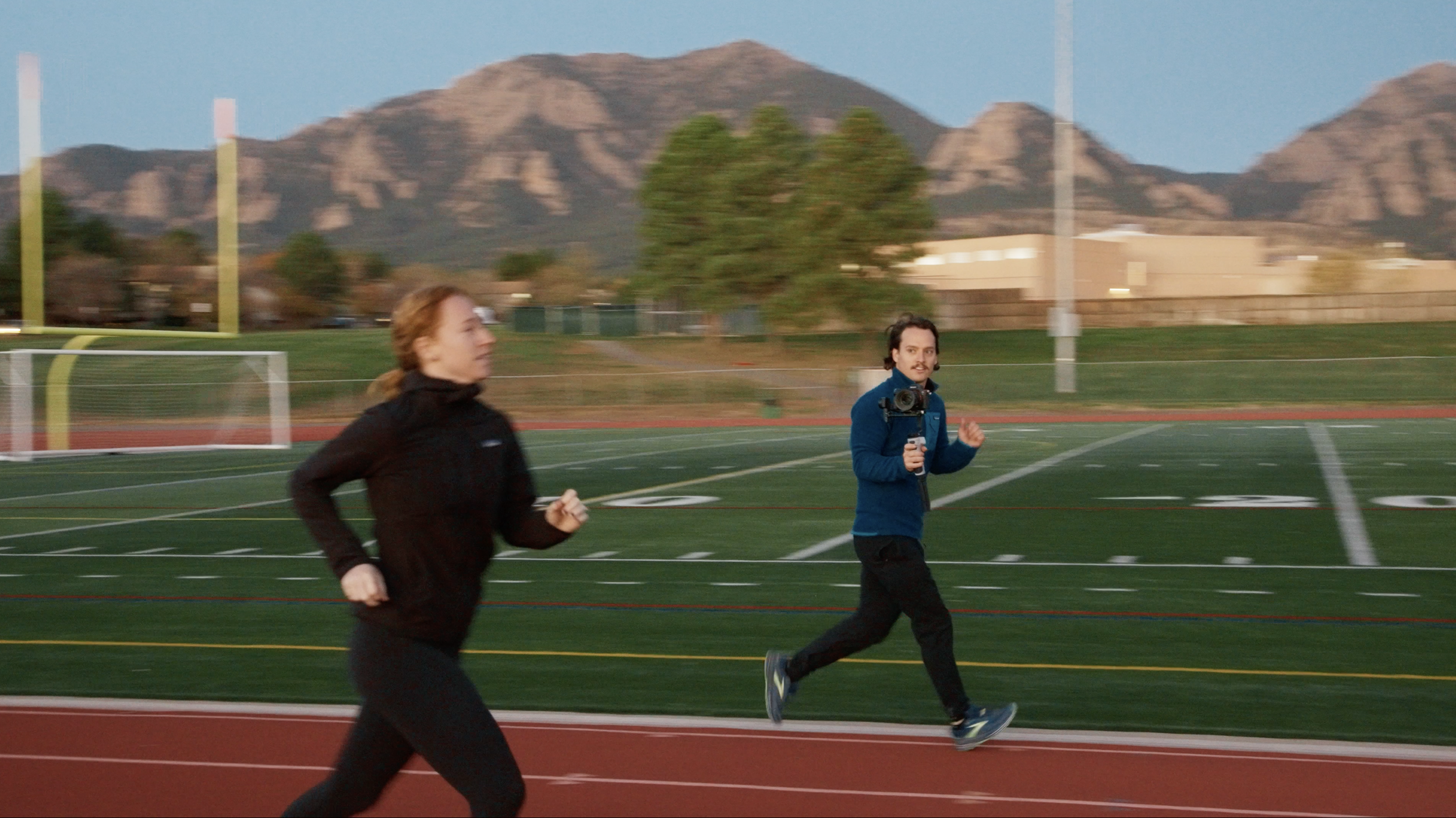
When I’m not on this website rambling on about filmmaking, I’m actually out there making films. From crafting memorable branded documentaries to directing and producing , I’ve got you covered. Need a filmmaker who can scale mountains or producer/director who can bring your $100k campaign to life? Let’s chat!

Let’s Connect
Roo is an Emmy nominated commercial/documentary filmmaker and photographer based in Boulder, Colorado but travels all around the world for his filmmaking career. He has directed documentaries for Patagonia in California, produced films for Outside Magazine throughout Europe and Africa, camera operated for Netflix in the Rocky Mountain West, photographed among indigenous communities in South America, and has received notable recognition in the outdoor industry for his work telling uplifting stories in the outdoor space.