
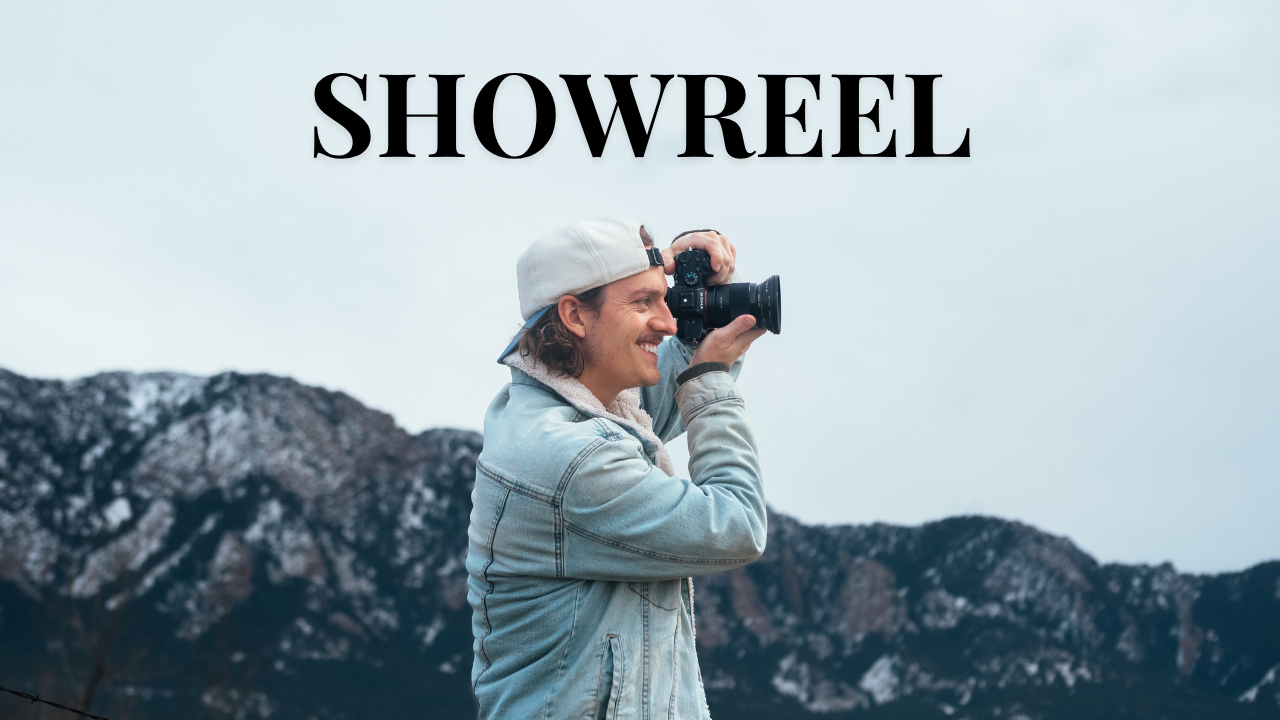
Before filmmaking became my career, I studied political science, spent years learning Spanish and Arabic and worked for the State Department. My route into this work included a pretty serious look at a completely different life.
That earlier life still belongs in the work I make now. Learning another language, considering a different career and spending time with people whose lives look different from mine all affect what I notice. A filmmaker brings those experiences into a project long before choosing a lens.
I think our next good idea deserves a starting point beyond the feed. The campaign another brand just released can help us discuss a technique, although I’d like to know what interests us before deciding which filmmaker we want to resemble.
We can learn a huge amount from other filmmakers, but beginning every project with someone else’s finished answer can make our own curiosity harder to hear. I want the person we’re filming to have a chance to surprise us before we decide how their story should look.
References can teach a technique while life gives it a purpose
I watch films and pay attention to other people’s work because there is so much to learn from a carefully made scene. An edit can teach timing, while the sound beneath it can explain a place before anyone speaks. Studying those decisions helps me understand the craft well enough to make choices of my own.
The problem starts when the reference becomes the source of the entire idea. We take the pacing, the look, the kind of character and the emotional destination, then search for a subject who will fit. The production may be competent, but the subject has become an ingredient in someone else’s recipe.
I’d rather meet the person and spend time in the place before settling on an approach. Once a detail keeps tugging at my attention, the craft has a useful job: helping someone else see why that detail matters.
That distinction is small enough to lose in a busy workweek. It is also where a lot of personality enters a film. Technique helps me communicate. Experience gives me something I actually want to say.
Borrowing an aesthetic is easier than developing a point of view
An aesthetic is visible. You can screenshot it, arrange it in a presentation and agree that it looks cool. A point of view takes more work to explain because it depends on what you notice and why you care.
Two filmmakers can stand in the same place and make very different films. One follows the physical challenge. Another notices the friendship. Someone else is interested in the person doing the preparation before everyone arrives. They share a location, although each person is paying attention to something different.
When I ask the internet what a film should feel like before spending time with its subject, I make that individual attention harder to hear. There are already so many confident answers available. It becomes tempting to choose one instead of sitting with a less polished observation of my own.
I think the useful question is simple: what would I still find interesting here if I had never seen a campaign in this category? That question can feel slightly awkward, which is useful when it asks me to do some actual looking, rather than reward myself for recognizing the right visual trend.
Ordinary experiences count
Lived experience sounds grand when you put the words together. It can suggest a passport full of stamps or an expedition that needs its own logistics team. I think a normal Tuesday offers plenty.
I’ve written on how playing music, surfing, volunteering with fourth- and fifth-graders and writing all feed my filmmaking. Those activities ask for different kinds of attention. Music and surfing both involve timing, while working with kids asks me to communicate clearly and stay adaptable. Writing makes me decide which thought I’m actually trying to express (usually after I’ve written several that were getting in its way).
None of those things needs to become a film in a literal way. I can carry the experience into how I listen, how I pace an edit or how I help a person feel comfortable in front of the camera. Influence can travel sideways.
That is encouraging to me. A creative life can include making dinner, walking the dog and calling someone who has a completely different job. The point is participation. Be present enough that the experience has a chance to leave a mark before deciding what content might come from it.
Get close enough to find the detail a mood board misses
On Goat Surf Club in Ireland, the trip connected surfing with people doing conservation work, including Hometree and the Old Irish Goat Society. Those are specific people and organizations with their own reasons for doing what they do.
A generic idea of an Irish surf film could give us attractive coastline and appealing water. Spending time with the actual story lets us explore how care for a place becomes practical work. We can follow the people doing that work and understand what connects a visiting surfer to those who live there.
Those questions create scenes that belong to this film. They also give the audience something more substantial than a visual impression of a country. The people become the way into the place.
This is why research matters beyond collecting references. Read, talk, visit where appropriate and ask the person what you have misunderstood. A useful production conversation can begin with a very basic question. Being willing to sound new to a subject often opens more doors than arriving with a finished theory and hoping the world will cooperate.
Leave room for an experience to stay an experience
During that Ireland trip, I spent time filming and flying the drone, then put the camera away and went surfing with Ben and Thomas. I’ve shared that moment before because the choice still feels useful.
Participation changes what I understand. Watching a day through a lens gives me one kind of attention. Being in the water with friends gives me another. Both have a place, and a life built entirely around recording can become oddly thin on the thing being recorded.
There is also a practical limit to making everything serve the next project. If every walk needs to generate an idea and every conversation needs to become a story, we have brought work into every corner of the day. That seems like a tiring way to find inspiration.
I want some experiences to remain complete on their own. Go surfing because the waves are there and your friends are going. Play a song because it feels good to play it. An idea may come later. The experience has already earned its place, even if the only thing it produces is a good afternoon.
Give the first idea a little privacy
An early idea is often rough. It may be a sentence, an image or a question that feels interesting without making much sense yet. Sharing it immediately with a feed full of finished work is a pretty uneven comparison.
I’d give that first thought a little space by writing down the person or situation in plain language. Try to explain what draws you to it without using another film as the explanation. The wording can be clumsy, and it probably will be. A rough sentence that identifies something interesting is already useful.
Then make something small from it: a short written scene, a sequence of photographs, a rough edit from material you already have permission to use. Making reveals questions that collecting references can leave hidden. You begin to see where the idea has substance and where it is still borrowing confidence from its presentation.
There is time for collaborators and references later. I simply want to arrive at those conversations with a thought of my own. It makes the exchange more interesting for everyone, and gives outside influence something real to work with.
Bring curiosity to people who live differently
My background in languages and political science feels relevant here. Learning how another person understands the world asks for patience. The first interpretation can be incomplete. A familiar word may carry a different meaning. Context changes what a sentence does.
Documentary filmmaking benefits from that same willingness to learn. Someone whose daily work feels ordinary to them may be showing me an unfamiliar world. My job includes noticing what needs explanation and respecting what I still need to understand.
The people I film work across different industries and communities. That range is useful because it keeps me curious. An idea from a laboratory, a workshop or a family routine can change how I approach an athlete’s story. The connection comes through people and behavior, rather than matching visual categories.
For a brand, this can be a helpful way to think of originality too. Spend time with customers, employees and the people affected by the work. Ask what they actually do, what they find difficult and what they care enough to explain twice. There is often a stronger story there than in another company’s launch video.
Use references after you know what you are trying to express
There is still a place for a shared visual language during production. A director, client and crew need ways to discuss tone, framing, pace and scale. References can make those conversations much clearer.
I’d use them to answer a specific question. This sequence shows the amount of space an interview needs. That photograph helps explain the relationship between a person and their surroundings. This edit demonstrates a pace we could explore. Each reference has a job instead of becoming an overall instruction to resemble someone else.
It also helps to draw from different forms. A song, a book or a photograph can influence a film without providing a ready-made film to imitate. The translation asks us to make decisions. Those decisions are where the new work begins to become itself.
When the subject gives us something better than the reference, I think we should follow it. The point of preparation is to become more attentive in the field. A plan that leaves room for discovery can hold both creative direction and genuine surprise.
Make a small experiment before making a big promise
If I wanted to change where my inspiration comes from this week, I’d start with a manageable experiment. Choose one ordinary experience and give it full attention. A run, a meal, a conversation or time spent learning something unfamiliar will do.
Later, write down three details you remember without checking a screen. Look for a detail that feels particular or raises a question you want to explore. Consider how it could help someone else understand the person or place. Then make a small piece using one of those details as the starting point.
The exercise works best with very little pressure to make something impressive. We are practicing attention and translation. The first attempt may reveal that the detail belongs in a sentence instead of a film. That is useful information too.
Over time, a collection of these observations can become a much more personal creative resource than a folder filled only with other people’s campaigns. It contains your questions, your associations and the things you keep noticing. Those patterns are a point of view beginning to show itself.
Let the work carry traces of an actual life
I want my films to feel like they came from someone who spends time with people, goes outside, makes things and remains curious. A polished finish can support that. The life underneath gives the polish somewhere to land.
Other filmmakers will keep making work I admire, and I’ll keep learning from them. I also want to arrive at a project with a real encounter or a small detail that has stayed with me. That gives the collaboration something of my own to build on.
There is plenty to explore without predicting which look will feel current next month. Making time for a conversation, playing a guitar or taking a different route on a walk can give us something specific to notice. None of those activities needs to justify itself with an immediate creative payoff.
The next idea may arrive while doing any of those things. For now, I’d like to be there for the experience itself. The camera can join us when there is something worth bringing it along for.

Why We Should Work Together…
When I’m not on this website rambling on about filmmaking, I’m actually out there making films. From crafting memorable branded documentaries to directing and producing , I’ve got you covered. Need a filmmaker who can scale mountains or producer/director who can bring your $100k campaign to life? Let’s chat!
Let’s Connect
Roo is an Emmy nominated commercial/documentary filmmaker and photographer based in Boulder, Colorado but travels all around the world for his filmmaking career. He has directed documentaries for Patagonia in California, produced films for Outside Magazine throughout Europe and Africa, camera operated for Netflix in the Rocky Mountain West, photographed among indigenous communities in South America, and has received notable recognition in the outdoor industry for his work telling uplifting stories in the outdoor space.