
How Much Does Outdoor Brand Video Production Cost? A 2026 Budget Guide
If you are planning a video campaign for an outdoor brand in 2026, the price can swing from $3,000 for a lean one-person shoot to $100,000+ for a larger commercial campaign with a full crew, talent, travel, multiple deliverables, and broad usage.
That range is huge because “video production” can describe wildly different things. A filmmaker following a trail runner for one day sits in a different category from a three-day alpine campaign with a full crew, athletes, travel, drones, post-production, and a dozen final edits.
I’m Roo Smith, a commercial filmmaker and director based in Boulder, Colorado. I spend a large part of my year making outdoor films, campaigns, athlete stories, documentaries, and social pieces for brands. My work has included projects for Patagonia, The North Face, Netflix, Garmin, HBO, La Sportiva, KT Tape, Canyon Bicycles, Outside, and many more.
Here is how I think through budgets when a brand reaches out.
The short answer
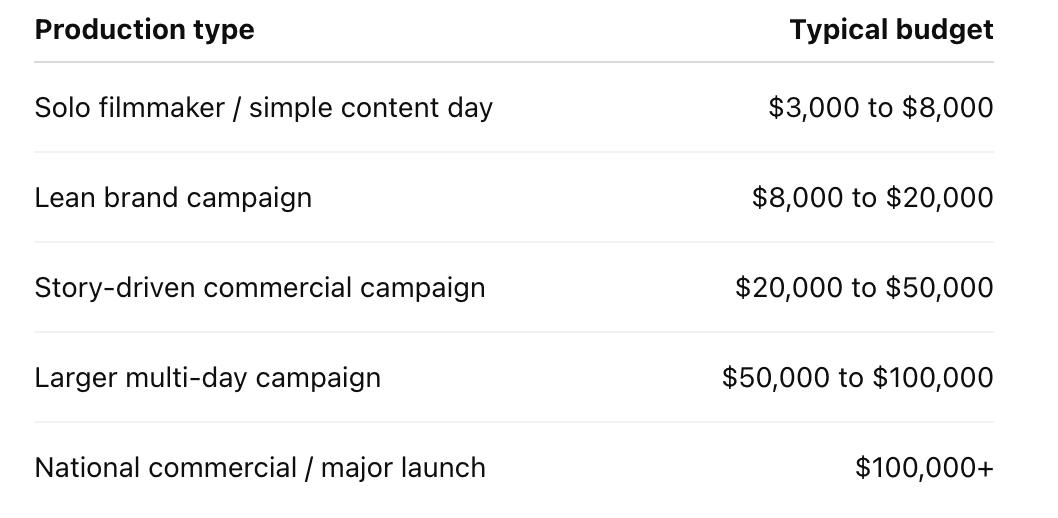
For most outdoor brands, I see projects fall into five broad ranges:
A healthy budget comes from matching the scale of the crew and production to the idea.
Some stories genuinely need six people, three locations, a snowmobile, an athlete, a drone team, and four edit versions. Some need one filmmaker, one runner, one ridge, and good light.
The skill is knowing which version will make the strongest film.
What are you really paying for?
A polished outdoor film usually has four stages: creative, pre-production, production, and post-production.
Creative covers the idea, story, treatment, shot approach, visual language, and campaign structure.
Pre-production covers producing, scheduling, permits, locations, casting, athlete coordination, travel, insurance, call sheets, logistics, and contingency planning.
Production is the shoot itself: director, camera department, audio, lighting, grip, drone, talent, vehicles, food, lodging, and gear.
Post-production is where the raw material becomes the campaign: editing, music, color, sound mix, graphics, captions, cutdowns, vertical versions, revision rounds, and final exports.
Outdoor logistics can carry more weight than people expect. A location five miles into the mountains creates a very different day from a trailhead beside a paved road. Skiing adds avalanche gear, access, and weather windows. Climbing can require ropes, guides, and specialized camera positions. Water shoots can need housings, boats, or safety teams.
The quote reflects the reality of getting the image safely and beautifully.
What does a film crew cost in 2026?
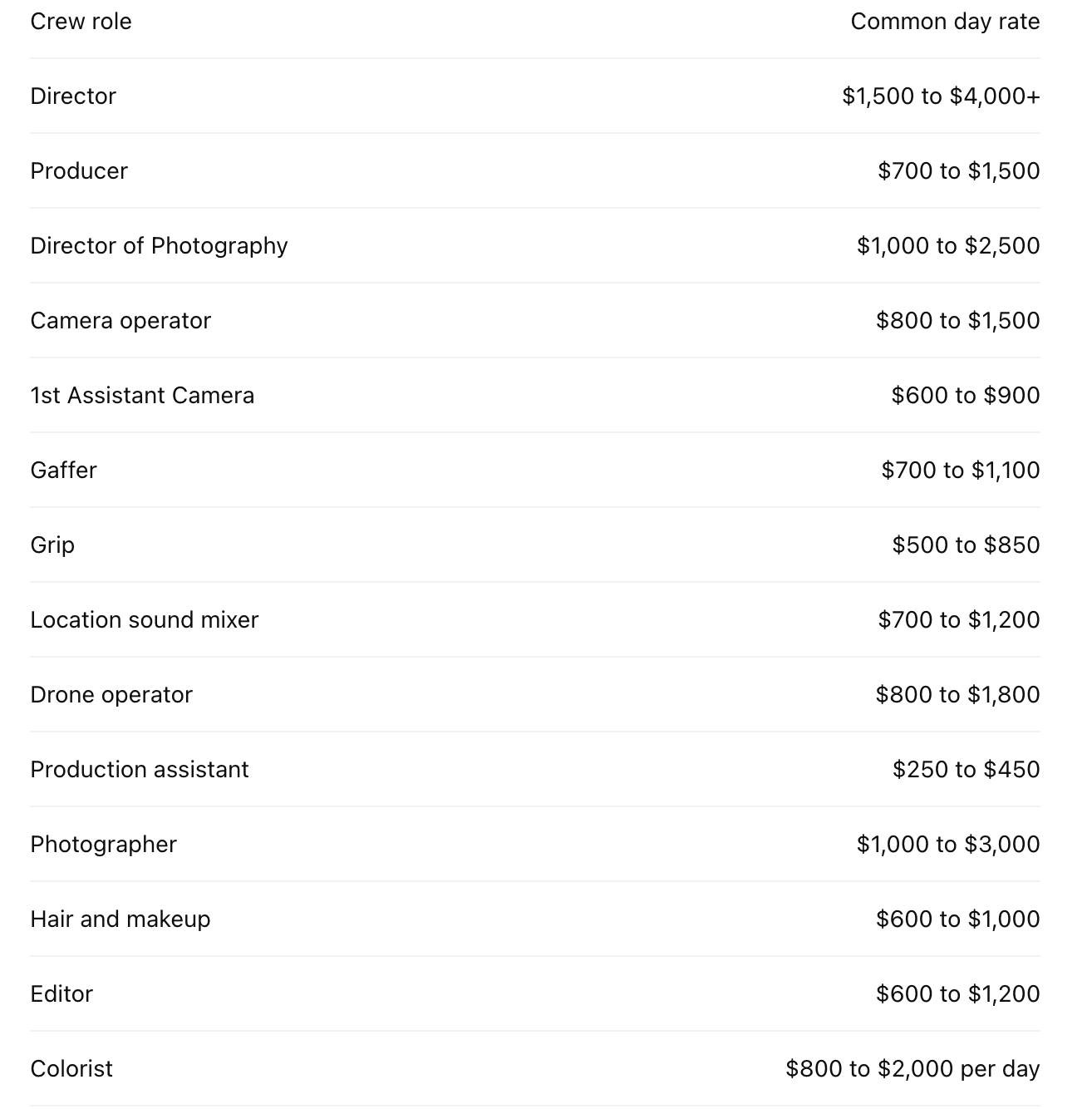
Rates vary by market, experience, production size, equipment, and scope. For the small and mid-sized outdoor campaigns I commonly encounter, these are useful working ranges for experienced crew.
Rates can climb on agency productions, union jobs, technically difficult shoots, or campaigns requiring specialized equipment.
They can also come down when one person fills multiple roles. On many outdoor productions, I might direct, operate camera, and handle portions of producing. A lean crew can create a lot of production value when everyone knows the terrain and the creative plan is focused.
What does talent cost?
Talent is one of the widest variables in a campaign budget.
For a small commercial shoot, a model or lifestyle athlete may land around $500 to $1,500 per shoot day. Experienced athletes, recognizable creators, professional sports talent, or people with valuable audiences can run $1,000 to $5,000+ per day, with some far higher.
Then there is usage.
A person appearing organically on a brand’s Instagram for a short campaign has different value from someone whose face will appear in paid advertising across North America for two years. Usage can add hundreds, thousands, or tens of thousands of dollars depending on reach, duration, territories, media, exclusivity, and the person involved.
Sponsored athletes can simplify casting, but their existing sponsorship agreement still needs to cover the planned use.
For documentary-style work, real people often create the strongest films. Their compensation should reflect their time and commercial contribution.
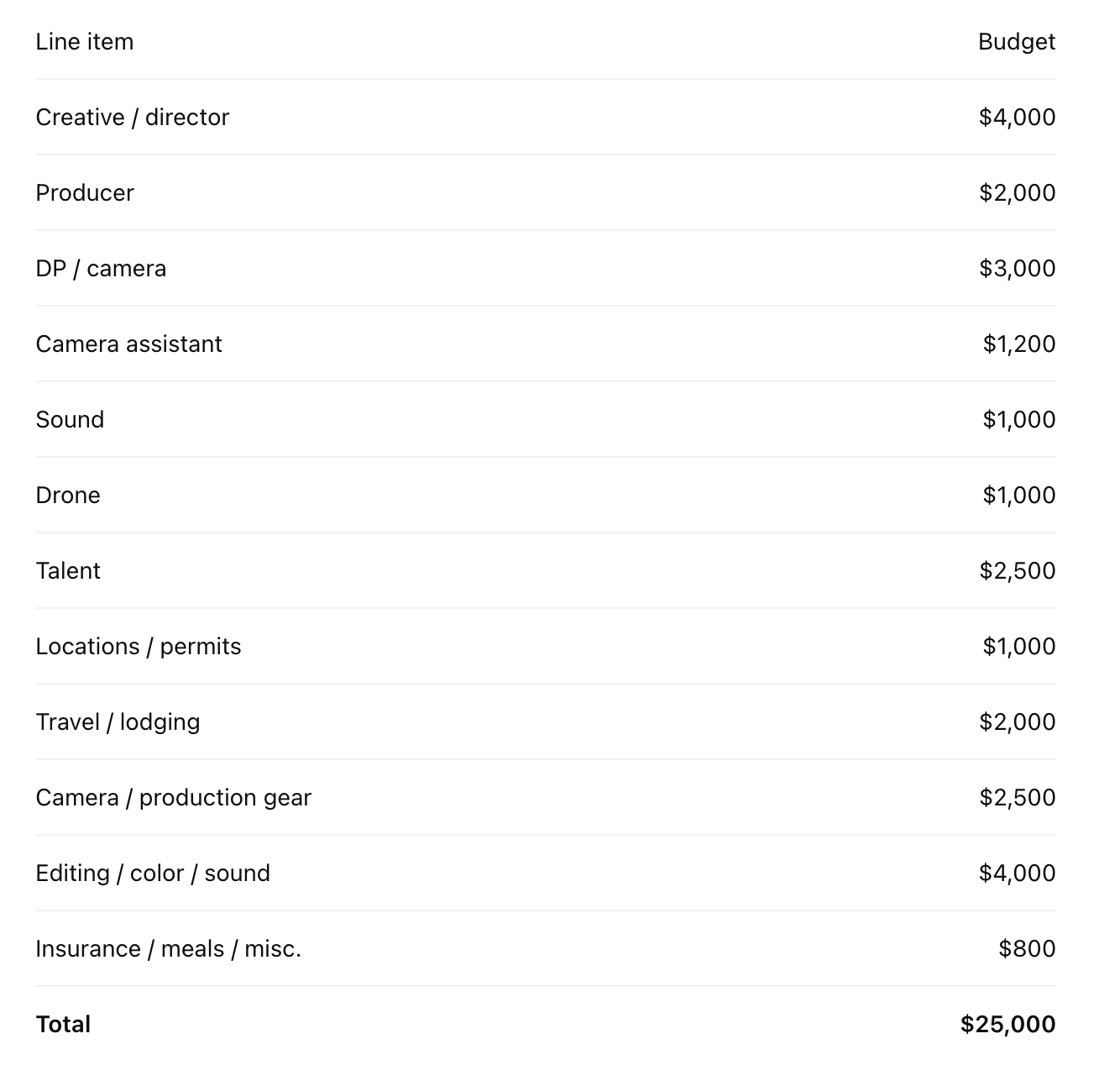
A real $25,000 outdoor campaign budget
Here is a realistic example for a two-day outdoor brand production with a lean professional crew and a handful of final deliverables.
That could produce a strong hero film plus a few short edits if the concept stays focused.
Shift the same project to a remote alpine location, add four athletes, build a second camera team, add photography, increase paid usage, and request 15 final assets, and the budget can reach $40,000 to $60,000 very quickly.
What does $5,000 buy?
At $5,000, I would think small and sharp.
Maybe it is one shoot day with a filmmaker, a local athlete, a simple location, minimal travel, and one or two finished pieces.
There can still be beautiful cinematography and strong storytelling. This range works well for athlete profiles, small product stories, founder pieces, organic social campaigns, local launches, or a compact brand story.
Trying to make a $30,000 idea for $5,000 usually stretches the crew, thins out coverage, and rushes post. A better move is to reshape the concept so the limitations become part of the style.
What does $10,000 to $20,000 buy?
This is where a lot of small and mid-sized outdoor brands can make excellent work.
You can usually support one or two shoot days, a small crew, stronger pre-production, experienced talent, travel within a region, solid camera and audio gear, drone coverage, and several deliverables.
A one-day content sprint can capture volume. A two-day story shoot gives people room to relax, creates multiple lighting windows, and gives the editor more human material to shape. For brands aiming beyond product B-roll, this can be a sweet spot.
What does $20,000 to $50,000 buy?
This is where outdoor production starts to feel like a true campaign.
You can build a custom concept, scout locations, bring in a dedicated producer, expand the camera team, hire stronger talent, travel farther, capture photography alongside motion, and create a broader suite of final assets.
This budget can support a hero film, 30-second and 15-second edits, vertical cuts, product-focused clips, still photography, and a library of useful campaign footage.
It also gives the production room to solve real outdoor problems. Weather shifts. Trails close. Wind kills interview locations. Travel gets delayed. A larger budget creates options, and options protect the creative.
Many branded documentary and outdoor commercial projects I love live in this territory. The crew gets professional support while staying fast in the field.
You can see that style in my branded documentary portfolio.

What does $50,000 to $100,000+ buy?
At this scale, brands are usually buying a campaign system rather than a single film.
Think three to five shoot days, several locations, a larger crew, dedicated production support, substantial talent fees, photo and video running together, art direction, wardrobe, specialty vehicles, permits, travel, larger equipment packages, multiple post specialists, and a large deliverable list.
A $75,000 project might create a two-minute hero film, two 30-second commercials, six vertical pieces, a photo library, web assets, paid media cuts, retail screens, and alternate versions for different products.
At $100,000+, the biggest changes are often reach, complexity, and volume rather than some magical leap in image quality.
The camera can already look incredible on a $15,000 job.
The extra money buys control: more time, specialists, access, casting options, locations, assets, revision bandwidth, usage, and chances to get the moment.
Why deliverables change the price so much
Brands sometimes think of every cut as a small variation of the same film.
Editors experience it differently.
A 90-second hero film, 30-second cut, 15-second cut, six vertical Reels, three product edits, captioned versions, alternate music, and several aspect ratios can become a significant post-production schedule.
Each piece needs structure, pacing, graphics, audio, color, exports, review, and quality control.
If you want to keep the budget efficient, decide which assets truly matter before production. Then shoot intentionally for those formats.
I often plan widescreen and vertical framing together during a shoot. That gives the editor cleaner material and keeps the social deliverables from feeling like awkward crops of the hero film.
Travel is rarely just airfare
Outdoor brands naturally shoot in places that are hard to reach.
Travel costs can include flights, vehicles, baggage, lodging, per diem, mileage, guides, permits, insurance, and crew travel days.
A two-day local shoot may require two working days. A two-day overseas shoot could require five or six paid calendar days once travel and scouting are included.
I am based in Boulder and regularly work across Colorado, the Mountain West, and destination productions. Building crews locally can keep more travel dollars on screen.
Where brands should spend more
If I had to protect three parts of an outdoor budget, I would protect the idea, the people, and the time.
A great location with a weak concept is scenery.
Expensive cameras with the wrong crew are expensive cameras.
A talented director and crew with enough time to follow real moments can make a relatively simple production feel huge.
For outdoor brands specifically, I would also protect local knowledge. People who ski, climb, run, ride, surf, or spend real time outside tend to move through these productions differently. They understand pace, weather, access, athlete rhythm, gear, terrain, and how fast a beautiful window can disappear.
That experience saves time and often creates better footage.
Where brands can save money
Keep the crew lean. Use fewer locations. Choose real athletes who already fit the product. Shoot photo and video during the same production. Create several assets from one strong story. Build the concept around a place with easy access. Use local crew where possible. Limit the number of review rounds. Decide usage before the shoot. Give the production company a clear deliverable list early.
Every one of those choices can save real money without making the film feel cheap.
So, what should your outdoor video budget be?
If you need a clean piece of organic content, start in the $3,000 to $8,000 range.
If you want a polished small campaign, think $8,000 to $20,000.
If you want a strong story-driven outdoor commercial with multiple deliverables, $20,000 to $50,000 is a very useful range.
If you are planning a large launch with multiple shoot days, talent, paid usage, photo, and a full content suite, $50,000 to $100,000+ is realistic.
The best budget is the one that gives the idea enough room to work.
Need help building the production?
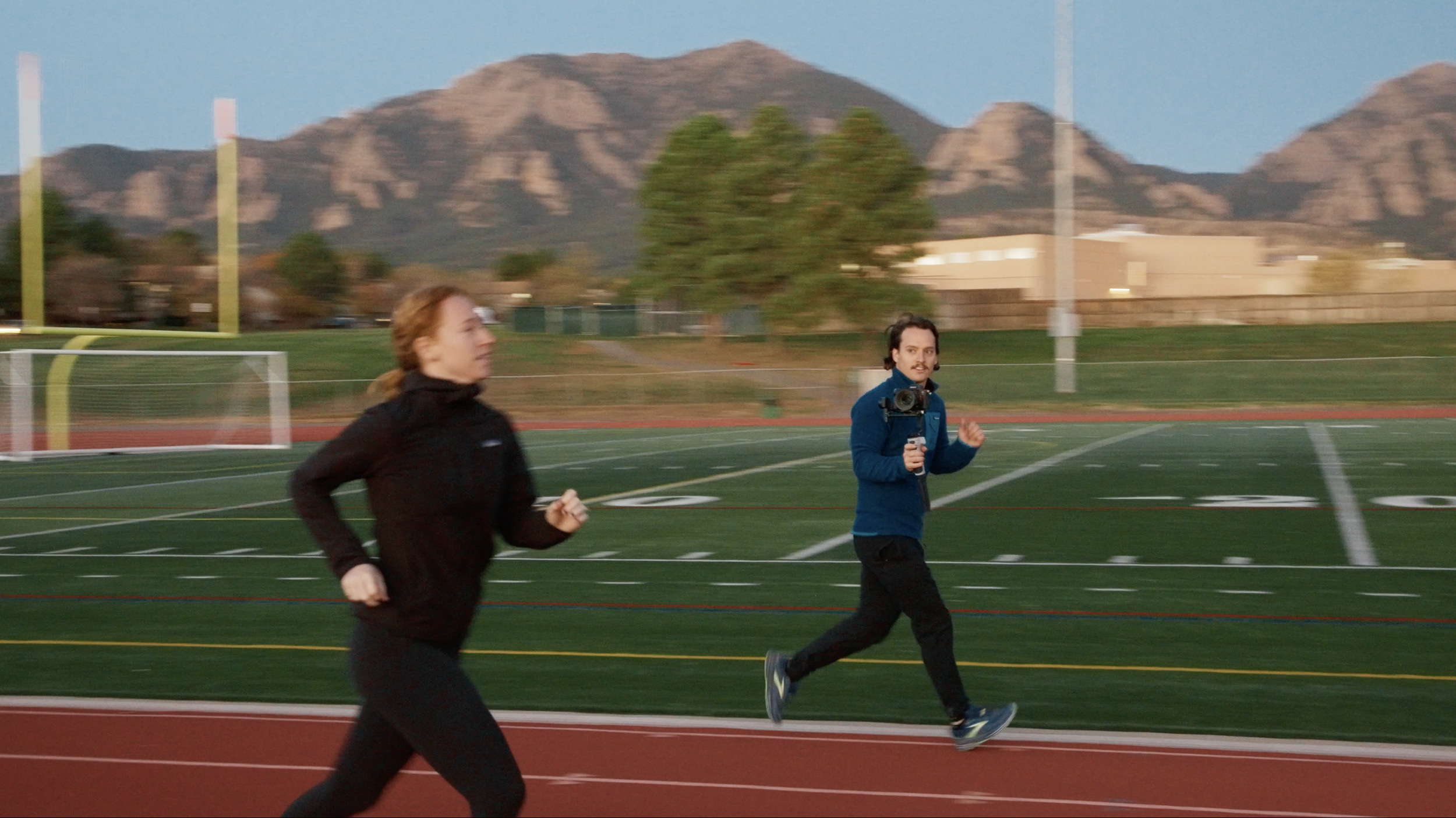
This is the work I love.
I run a video production company built around outdoor, sports, lifestyle, and human stories. I can come in as a director and filmmaker, or I can build the full production from concept through final delivery.
That can include creative development, producing, crew, locations, casting, filming, drone, photography partners, editing, color, sound, and campaign cutdowns.
My approach stays intentionally nimble. I like crews that can move through mountains, trails, snow, rivers, roads, and real environments without turning every scene into a giant production event.
The goal is simple - make something beautiful, authentic, useful, and worth watching.
If you are planning an outdoor campaign in 2026, send me your rough scope, budget range, timeline, and what you hope to create. I can help shape the production around the resources you have and build a crew that makes sense for the story.

Let’s Connect
Roo is an Emmy nominated commercial/documentary filmmaker and photographer based in Boulder, Colorado but travels all around the world for his filmmaking career. He has directed documentaries for Patagonia in California, produced films for Outside Magazine throughout Europe and Africa, camera operated for Netflix in the Rocky Mountain West, photographed among indigenous communities in South America, and has received notable recognition in the outdoor industry for his work telling uplifting stories in the outdoor space.