
I went to school with Robert August’s daughter when I was living in Costa Rica. Every so often, I would see him out in the lineup, riding a longboard he had shaped himself. I had already watched The Endless Summer, so there was something pretty wild in seeing a person from that world-famous film simply doing the thing he loved, right there in front of us.
That connection has stayed with me. When I think of a great outdoor sports documentary, I think of a film that makes its people feel real enough to recognize beyond the screen. The climbing, surfing and scenery invite us in. A person gives us a reason to stay.
Three of my favorites are 180° South, The Dark Wizard and The Endless Summer. They take different routes into that feeling, following a journey toward a larger set of values, examining a complicated life or inviting us along on a surf adventure. Looking at them together helps me think through the choices I want to make in my own films.
180° South: give the adventure somewhere deeper to go
Chris Malloy’s 180° South follows Jeff Johnson as he retraces the spirit of Yvon Chouinard and Doug Tompkins’ 1968 journey to Patagonia. Surfing and climbing provide the movement, while the people and places he encounters gradually expand the meaning of the trip.
That is a really useful starting point for an adventure documentary. There is a clear direction. A viewer can understand the desire to reach a place or attempt a climb, even with zero knowledge of climbing grades or surf conditions. The physical journey gives the film a shape that is easy to enter.
I love the idea that a story can begin with wanting to go somewhere and develop into a question of how we want to live. That movement feels close to the reason I am drawn to outdoor filmmaking in the first place. Getting outside opens a door. The conversation that happens through that door can travel much further than the original plan.
From a storytelling perspective, the destination acts like a handrail. It gives the audience something to hold while the film explores bigger ideas. Without that simple through-line, environmental concerns and personal philosophy could feel like a separate essay dropped into an adventure. With it, those ideas belong to the journey.
There is also a useful shift in scale. A person heads toward a mountain. The story introduces the wider pressures surrounding the landscape. The beautiful place becomes somewhere with a future, affected by choices people make. That change gives scenic photography a purpose beyond making us wish we had booked a plane ticket.
For a filmmaker, I think this is where restraint matters. A landscape can establish wonder on its own. A conversation can introduce the stakes. Putting those elements next to each other gives viewers space to connect them. Repeating the message over every beautiful image would make that relationship feel much heavier.
Finding depth in a smaller story
The same principle can shape a smaller film. Imagine following someone as they return to a familiar stretch of river. Their practical goal could be wonderfully simple: get on the water. Their relationship with that place might reveal family history, work, change or stewardship. Those layers can arrive through what happens along the way.
That is a hypothetical example, but the structure is useful. A clear activity gives us something to follow while time with the person helps us understand why it matters. The practical goal can stay simple even as our understanding of it grows.
What I take from 180° South is permission to let the original goal evolve. A film can honor the adventure while allowing the people involved to change their understanding of it. The meaning comes from that development, rather than from a motivational sentence added in the edit.
I would watch this one with two questions in mind: what keeps the journey moving, and when does the reason for caring become larger than the destination? Those are separate pieces of storytelling. When they work together, an outdoor film can feel expansive while remaining very human.
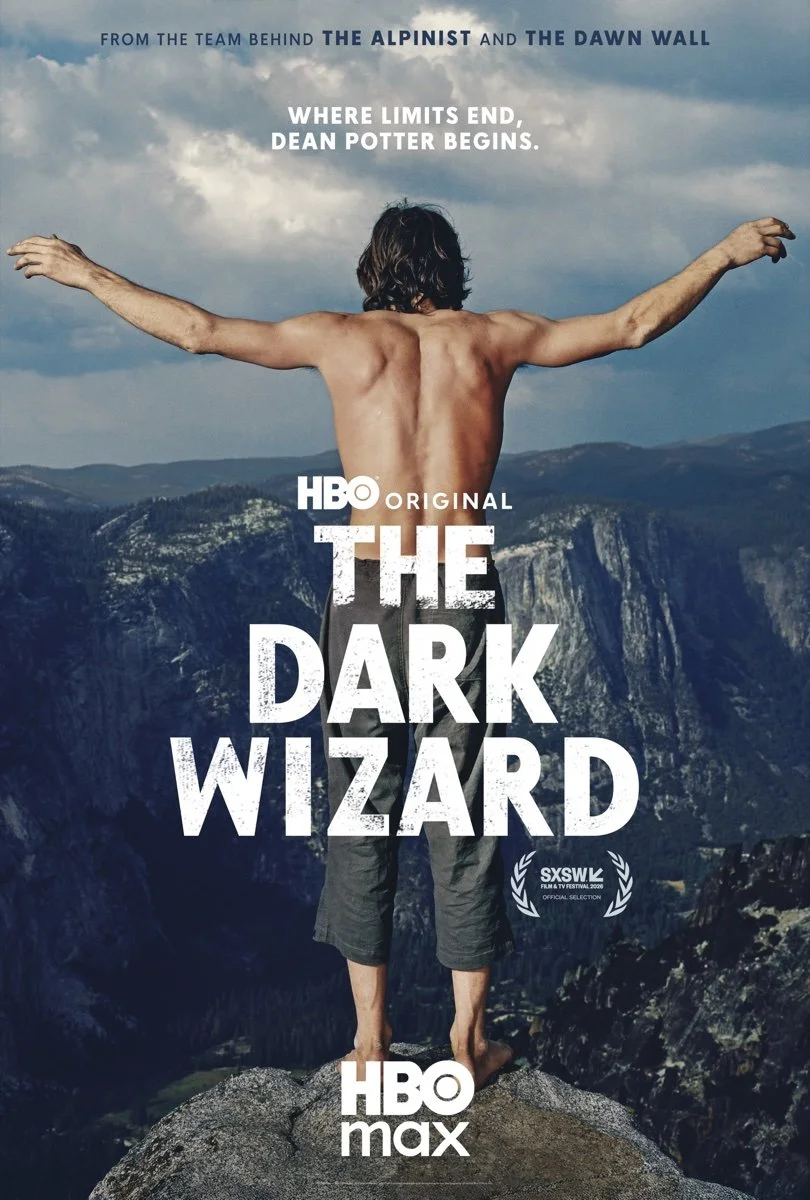
The Dark Wizard. Official artwork: Sender Films / HBO.
The Dark Wizard: let an extraordinary person stay complicated
The Dark Wizard is a four-part documentary series from Sender Films, directed by Peter Mortimer and Nick Rosen. It follows Dean Potter, whose climbing, highlining and BASE jumping made him an influential and controversial figure in outdoor sport.
Its place in this group matters because the emotional territory is very different from a sunny travel film. A portrait of someone operating at those extremes asks us to look beyond the achievement and consider the person living inside it.
Admiration alone has a limited range. If every scene exists to demonstrate how impressive someone is, we understand the message quickly. Curiosity lasts longer when a film allows questions, disagreement and uncertainty to remain in the frame. A person becomes harder to summarize, and more worth understanding.
In their Alpinist interview, Mortimer and Rosen describe the importance of Potter’s journals, shared by his sister, alongside the other material used to tell his story. That combination interests me as a filmmaker. An athletic image shows what someone does. Personal writing can offer a different kind of access, while friends and family bring their own perspectives.
Those sources have different jobs. Archive footage can bring us close to a moment. An interview can help us understand how someone experienced it. A journal can reveal the language a person used for themselves. Editing them together creates a conversation across time.
It also creates responsibility. A filmmaker is deciding which voice follows which image, where a pause sits, and how much certainty the audience is encouraged to feel. Those decisions shape our understanding of a real life. I think a strong documentary keeps that responsibility visible in the care of its choices.
Giving a real person enough room
For me, the useful lesson reaches far beyond extreme sport. In an athlete portrait, a founder film or a community documentary, a person deserves more space than a list of admirable traits. Their hesitation, humor and changing perspective can be as revealing as their most polished answer.
That does require judgment. Complexity is different from manufacturing drama. A difficult question should serve understanding. A sensitive moment should earn its place through relevance and care. The camera gives access to people, and that access comes with a duty to treat them with care throughout the edit.
I would also separate emotional stakes from physical danger. A film can matter deeply without asking anyone to take a bigger risk for a shot. A meaningful conversation, a difficult choice or a change in a relationship can carry enormous weight. The story should follow the life, with safety and consent shaping how it is filmed.
The Dark Wizard gives this discussion a much more demanding example than a conventional highlight reel. The question becomes what it takes to portray someone whose achievements, relationships and internal struggles resist a neat explanation.
That resistance is valuable. I want to make films that leave room for a viewer to think, rather than delivering a perfectly packaged verdict on another person. Sometimes the most honest ending is one that preserves the difficulty of the question.
The Endless Summer: curiosity can carry the whole film
Bruce Brown built The Endless Summer around a wonderfully clear premise: follow surfers Robert August and Mike Hynson as they travel in search of waves. You can explain the invitation in a sentence. You can also immediately imagine wanting to join them.
It can be tempting to add another theme or more backstory until an idea feels important enough. This film reminds me how much a clear invitation can do. The promise of going somewhere with curious people gives us a reason to follow along, and the encounters along the way keep that promise interesting.
My connection to Robert August gives that feeling a personal layer. Back in Costa Rica, the person I saw in the water still had the enthusiasm that made the film feel alive to me. I have written before that watching it brings back awe, excitement and curiosity. Those are lovely feelings for a film to leave behind.
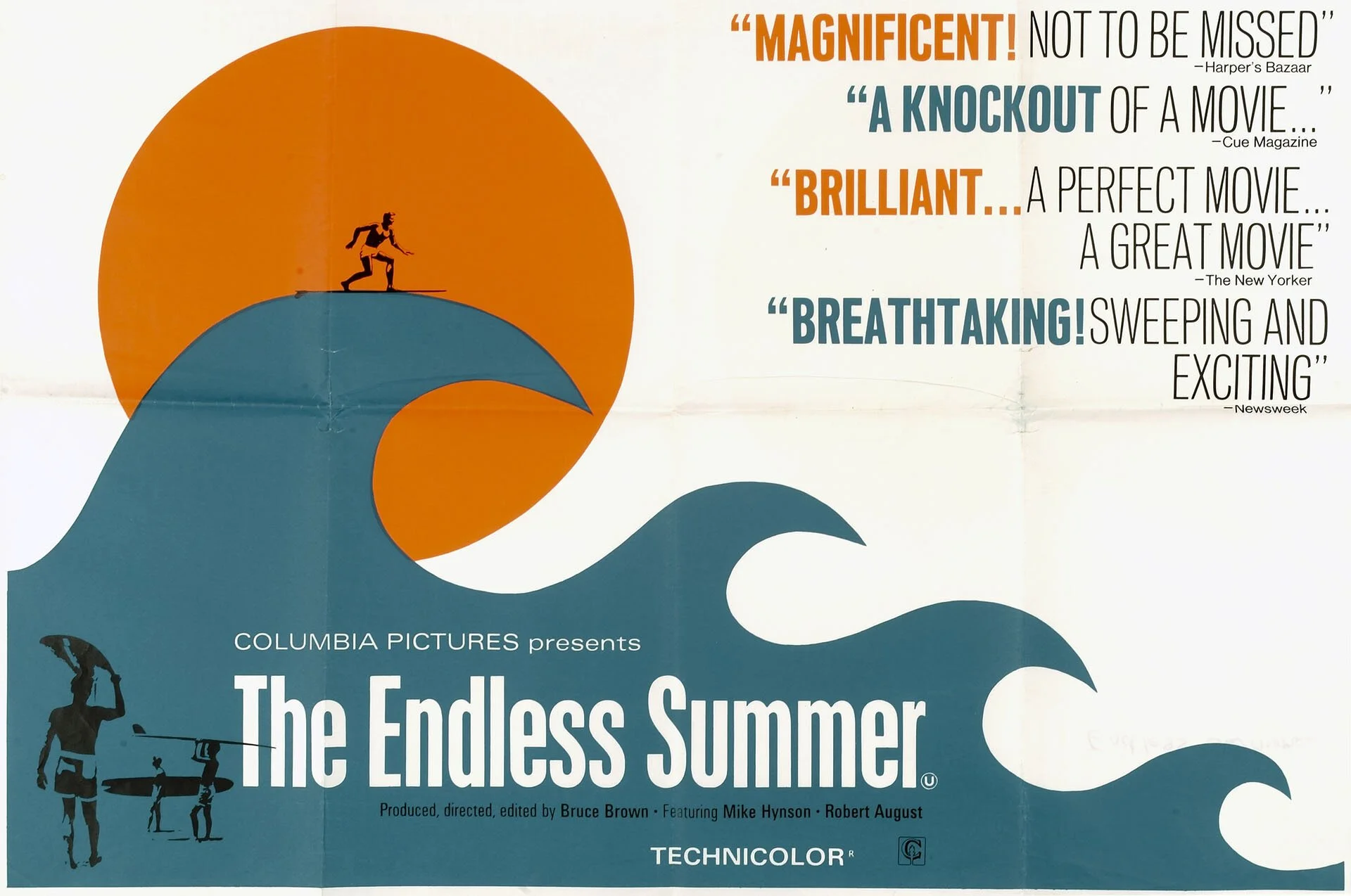
The Endless Summer. Official artwork: Bruce Brown Films. Select the image for the film page.
Those feelings are accessible. A viewer can understand the pleasure of searching for something with friends without understanding surfing technique. The sport is specific, while the desire underneath it is familiar.
Brown’s presence as a narrator is part of that invitation. There is a person guiding the experience, with a recognizable sense of humor and a way of looking at the world. The voice gives the travel a social feeling, as though someone is sharing an adventure with you.
For my own thinking, the lesson is to let a film have a personality. A clear point of view can make a project easier to connect with than a collection of technically impressive images. We feel who is showing us this world and why they wanted to bring us.
The search also gives the film a natural flow. Anticipation makes an arrival meaningful. Travel gives the surfing context. A detour or an encounter can become part of the pleasure rather than an interruption to the main event. The experience has room for something beyond a succession of perfect waves.
That is relevant to the way I think of the Goat Surf Club. I am drawn to surf adventures that include the people and coastal communities around them. The wave can start the conversation. A place contains many more stories once you spend time with the people who live there.
There is an important consideration when learning from an older travel film, too. The visitor’s view is only one perspective. If I carry that spirit of curiosity into a project today, I want local people to have room to explain their own lives. A community is a place with its own relationships and knowledge, even before a visiting filmmaker arrives.
That feels like a useful way to love a film and continue learning from it. Take the invitation, the humor and the appetite for discovery. Keep asking how to make the next story more attentive to everyone involved.
The Endless Summer makes me want to create experiences with friends and bring a camera along. That is a pretty strong result for a film. Years later, the invitation still feels open.
What these three stories give me beyond outdoor filmmaking
Putting these documentaries beside each other helps me separate a subject from a story. Surfing or climbing tells me what I might see. A journey, a complicated person or a shared search tells me how the experience might unfold.
Each one offers a different way to build a film. With 180° South, I would study how a clear destination can support a widening perspective. With The Dark Wizard, I would study how different sources can deepen a portrait. With The Endless Summer, I would study how a simple premise and a personable voice can sustain curiosity.
If I were developing a new documentary, I would begin with the person and their actual situation. Understanding what they want to do and who else belongs in their story would help me decide where to spend time. The details that emerge could then shape the film’s length and visual approach. I want those decisions to respond to the people rather than force them into a structure chosen too early.
Then I would make room for pleasure. A meaningful film can still be funny, playful or full of ordinary moments. I love outdoor stories partly because they remind me that life can contain effort and joy in the same afternoon. The small details help us feel that combination.
There is a practical editing exercise in all of this, too. Describe the story without naming the sport. If the description still contains a person, a desire and a reason to care, there is probably something worth exploring. Then bring the sport back in with all its texture, specificity and movement.
That is where the camera becomes exciting to me. It can show the gesture, the place and the relationship that a summary will always miss.
These three documentaries leave me wanting to get outside, pay closer attention and make work with a little more curiosity. I think that is why they belong together on my list, even though they feel so different.
If you have a film that gives you that same urge to call a friend and make a plan, send it my way. I am always happy to add another one to the list!
Why We Should Work Together…
When I’m not on this website rambling on about filmmaking, I’m actually out there making films. From crafting memorable branded documentaries to directing and producing , I’ve got you covered. Need a filmmaker who can scale mountains or producer/director who can bring your $100k campaign to life? Let’s chat!
Let’s Connect
Roo is an Emmy nominated commercial/documentary filmmaker and photographer based in Boulder, Colorado but travels all around the world for his filmmaking career. He has directed documentaries for Patagonia in California, produced films for Outside Magazine throughout Europe and Africa, camera operated for Netflix in the Rocky Mountain West, photographed among indigenous communities in South America, and has received notable recognition in the outdoor industry for his work telling uplifting stories in the outdoor space.