
To make a complicated company easy to understand on video, give the audience a clear path through the story: the problem someone faces, the work your team is doing, and the people making it happen. Then choose the technical details that help that particular viewer follow the path.
I’m Roo Smith, a documentary and commercial filmmaker based in Boulder, Colorado. I’m drawn to companies where interesting work is happening behind language that takes a little unpacking. There is usually a much more approachable story inside the slide deck.
Here’s the process I’d use to find it, whether your team works in robotics, biotech, AI, advanced manufacturing, medtech, energy, aerospace, or another part of B2B technology.
Decide what the viewer needs to understand
A company film becomes difficult to follow when it tries to answer every possible question at once. Before we plan a shoot, I’d want to know who will watch and what they should understand when the video ends.
A prospective customer may need to see how a product fits into a workflow. A potential employee may want to understand the people and problems they would work with. A partner may need an introduction to the company’s capabilities and a reason to continue the conversation.
That choice helps us set a useful level of detail. A technical audience may appreciate a precise explanation of one process. A broader audience may first need to understand why the process exists.
Write the useful takeaway in one sentence
I’d ask your team to finish this sentence: after watching, this person should understand how we help them do what? The answer becomes a reference point for the treatment, interviews, and edit.
For a hypothetical robotics film, the takeaway might describe how an operator uses the product during a normal day. For a biotech team, it might explain one stage of the research process and the people responsible for it. For a B2B software company, it could be a task moving through the product.
Choose the next conversation
The film also needs a destination beyond the final frame. Should someone request a demo, explore a service, meet the team, or arrive at an introductory call with better questions?
I’d use that next step to keep the scope focused. A clear introduction can be a successful film even when the full technical discussion belongs in a later conversation.
See my documentary and commercial work
Give the story three connected layers
I find it useful to think through the human problem, the practical work, and the people behind it. Each layer answers a different question, and together they help the company feel understandable.
The human problem
Start with the situation that creates a need for the work. Who encounters it? What makes it difficult? What is someone trying to accomplish? A viewer can often connect with that situation before learning the technical vocabulary.
I’d look for a scene that makes the problem visible. That could be a person preparing a task, explaining a constraint, or demonstrating an existing process. The scene gives the explanation something concrete to refer to.
The work itself
Next, show what the company actually does. A product demonstration, a lab sequence, a screen recording, or a carefully planned graphic can help the audience understand a mechanism or workflow.
The right format depends on access and the idea. A physical object may be best explained in someone’s hands. A software process may need a screen capture and a user’s voice. A hidden process may benefit from animation alongside real footage.
The people making it happen
Finally, let the viewer meet the people responsible for the work. A scientist explaining a decision, an engineer testing a component, or a customer describing a practical experience can make an abstract company feel specific.
I want those people to sound like themselves. My job is to create a comfortable conversation, ask useful follow-ups, and help the edit preserve the details that make their perspective interesting.
Use the camera to answer questions
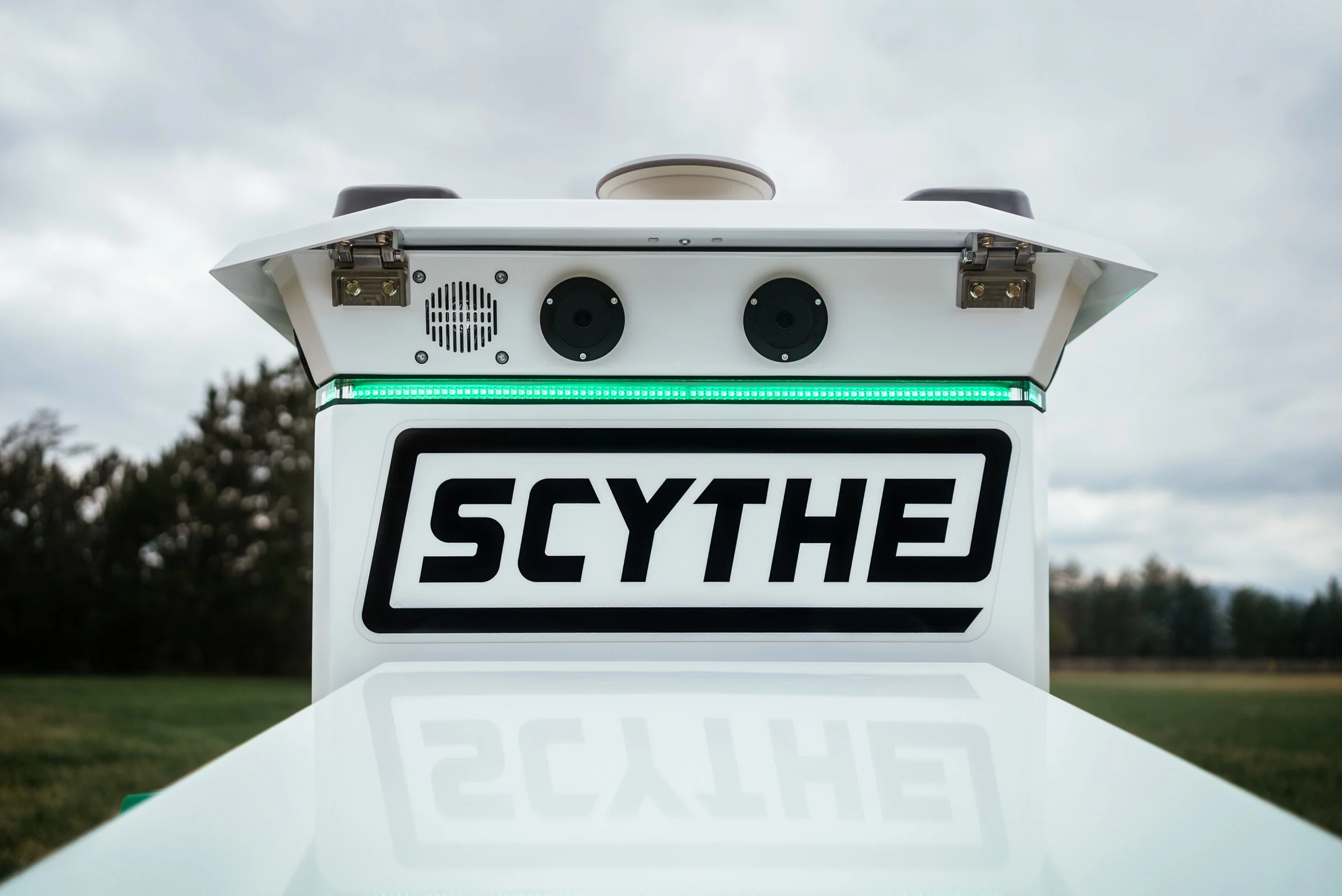
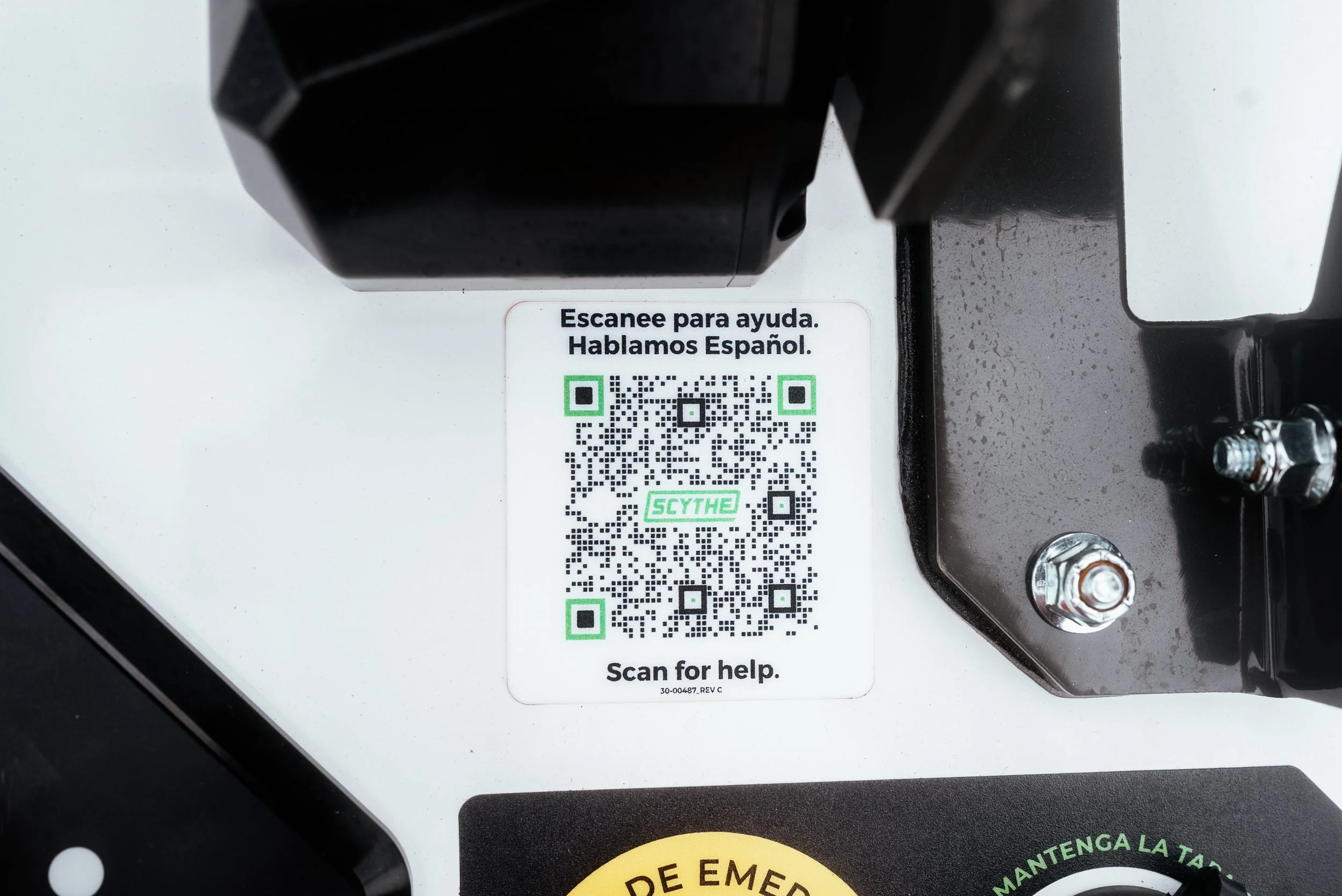
During my photo and video campaign for Scythe Robotics, the coverage included the product in action, people interacting with it, and close details of the design. That combination helped the company show different sides of its work.
The focused six-hour shoot produced three videos and seventy-five photographs for a website rebrand and advertising campaign. The marketing manager helped coordinate the production, with robots, participants, and support provided by the team.
A wide shot can establish scale and setting. A person using the product can show the relationship between the technology and its user. A close-up can make a detail easier to understand. Those are storytelling decisions as much as visual ones.
The Scythe Robotics case study shows how that approach became a useful collection of photo and video assets.
Interview for examples people can picture
Before the shoot, I’d talk with the people closest to the work. I want to learn which questions keep coming up, what outsiders tend to miss, and where an explanation becomes easier with an example.
During an interview, I might ask someone to walk me through a recent task or show me a part they helped design. If an answer becomes abstract, a follow-up can bring it back to a specific decision or moment.
Translate with the expert in the room
Plain language should preserve the meaning. I’d ask your subject experts to help choose accurate comparisons, explain essential terms, and flag places where a simpler phrase changes the claim.
That collaboration matters for technical industries. A medtech team may need careful distinctions between a demonstration and a real use case. An AI company may need to explain the role of the system and the person using it. Your reviewers can guide those distinctions.
Turn a complex idea into a film
Plan for the parts we can actually film
Some of the most useful scenes require preparation. A prototype may need an operator. A manufacturing sequence may happen at a particular time. A lab may have approved areas, supervision requirements, or equipment that affects where the camera can go.
I’d work with your team to map those constraints before the shoot. For sensitive projects, we would identify the spaces, screens, products, and conversations approved for filming. That lets the crew move confidently within the agreed scope.
Build a visual plan with alternatives
If a process is unavailable on the day, what else can show the idea clearly? We might prepare a demonstration, film approved components, or use an animation developed with your experts. Planning those options protects the story.
The same attention applies to sound. A busy facility may be a great place for observational footage and a difficult place for a long interview. I’d choose an interview location that gives us usable audio while keeping the visual connection to the company.
Shape the edit around understanding
In the edit, I’d look at how each sentence and image builds on the one before it. Does the viewer know what they are seeing? Have we introduced a term before relying on it? Does a graphic stay on screen long enough to read?
A rough cut is a useful place to test that sequence with someone who resembles the intended audience. Ask them to explain the company back in their own words. Their response can reveal where the film needs more context or a clearer transition.
Your technical and brand reviewers should have defined review points, with one person collecting feedback into a usable set of notes. That helps the final cut stay coherent while incorporating the expertise your team brings.
Create a useful set of deliverables
One production can support several communication needs when those needs are planned early. A main company film could be accompanied by a product sequence, a short interview clip, still photographs, and versions for specific channels.
I’d define the priority assets first, then scope the crew, shoot days, graphics, and editing around them. My branded documentary pricing guide gives a useful starting point for how those choices affect the investment.
Explore video production budgets
Let the interesting work come through
You already have people solving problems, making decisions, and building something. I can help find the story inside that work and shape it into a film with a clear purpose and a human point of view.
My services can include creative development, production planning, directing, cinematography, interviews, editing, and photography. If your company takes a little explaining, send me the challenge and the audience you want to reach. We can make something meaningful that helps the next person understand.
Let’s Connect!

If you’re looking for creative partner to lead a story-driven campaign from start to finish, I’m here to help you create work that actually moves people.
My goal isn’t just to make beautiful content, it’s to make something that you feel good about, the audience feels great about and everybody leaves the process full of joy.
Fill out the form and tell me a bit about your vision.
I personally read every inquiry and usually respond within 24 - 48 hours.
This isn’t just a contact form - it’s the start of making something meaningful together :)