
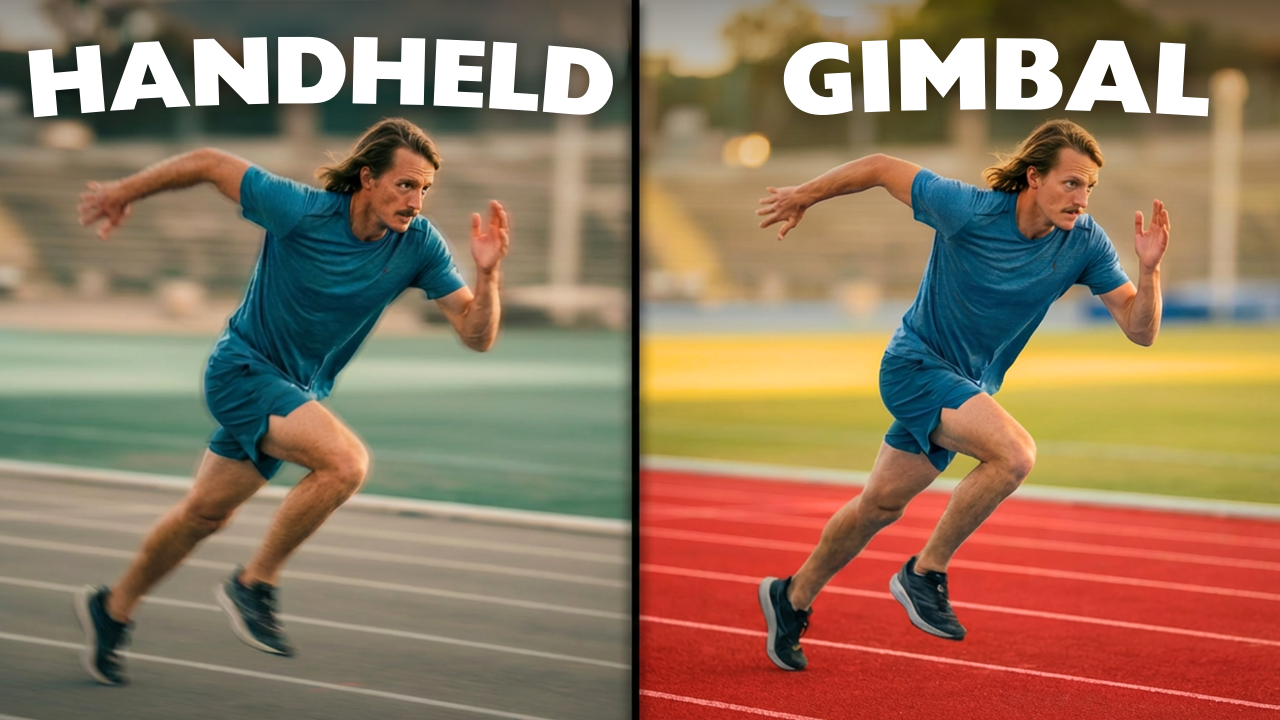
If you’ve ever tried filming someone running while you’re also running, you already know the truth: this is where things fall apart.
Shots get shaky. Your framing drifts. Your breathing gets loud. The footage feels chaotic instead of cinematic. And suddenly you’re wondering if you actually know how to film running at all.
This episode is about fixing that.
In Episode 3 of the How to Film Running Masterclass, I break down how I approach filming running with both a gimbal and a handheld setup. Not from a gear-flex perspective, but from a feel perspective. Because smooth isn’t always better and raw and gritty isn’t always right. What matters is choosing the right movement for the moment.
This blog post expands on the episode so you can slow it down, revisit the ideas, and apply them intentionally the next time you’re out filming.
Why Movement Matters When Filming Running

Running is dynamic by nature. Every step creates motion. Every breath shifts posture. If your camera movement fights that energy, the footage feels disconnected.
A lot of filmmakers assume the goal is to eliminate movement. To make everything perfectly smooth. But when you do that without intention, running footage starts to feel artificial. Like it’s floating instead of moving.
The real goal is alignment.
Sometimes that means smooth, controlled motion that lets the runner breathe inside the frame. Other times it means embracing a bit of chaos so the viewer feels like they’re right there with them. This episode is about learning how to make that call, shot by shot.
Part 1: Filming Running with a Gimbal
Gimbals are powerful tools, especially for running. They allow you to move with your subject while maintaining control and polish. But they’re also easy to misuse.
I use a gimbal when I want shots that feel intentional, cinematic, and calm. Shots where the camera movement supports the runner instead of competing with them.
Gimbal Gear and Setup
I keep my gimbal setup lightweight and flexible. The goal is fast balance, minimal fatigue, and reliable performance in the field.
I typically run a compact gimbal paired with a lightweight camera body and a versatile lens. The lighter the setup, the longer you can stay sharp.
A few setup principles that matter more than brand names:
Balance the camera properly. Take the extra minute. It saves your arms and your motors.
Choose the lightest lens that still tells the story.
Decide early whether you’re using autofocus or manual focus so you’re not fighting the system mid-shot.
When filming running, simplicity wins every time.
Best Use Cases for a Gimbal
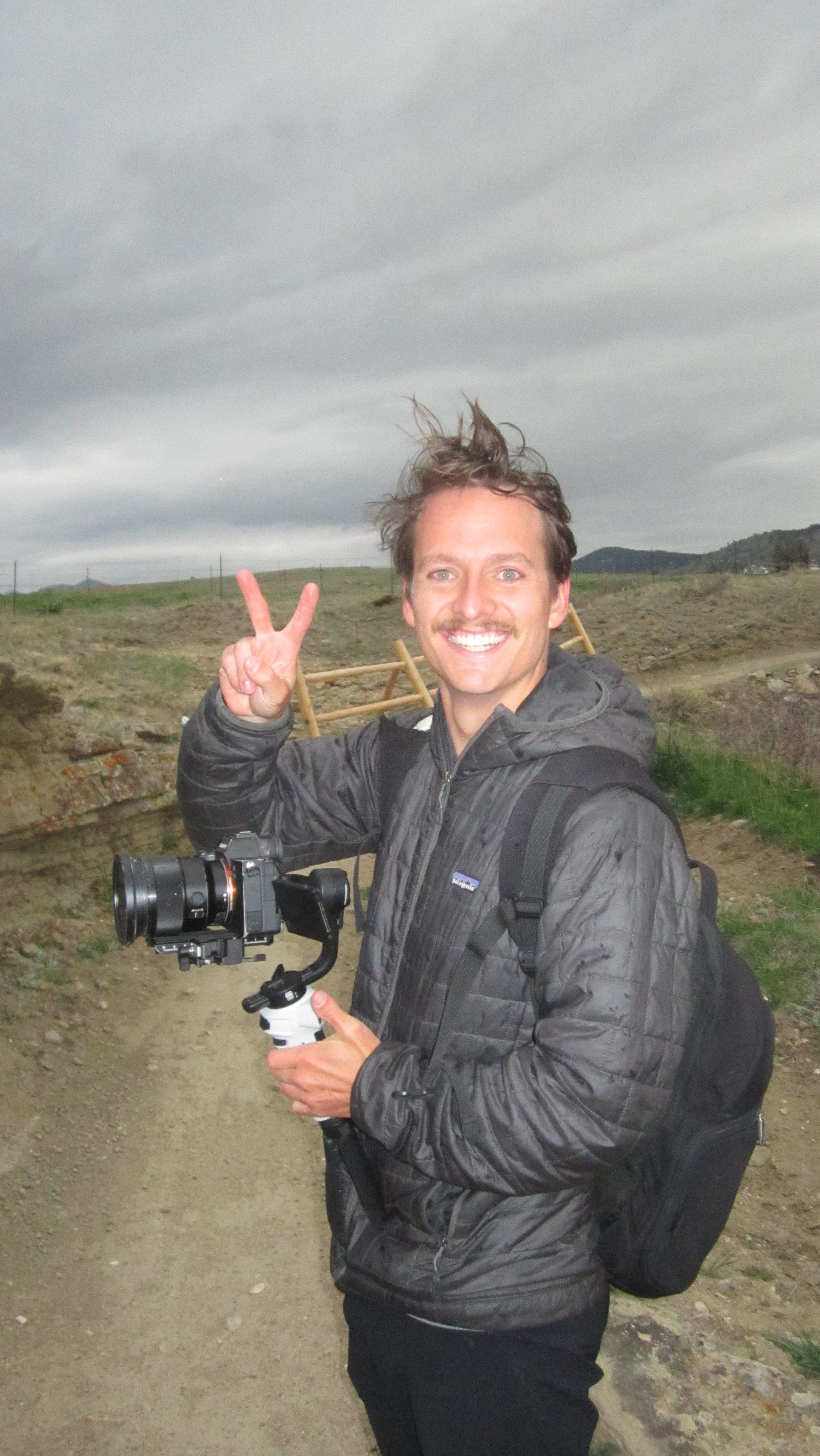
Gimbals shine when you want movement that feels smooth and deliberate.
Some of my favorite scenarios include:
Side-profile tracking shots where the runner holds position in frame
Front-facing shots while walking backward at a controlled pace
Following runners through bends or turns, where the background motion adds energy
Moving through dynamic light, like forest shadows or open sun breaks
These shots work because the gimbal absorbs micro-movements and lets the runner’s motion become the star. The key is pacing. If you move too fast, the footage feels rushed. If you move too slow, it feels disconnected.
Start slow. Match the runner’s rhythm. Let the movement settle.
How to Move with a Gimbal
Your body is the first stabilizer. The gimbal is just helping.
When I’m filming with a gimbal, I’m thinking about how I move more than how the camera moves.
A few fundamentals that make a massive difference:
Keep your elbows tucked in close to your body
Bend your knees slightly and stay loose
Walk heel-to-toe, not flat-footed
Keep your hips steady and your upper body relaxed
I also film in short bursts. Ten to twenty seconds at a time is usually plenty. Long takes sound nice in theory, but they fatigue your arms and introduce mistakes.
One mental shift that helps: think like a dolly operator, not a runner. You’re not reacting. You’re flowing.
Yes, You Can Run with a Gimbal
There are moments when walking just doesn’t cut it. The runner accelerates. The energy spikes. And you need to move faster.
Running with a gimbal is possible, but it requires a different mindset.
First, accept that you’re not trying to be an athlete. You’re trying to be smooth.
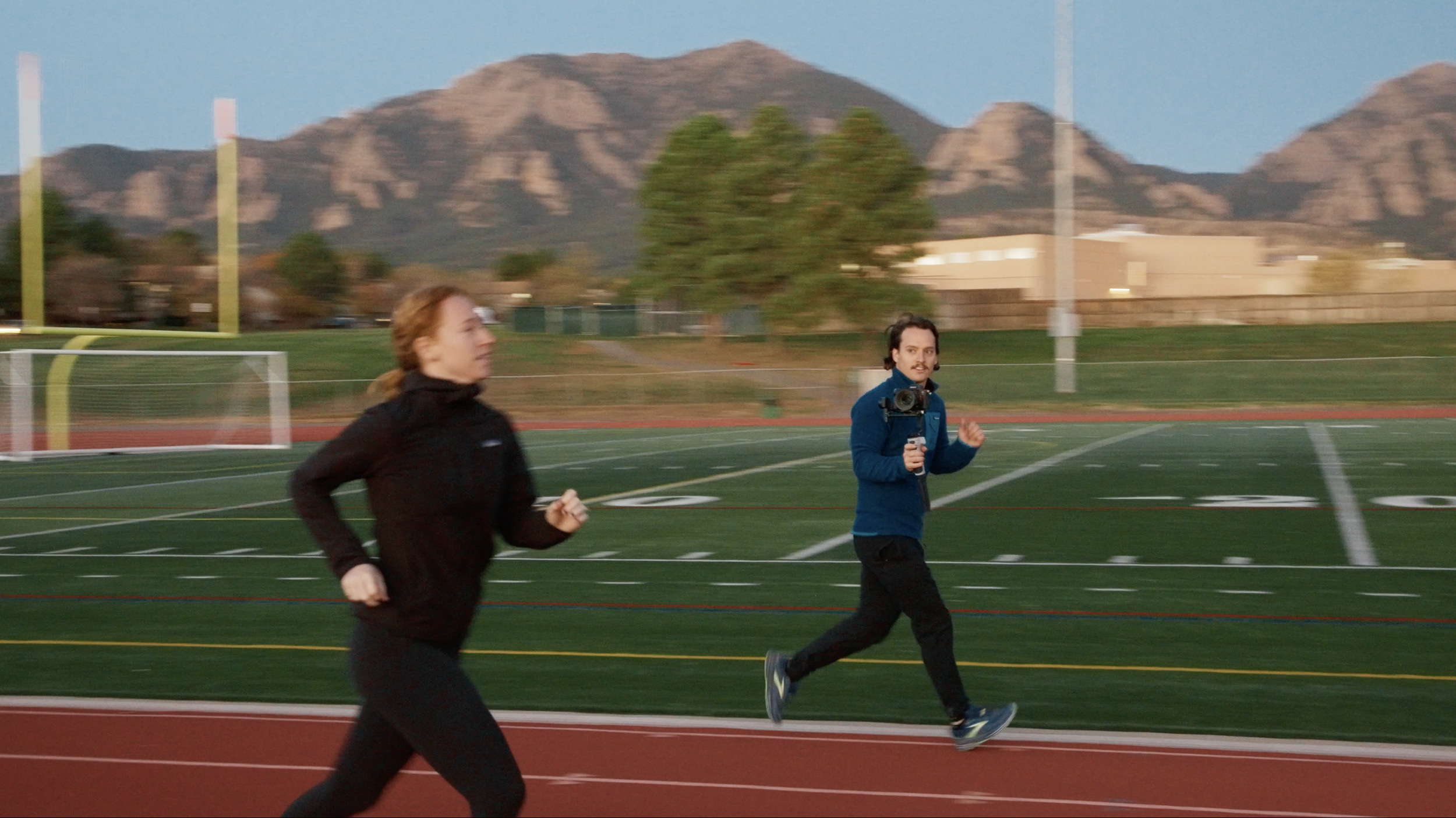
A few techniques that consistently help:
Shoot wider focal lengths to mask micro-bounce
Use pan-follow modes instead of lock modes so the camera reacts naturally
Bend your knees more than you think you need to
Hold the gimbal close to your chest or low in front of you for control
Keep takes very short, often three to ten seconds
Match the runner’s pace instead of sprinting past them
If the terrain is too rough, don’t force it. Run alongside the trail. Shoot from a parallel path. Get creative with angles. You don’t need to destroy your knees to get a cinematic shot.
When Not to Use a Gimbal
Gimbals are not the answer to every problem.
There are plenty of moments where they slow you down or work against the feeling you’re trying to create.
I usually skip the gimbal when:
The trail is steep or highly technical
The day is long and weight matters
The action is fast and unpredictable
The moment should feel raw or emotional
Setup time would cost me the shot
That’s when handheld filming takes over.
Part 2: Filming Running Handheld
Handheld footage gets a bad reputation because most people do it wrong.
Handheld doesn’t mean careless. It means intentional movement, controlled energy, and proximity.
When done well, handheld running footage feels human. It feels reactive. It puts the viewer inside the experience instead of observing it from a distance.
Handheld Technique That Actually Works
You don’t need a gimbal to get usable, even smooth footage. You just need to change how you move.
A few fundamentals I rely on constantly:
Shoot wider focal lengths to reduce visible shake
Use in-body stabilization and lens stabilization together
Keep a firm two-hand grip
Tuck your elbows into your ribs
Let your knees act as shock absorbers
Match the runner’s pace instead of fighting it

I also use foreground elements intentionally. Trees, branches, runners passing close to frame. These help mask micro-movements and add depth.
It might look awkward when someone films you doing it. It works anyway.
When Handheld Is the Better Choice
Handheld shines when you want immediacy.
I reach for handheld setups when I’m filming:
Spur-of-the-moment shots
Lifestyle-heavy running content
Faster pace or erratic movement
Tight trails or dense forests
Long days where energy conservation matters
A little bounce isn’t always a flaw. Sometimes it’s the point. It reminds the viewer that there’s a person behind the camera, moving through the same space.
The Hybrid Approach: Using Both
Most of my running shoots use both gimbal and handheld setups.
Gimbal for hero moments. Handheld for transitions and texture.
The mistake is getting precious about one tool. Don’t lock yourself into a single approach. Let the story decide.
If a moment needs polish, stabilize it. If it needs urgency, stay loose. The best running films blend both, often without the audience consciously noticing the shift.
When you compare the same scene filmed both ways, the difference usually comes down to tone. One feels composed. The other feels alive. Both are valid.
The Bigger Idea Behind This Episode
This episode isn’t meant to choose sides but rather listen to what’s best for a certain occasion.
Listen to the terrain. Listen to the runner. Listen to the energy of the moment.
Sometimes perfection kills the feeling. Sometimes chaos ruins clarity. Your job is to find the balance.
Filming running is hard because it demands that you move, think, and feel at the same time. Gimbals and handheld setups are just tools. What matters is how intentionally you use them.

Why We Should Work Together…
When I’m not on this website rambling on about filmmaking, I’m actually out there making films. From crafting memorable branded documentaries to capturing stories and products that move people, I’ve got you covered. Need a filmmaker who can scale mountains, brave the surf, or just tell a dang good story? Let’s chat!
In case I haven’t convinced you, here are three reasons why it might be fun to work together…
I believe in stories that stick with you - like campfire smoke on your clothes. The kind that makes you laugh, cry, or immediately want to call your mom.
I’m just as comfortable at 14,000ft as I am in front of a timeline. You get me in the mountains, in the ocean and in the editing room, making sure the magic out there really shines in the final cut.
I’ve filmed in some pretty wild places, but the best stories are the ones that bring people together. It’s those shared moments -big or small - that remind me why I love what I do.

Let’s Connect
Roo is an Emmy nominated commercial/documentary filmmaker and photographer based in Boulder, Colorado but travels all around the world for his filmmaking career. He has directed documentaries for Patagonia in California, produced films for Outside Magazine throughout Europe and Africa, camera operated for Netflix in the Rocky Mountain West, photographed among indigenous communities in South America, and has received notable recognition and awards in the outdoor industry for his work telling uplifting stories in the outdoor space.