
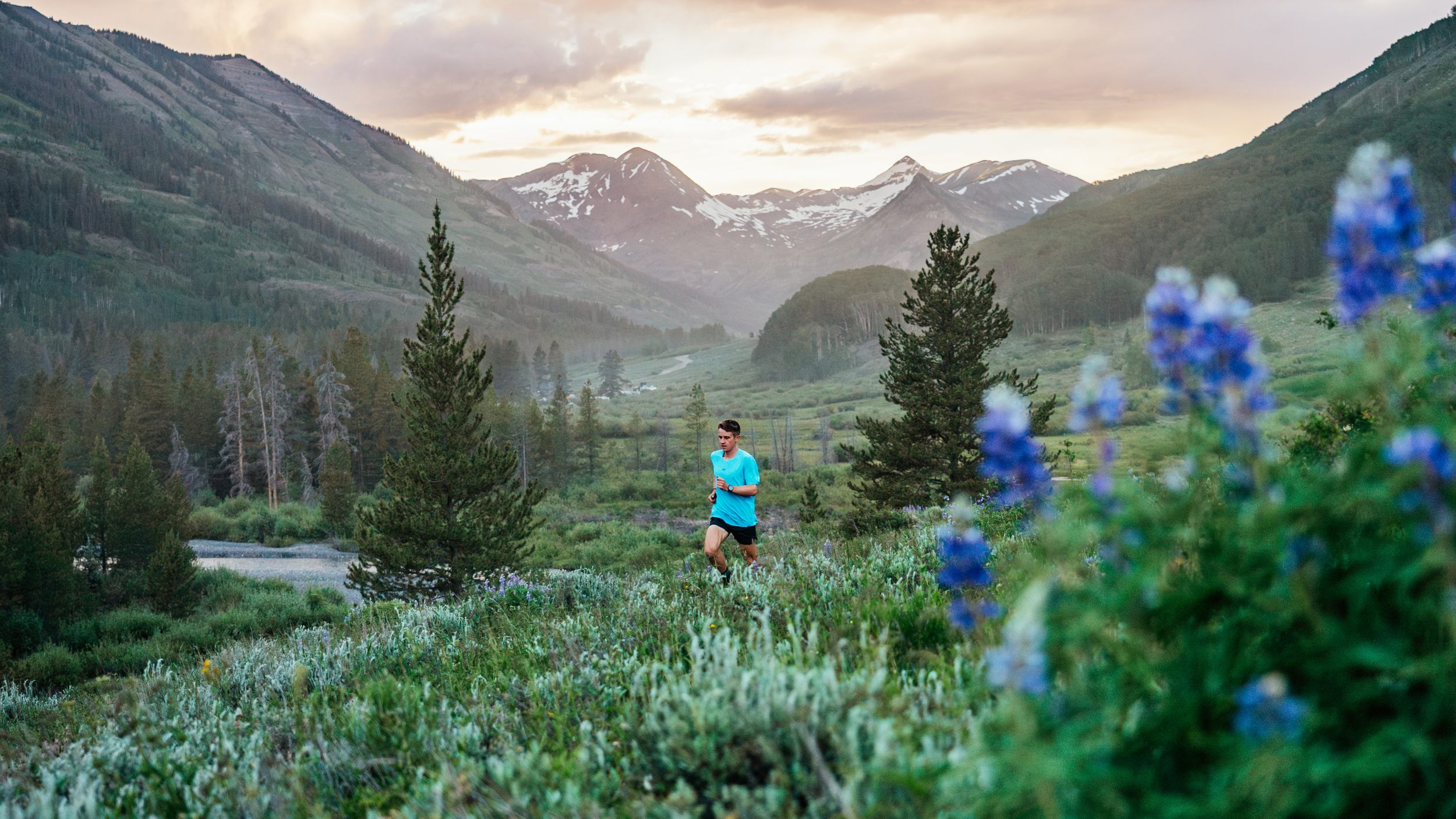
The goal for this shoot was to make a short athlete profile that felt like Taylor Stack.
That meant the film couldn’t rely only a bunch of race footage, dramatic music, heavy pacing, or the usual high intensity language that shows up in many elite running edits. Taylor is one of the best mountain runners in the world, but the piece needed to show the full person behind that level of performance. He lives in Crested Butte, Colorado. He runs through high alpine terrain. He works in conservation biology. He fly fishes in small mountain streams. His life is connected to ridgelines, rivers, trails, and the slower rhythm of a mountain town.
As a Colorado running filmmaker, I wanted the film to hold all of those pieces at once. It needed to show that Taylor is elite, while still feeling peaceful, grounded, and human. The central challenge was finding a short story that could fit inside a video under sixty seconds while still giving the audience a sense of place, personality, and purpose.
That meant the production had to be intentional from the start. Every shot needed to serve a feeling. Every interview line needed to move the story forward. Every frame had to connect Taylor’s running with the land he trains on, the rivers he studies, and the life he has built in Crested Butte.
Starting With the Feeling
Before filming, I knew this story shouldn’t feel like a hype piece. Taylor’s running career gives us the stakes. His results show his talent. In his 2025 season, he earned podiums and finished fourth in the overall series, which places him among the top athletes in the sport. Still, the most interesting part of the film wasn’t only what he has achieved. It was the way his running, work, and hobbies all seemed to come from the same source: exploration.
That became the core of the video.
Taylor said it best in the interview: “Exploration is kind of the the main driver for me.”
That line became a hinge for the whole edit. Running was exploration. Fly fishing was exploration. Conservation biology was a way to protect the places that give him that sense of exploration. Once that theme became clear, the film started to take shape.
For a short athlete profile, I like to build a simple narrative spine. The viewer needs to understand where we are, who the athlete is, why their world matters, and what emotional idea ties everything together. In this case, the spine looked like this:
Taylor lives in one of the most beautiful mountain towns in Colorado.
This place shapes the way he trains and moves.
He is competing at an elite level, but his life is rooted in more than racing.
His work in conservation biology and his love for fly fishing connect him to the same landscapes he runs through.
For Taylor, running is both a challenge and a way to experience joy.
That structure gave us a film that felt calm, but still purposeful.
Filming Crested Butte as a Character
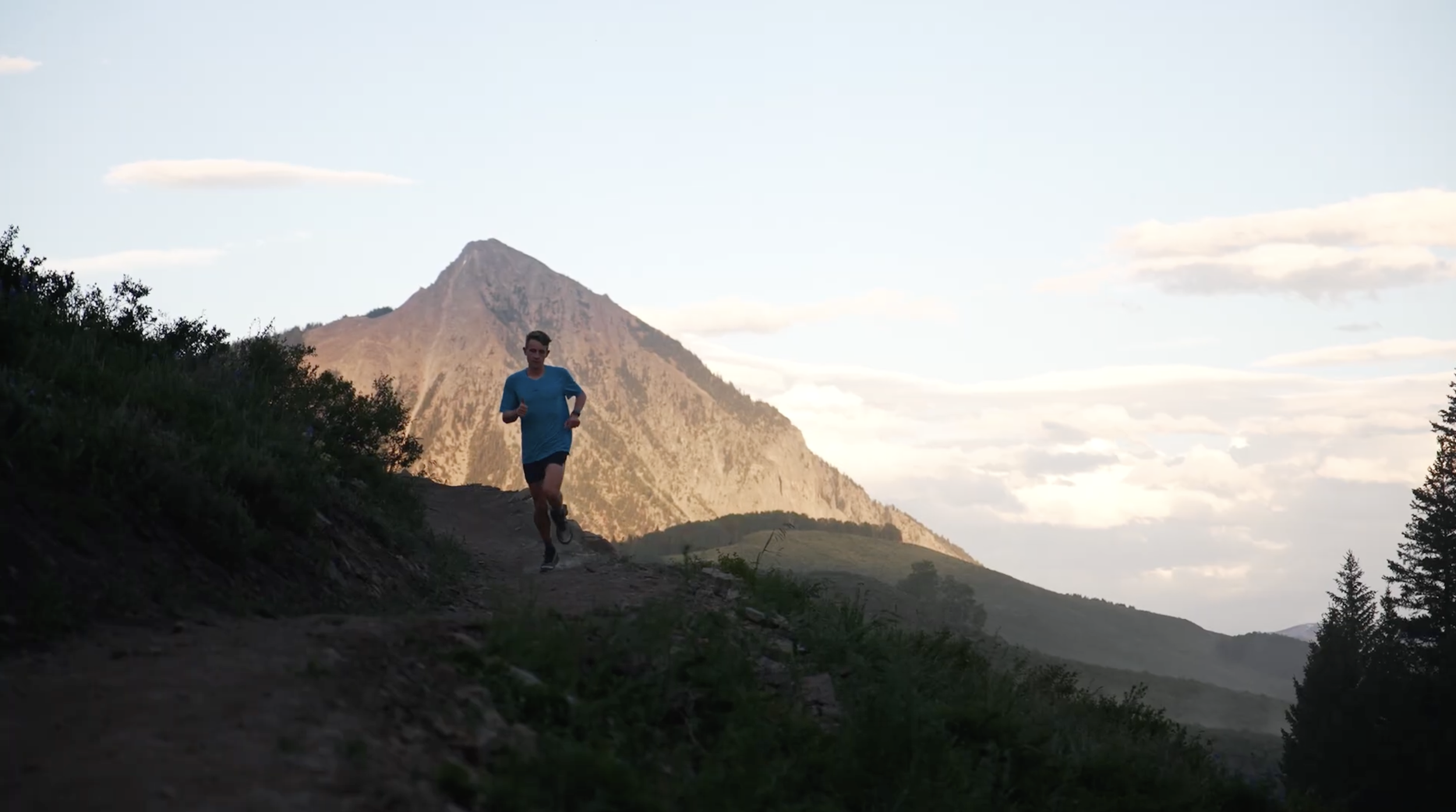
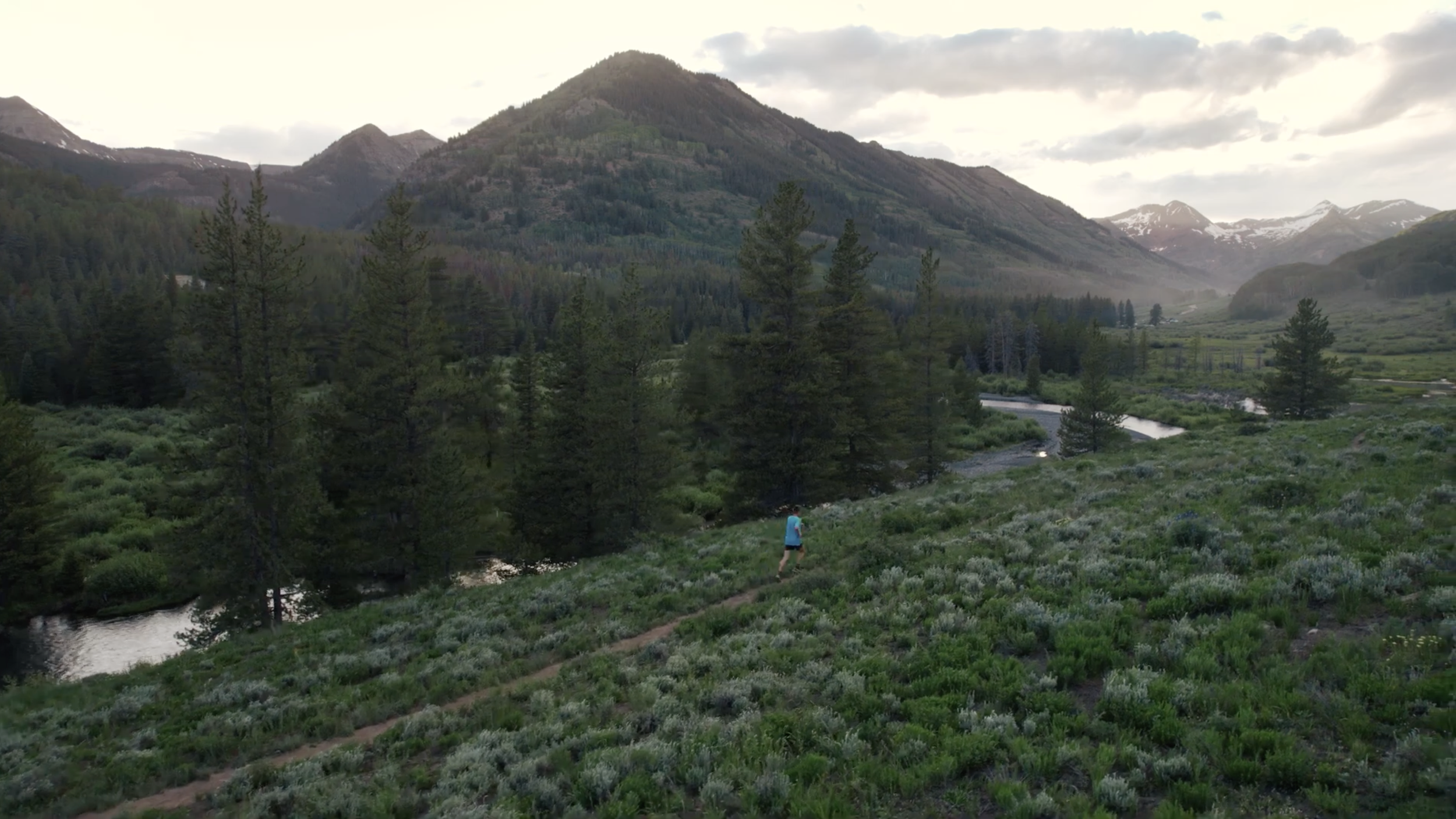
Taylor Stack running in front of Mt. Crested Butte
Crested Butte couldn’t be treated like generic scenery. It had to feel like a character in the story.
Taylor’s first line helped set that up: “I live in Crested Butte, Colorado, and it's just one of the most beautiful places in the world to me.”
Once an athlete says a place is that meaningful, the visuals have to prove it. I wanted the viewer to feel the openness of the valley, the texture of the trails, the calm of the water, and the way the mountains sit right above daily life. The location needed to explain Taylor without needing extra exposition.
For the landscape footage, I focused on big, expansive frames. Wide shots of the valley. Mountain layers. Small town edges. Roads leading toward trailheads, water moving through grass and rock. These weren’t filler shots. They were part of the story language.
This is where outdoor filmmaking and running filmmaking overlap. You aren’t only filming movement. You are filming why that movement matters in that place. A runner on a trail can look impressive anywhere, but when the trail feels tied to the athlete’s identity, the image carries more weight.
The visual goal was to make Crested Butte feel peaceful, but not passive. This is a rugged place. The trails climb. The weather changes. The altitude matters. It is beautiful, but it also asks something from you. That balance matched Taylor’s own words later in the interview, when he described running as a sport of both discomfort and joy.
Capturing Running Without Making It Feel Forced
Running footage can easily become repetitive. A few wide shots, a few closeups of shoes, a few slow motion passes, and suddenly every athlete profile starts to feel the same. For this film, I wanted the running to feel less staged and more like an extension of Taylor’s daily life.
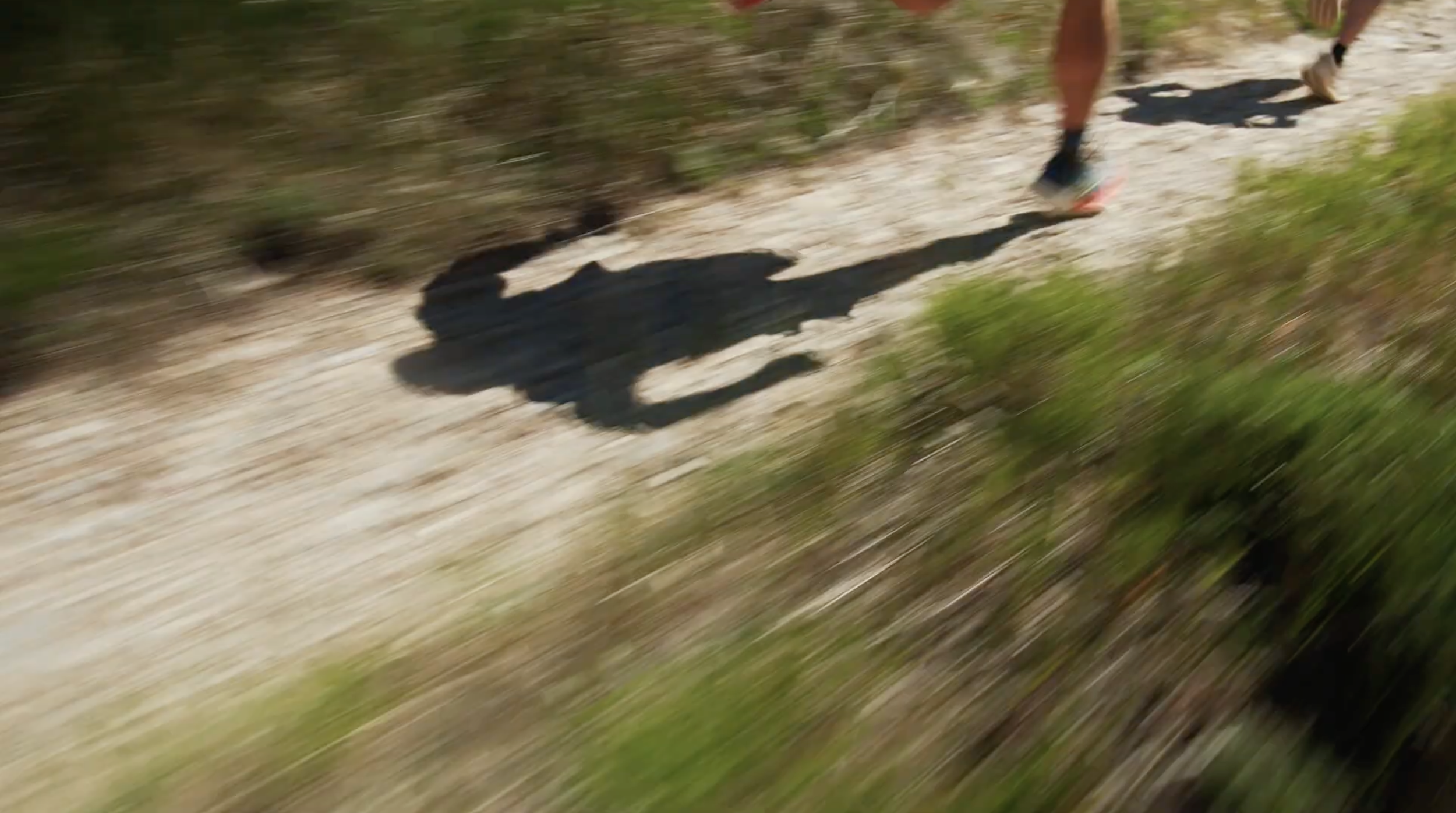
That meant filming movement in a way that felt natural to the terrain. I used a mix of wide frames, longer lens compression, and handheld movement. The wide frames gave the viewer scale. The longer lens shots made Taylor feel fast and precise in the landscape. The handheld pieces gave the edit a sense of being there with him, moving through the same trail corridor.
Since the final video was under sixty seconds, I didn’t need a huge library of running shots. I needed the right shots. A calm stride through open terrain. A moment where the mountains were visible. A frame where Taylor looked small against the landscape. A closer shot that showed effort in his body. A pass that could carry the VO line where he says, “training can be hard, but when you do it in a place like this, you know, it makes every day like a new adventure and a new opportunity to explore.”
That sentence became one of the most important lines in the piece. It explains why the running footage shouldn’t feel aggressive. It is hard, yes, but it is also tied to wonder. The edit needed to preserve that.
Making Space for Elite Performance
Even though the film centered on personality and place, it still needed to show that Taylor is a truly elite runner. The trick was to include that information without letting the film turn into a race recap.
The answer was to use one small section from the interview that gave the audience context:
“2025 was my first year running Golden Trail Series, and I wasn't really sure what to expect, and I'd never really done that much travel and racing at that level before.”
Then:
“But it went really well. And, you know, I had a couple great races and got on some podiums and ended up fourth at the final and fourth in the overall series.”
That was enough. It told the viewer that Taylor belongs at the highest level, then allowed the film to return to the deeper theme. In a short story, restraint matters. You don’t have time to list every result, every ranking, and every race. One strong accomplishment can establish credibility, then the rest of the piece can show character.
For brands, athletes, and outdoor companies, that is often where the best athlete profile videos live. Performance creates trust, but personality creates connection.
Fly Fishing as a Visual Bridge
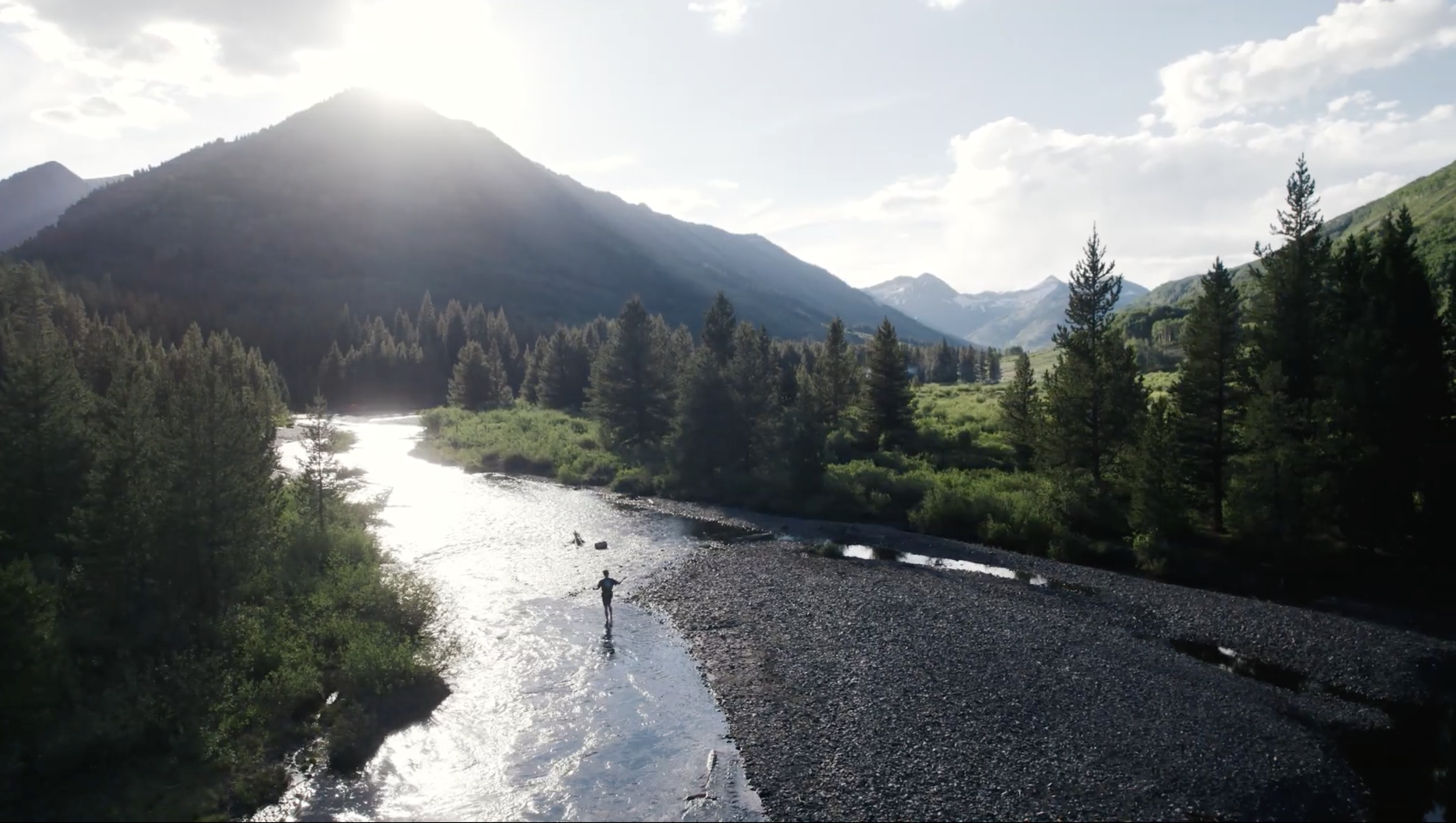
The fly fishing footage was one of the most important pieces of the story because it gave the film a different pace. Running is movement, breath, effort, and forward momentum. Fly fishing is patience, attention, water, hands, and place.
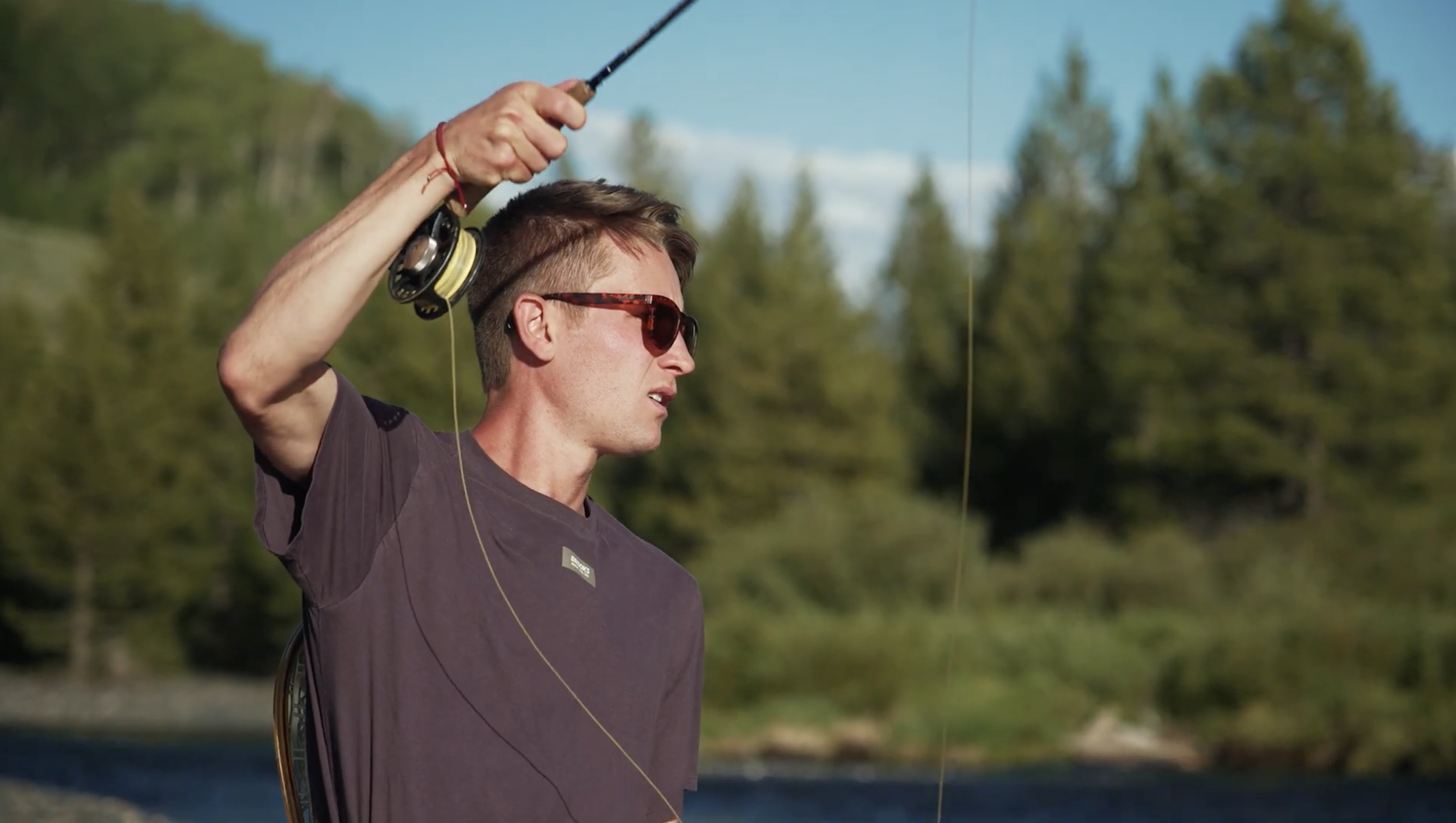
Taylor’s relationship with fly fishing gave us a way to slow the film down without losing meaning. He said, “I've been fly fishing since I was a young kid, and it's just always been one of my favorite hobbies.” Then he described it as “an amazing way to explore, you know, beautiful creeks and, like, you get off trail.”
That line tied directly back to running. Both activities are ways of moving through land, reading terrain, and seeking something beyond normal routes. Running takes him across ridges and trails. Fly fishing takes him into creeks and off trail pockets of the landscape. The film needed to make those two worlds feel connected.
Visually, I looked for detail. Hands on the rod. Water texture. Feet near the bank. The motion of casting. Taylor walking into the river corridor. These small shots gave the edit breath. They also created a more rounded picture of Taylor, one that wasn’t limited to racing.
The fishing footage also helped build a softer tone. It let the audience sit with Taylor in his home environment. It gave the film room to feel reflective, not just athletic.
Conservation Biology and Purpose
The third layer of the story was Taylor’s work in conservation biology. This was important because it showed that his connection to the landscape is not only recreational. It is also professional and protective.
His interview line was clean and useful: “My career outside of running is conservation biology, which involves research of wildlife populations as it relates to trying to conserve and preserve, you know, cool species on the landscape.”
That quote gave the film a deeper sense of purpose. Taylor runs through these places. He fishes in these places. He also works in a field centered on protecting species and landscapes. That creates a natural circle.
For the visuals, the work scene didn’t need to be overly complicated. A laptop, field notes, data, maps, hands typing, and Taylor focused in a home workspace were enough to shift the audience into that part of his life. In a short profile, you only need a few frames to suggest a whole world if those frames are chosen well.
This kind of sequence is valuable in an athlete profile because it breaks the expected pattern. Viewers may expect trail running footage. They may expect scenic landscapes. They may not expect the athlete to be working with fish populations and conservation research. That detail makes Taylor feel specific.
Specificity is what makes a short film memorable.
Building the Voiceover
For a sub sixty second video, the interview edit is everything. You cannot include every strong line. You have to find the sentences that create the clearest emotional path.
I wanted the voiceover to move from home, to elite running, to conservation, to fishing, to the closing idea of running as both challenge and joy.
The rough structure became: Crested Butte is home. The mountains shape the lifestyle. Taylor is competing at a world class level. His work is conservation biology. His fishing connects him to rivers and creeks. Exploration ties it together. Running is hard, but it can also be joyful.
That structure allowed the piece to feel complete even at less than a minute. It also meant I didn’t need to explain everything visually. The interview carried the story, while the images created emotion.
The closing line was the emotional destination:
“I think running is a sport of, you know, deep challenge and discomfort, but it can also be a sport of euphoria and joy”
That line worked because it named the contrast we had been seeing the whole time. The film had running, yes, but it also had water, science, mountains, and small moments of stillness. The final line made those images feel intentional.
Editing for a Peaceful Colorado Running Film
In the edit, pacing mattered more than speed. A lot of running videos lean on constant motion. For this piece, I wanted the rhythm to feel more relaxed, more like a morning in the mountains.
That meant giving shots enough time to land. Water could move for a moment. Taylor could walk through the frame. A running shot could breathe before cutting away. I wanted the viewer to feel like they were entering his world rather than being pushed through it.
Music choice was also key. The track needed to support a peaceful tone without becoming sleepy. It needed motion, but not intensity. The goal was warmth, space, and a sense of gentle momentum.
Natural sound helped too. Water, footsteps, gear, breath, and environmental audio can make a profile feel more grounded. Even small sound design choices help a short film feel less like a montage and more like a lived experience.
As a running videographer in Colorado, this is one of the biggest lessons I return to: the landscape already has drama. You don’t always need to force it. Sometimes the best choice is to let the environment speak, then place the athlete inside it with care.
Why This Kind of Athlete Profile Works
A short athlete profile works best when it gives viewers more than information. It should give them a reason to care.
Taylor’s results matter. His fitness matters. His place in the sport matters. But the thing that makes this story engaging is the way all the parts of his life connect. Running is not separate from fly fishing. Fly fishing isn’t separate from conservation. Conservation isn’t separate from Crested Butte. Crested Butte is not separate from his training.
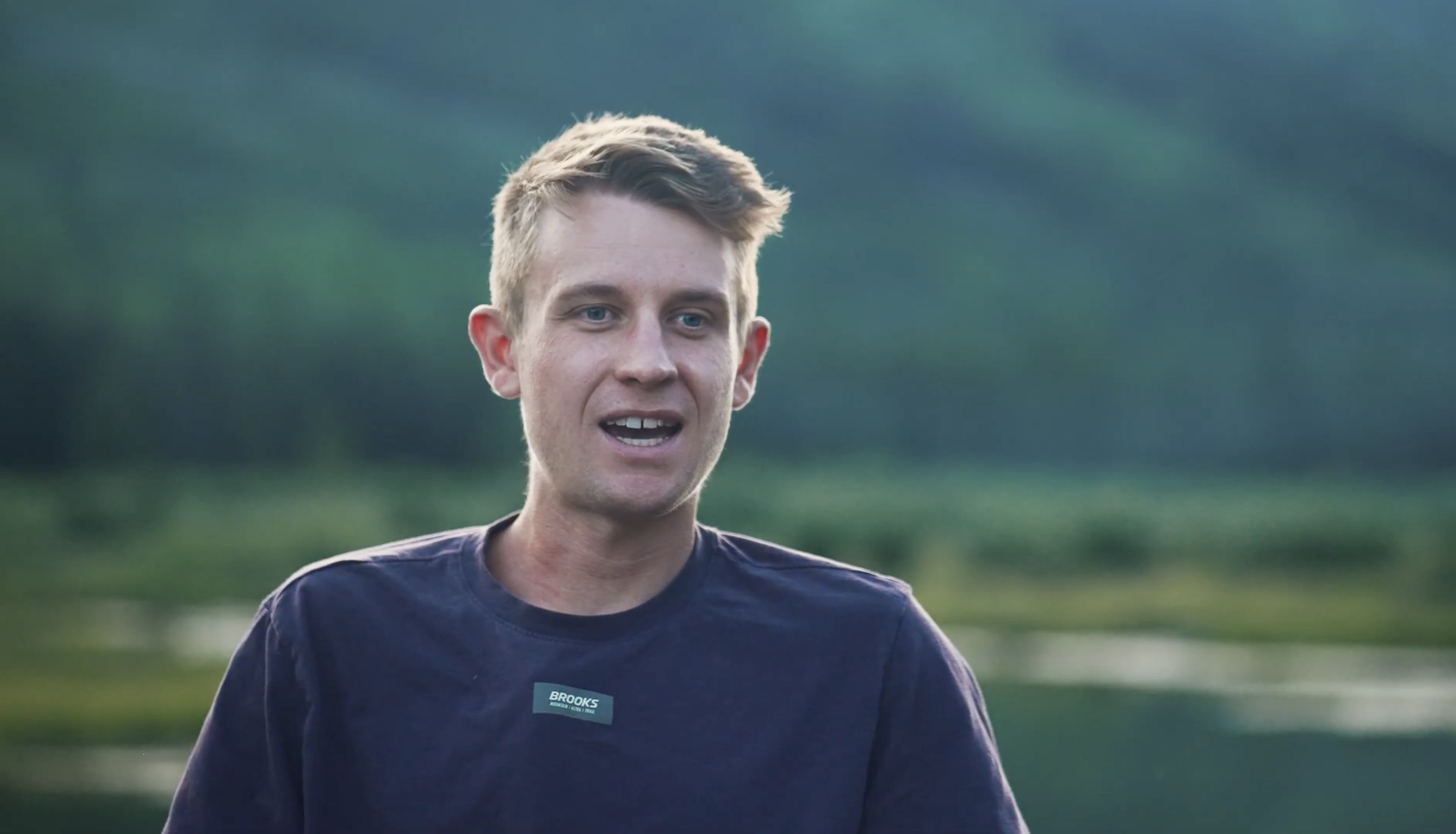
Taylor Stack sitting down with me for his 20 minute interview for this one minute piece
That is the heart of the film.
For outdoor brands, running companies, and athletes, this type of profile can be more effective than a standard performance edit because it gives the audience a fuller human story. It shows what the athlete values. It shows where they come from. It shows why their sport means something beyond results.
That is also the kind of work I love making: outdoor films and athlete profiles that blend movement, place, and character.
Final Thoughts From the Shoot
Filming Taylor Stack in Crested Butte was a reminder that strong running films don’t need to be loud to be powerful. They can be peaceful. They can be layered. They can move through trails, rivers, work, and daily routines, then still land on elite performance.
For this piece, the story came from listening closely to Taylor’s own words and matching the visuals to the feeling behind them. The final film wasn’t only a running edit. It was a short portrait of a Colorado mountain runner whose life is shaped by exploration, conservation, and joy in wild places.
As a Colorado running filmmaker, that is the kind of story I am always looking for. Not only the athlete moving through the landscape, but the deeper reason that landscape matters to them.
If your brand, race, or athlete team needs a running film, trail running campaign, or athlete profile video in Colorado, I create documentary style outdoor films that bring together sport, story, and place.

Why We Should Work Together…
When I’m not on this website rambling on about filmmaking, I’m actually out there making films. From crafting memorable branded documentaries to capturing stories and products that move people, I’ve got you covered. Need a filmmaker who can scale mountains, brave the surf, or just tell a dang good story? Let’s chat!
In case I haven’t convinced you, here are three reasons why it might be fun to work together…
I believe in stories that stick with you - like campfire smoke on your clothes. The kind that makes you laugh, cry, or immediately want to call your mom.
I’m just as comfortable at 14,000ft as I am in front of a timeline. You get me in the mountains, in the ocean and in the editing room, making sure the magic out there really shines in the final cut.
I’ve filmed in some pretty wild places, but the best stories are the ones that bring people together. It’s those shared moments -big or small - that remind me why I love what I do.

Let’s Connect
Roo is an Emmy nominated commercial/documentary filmmaker and photographer based in Boulder, Colorado but travels all around the world for his filmmaking career. He has directed documentaries for Patagonia in California, produced films for Outside Magazine throughout Europe and Africa, camera operated for Netflix in the Rocky Mountain West, photographed among indigenous communities in South America, and has received notable recognition in the outdoor industry for his work telling uplifting stories in the outdoor space.