
Strong video production for Colorado banks and credit unions starts with a story people can recognize: a business owner serving lunch, employees caring for a shared place, or a team helping someone understand a difficult decision. Find the human situation, connect it to a clear message, and build the production around what your audience needs to see.
I’m Roo Smith, a commercial and documentary filmmaker based in Boulder, serving Denver and companies across Colorado. I work as a production partner through creative development, planning, directing, filming, and post-production. My approach combines the attention of a commercial production with the curiosity of documentary filmmaking.
I have brought that approach to work with Elevations Credit Union and its agency partner, Cultivator. That experience offers a useful starting point for a bank or credit union planning its next film.

Make the community visible
When Elevations and I worked on two commercial spots, the creative centered on the relationship between financial wellbeing and the health of a community. One film used footage of an actual staff river cleanup in the Boulder area. Another took us to Marco’s Hot Dogs & Tacos in Longmont.
Marco’s stayed open while we filmed. We worked through the lunch rush, with the activity of the business giving the piece its texture. The finished campaign ran on Hulu, regional broadcast television, and digital platforms.
Those are details from the actual production. You can explore the Elevations Credit Union commercial case study for the full approach.
The useful lesson for another organization is to look for situations where its values become visible. A statement of purpose gains meaning when the viewer can connect it to a person, a place, and an action.
Choose one job for the film
A brand campaign, a member story, a recruitment piece, and a product explanation serve different needs. Decide which one you are making before combining them into a single brief.
A community film might help a viewer understand what your institution supports. A customer story might explain a particular experience. An employee film might help prospective hires picture the work. A service explanation might make a process easier to follow.
Start with the audience and the next step. Who should see this? What should they understand? Where will they encounter the film? What would you like them to do afterward?
That direction helps us choose the story, shape the edit, and give the call to action a natural place. It also gives your marketing team a useful way to evaluate the creative before filming.
Find a subject with something specific to share
A strong participant has more to offer than a positive description of the organization. Look for someone who can explain an experience in their own words and show us the work or situation around it.
For a small-business story, that could be the owner, the team, and the everyday activity that makes the company meaningful to its customers. For an employee piece, it could be a person whose role helps explain how your organization works.
Discuss participation early and give the person clear context for the film’s purpose and intended use. Your team should confirm which details are appropriate to share. The production can then be shaped around an agreed story and a comfortable participant.
My documentary storytelling approach is rooted in listening for those concrete details and finding the visuals that help them land.
Bring your reviewers into the creative process
Financial organizations often have several people who need to review a film. Identify them at the beginning and agree on what each person needs to approve.
I would ask your marketing team to arrange the appropriate internal review of scripts, interview topics, claims, graphics, and any required disclosures. Your organization’s reviewers define those requirements. My role is to account for them in the production and edit.
A useful process includes checkpoints for the treatment, planned language, first cut, and final version. Give the reviewers a clear description of where each asset will run, because a short social clip and a longer website film may need different creative treatments.
This is also where you decide which screens, paperwork, workspaces, and customer interactions can be filmed. Preparing approved materials keeps the camera focused on the story your organization has agreed to share.
Design the shoot around a working business
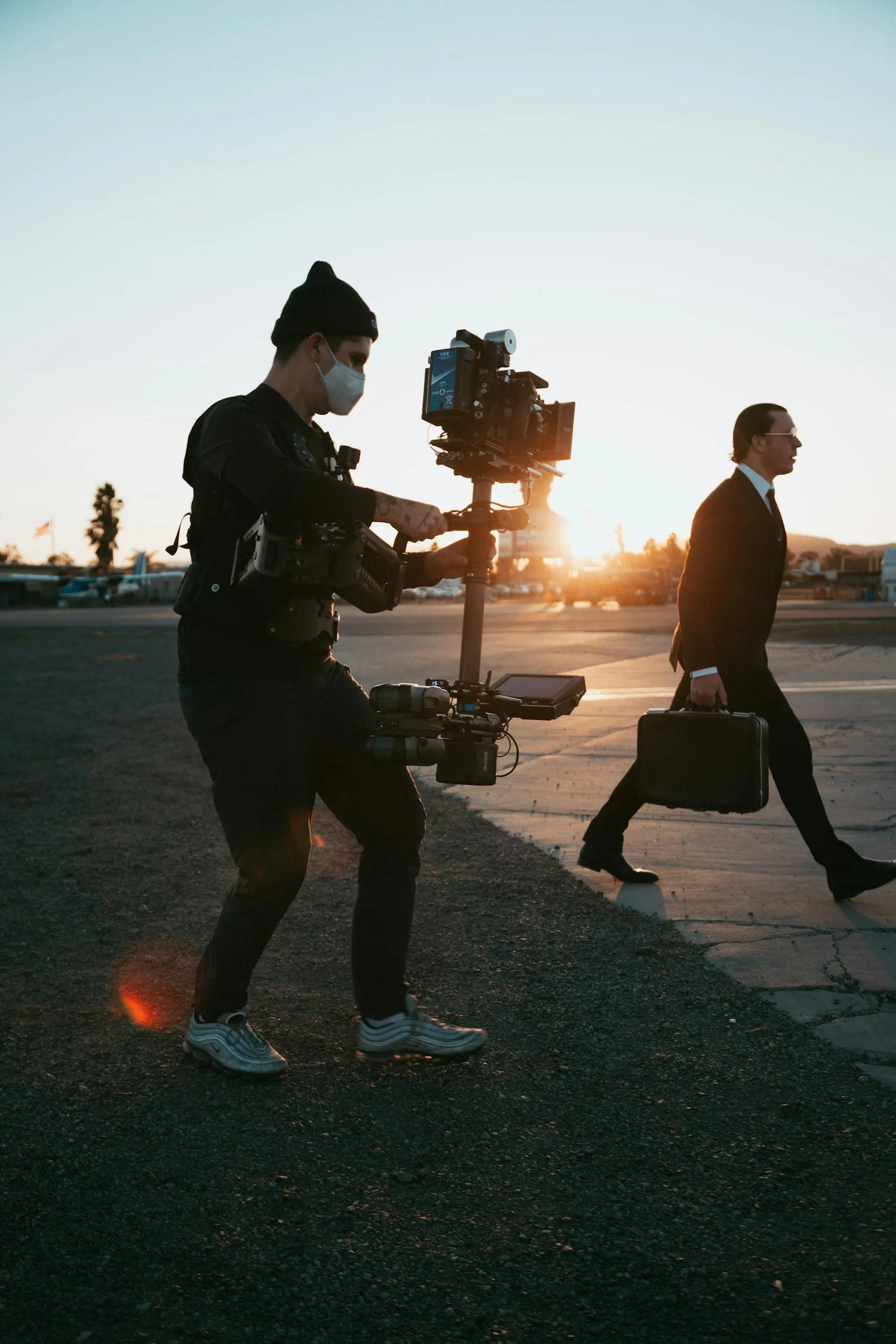
A branch, office, restaurant, or community event keeps moving while a crew works. The production plan needs to respect that activity.
Before filming, I would map the scenes, access, participants, sound conditions, available light, and times when the location is busiest. Some sequences can follow the work as it happens. Others need a short window with more control.
The crew size should fit the situation. A compact documentary team can move comfortably through a live environment. A larger commercial concept may benefit from dedicated lighting, sound, production support, photography, or additional cameras.
As a director-led production partner, I can help your team choose that structure and coordinate the collaborators needed to execute it. High-end work comes from the quality of those choices and the care carried through the finished film.
Give the images a reason to be there
Office footage becomes more useful when it reveals something specific. A person preparing for a conversation, a small business opening for the day, or a team working together can help the viewer understand the organization.
I would build sequences that connect to the message instead of collecting isolated gestures. A wide view establishes the place. A closer detail shows the work. An interaction introduces the people. Together, those images can carry a story.
Sound matters too. The atmosphere of a real place, a clear voice, and a careful mix help the piece feel coherent. Color, pacing, and music should support the tone your organization wants to communicate.
You can watch complete examples in my commercial and documentary portfolio to see how those decisions work together.
Plan the campaign beyond its main film
A production may need a primary brand film, shorter paid placements, website assets, social edits, or recruitment content. Write down those uses while the concept is still being developed.
A short version needs its own clear opening and ending. It may need different framing or a more focused message. Simply shortening the main film can leave out the context that made it understandable.
Decide which versions need captions, on-screen language, or a different call to action. Give the editing scope enough room for those decisions and the review they require.
Photography can be part of the same campaign when it has a deliberate place in the schedule. Your team may need images for a landing page, an email, or a social launch. Planning them early gives the photographer room to make useful compositions.
Measure the response you actually want
Choose measures that match the film’s purpose. For a campaign asking viewers to start a conversation, that could include visits to the relevant page and completed inquiries. For recruitment, it could include visits to the careers page and applications. Your team can decide what it can reliably track.
Views help describe reach, but the next step matters too. Give the film a relevant destination and make it easy for someone to act after watching.
My Elevations case study describes the creative and distribution of those spots. It is a production example rather than a promise of a particular financial or marketing result for another organization.
Let’s find the story your organization can tell
If you are looking for video production for a Colorado bank or credit union, I would love to hear what your team is planning. I can help develop the creative approach, build the production, direct the people, and lead the film through post-production and delivery.
Use the form below to share your organization, audience, campaign idea, timing, and working budget. We can talk through the people and places behind the message, then build a film your team feels confident putting into the world.

Bring me your audience, your idea, and the deadline you are working toward. I can help shape the creative direction, assemble the right production team, and carry the project through filming and final delivery.
Use the form below to share your company, the videos you need, and your timing. I personally read every inquiry and usually respond within 24–48 hours.