
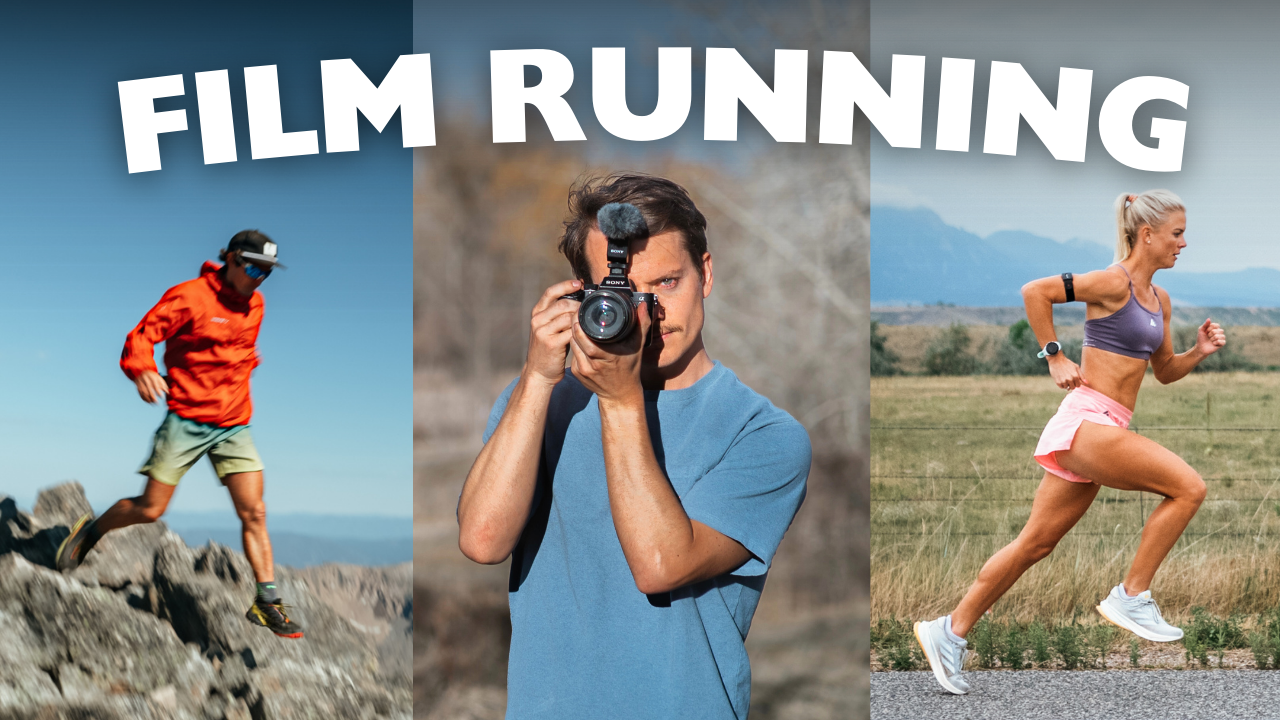
How to Film Running
This is how to film running….
Not the overproduced, gear-obsessed version. Not the kind that looks fast but feels empty. This is about creating running films that actually connect and crafting films that translate the effort, place, and emotion into images people can feel.
Episode 1 of the How to Film Running Masterclass is the foundation. It sets the tone for everything that follows. Camera settings matter. Gear matters. Technique matters. But if you only focus on those things, you’ll miss the point. Running isn’t just motion. It’s meaning.
In this episode, I take you into the field with me to show how I approach filming running from start to finish—whether I’m filming a friend on the trail or working with a brand on a real campaign. This post expands on the episode so you can revisit the ideas, understand the decisions behind the shots, and apply them on your own projects.
Why Filming Running Is Different
Running looks simple. One direction. One repeated movement. Forward momentum.

That simplicity is exactly what makes it hard to film well.
There are no tricks built into running. No jumps, no drops, no obvious spectacle. Everything interesting happens in the margins: breath, rhythm, fatigue, focus, doubt, calm. If you don’t know what you’re looking for, you’ll miss it.
Over the years, filming running for brands and athletes taught me one core lesson: great running films are emotional before they are technical. If you chase speed, you’ll get footage. If you chase feeling, you’ll get a film.
Episode 1 is about learning to see that difference.
Setting the Stage: Filming on Location
This episode takes place on Orcas Island at Moran State Park, early in the morning. Soft light. Quiet forest. The kind of place that immediately slows you down.
That choice is intentional.
Before you ever press record, you’re already making creative decisions. Location, time of day, weather, and terrain all shape the emotional tone of your film. Running through a forest at sunrise feels different than running on pavement at noon. Your job as a filmmaker is to choose environments that support the story you want to tell.
When I arrive on location, I’m not thinking about shots yet. I’m listening. Watching how the light moves through the trees. Noticing where the trail opens up and where it tightens. Paying attention to where effort will show up naturally.
That awareness informs everything that follows.
Camera Settings and Gear: Keep It Simple, Stay Mobile
Gear is a tool, not a personality trait.
For filming running, I prioritize mobility and reliability. One camera body. A small set of lenses. A drone if the location earns it. The lighter the kit, the more present I can stay.
Core Camera Settings

Frame rate
I shoot most cinematic sequences at 24fps. When I know I’ll want to slow something down—foot strikes, breath, subtle motion—I switch to 60fps. Intent matters more than habit.Shutter speed
I follow the standard rule of thumb: shutter at roughly double your frame rate. This preserves natural motion blur and keeps movement feeling real.ND filters
Daylight filming without ND filters is asking for compromise. NDs let you keep your shutter and aperture where you want them while controlling exposure.ISO
I stay at my camera’s native base ISO whenever possible. Clean images give you more flexibility in post and help preserve subtle tonal detail, especially in forest light.
The takeaway here is not the specific settings. It’s the mindset. Dial things in quickly. Then stop thinking about them.
Composition and Shot Variety: Wide, Medium, Tight
Running footage gets boring when every shot does the same job.
I’m always thinking in wide, medium, and tight. Not because it’s a rule, but because it gives me options in the edit and allows the story to breathe.
Wide shots establish place. They answer the question, “Where are we?”
Medium shots create relationship. They let us move with the runner.
Tight shots reveal effort. Breath. Texture. Touch.
A foot hitting dirt. A hand brushing a branch. Breath hanging in cold air. These moments are small, but they’re powerful. They remind the viewer there’s a human inside the movement.
I also look for cutaways that aren’t about the runner at all. Trees sliding past. Light flickering through leaves. Dust catching the sun. These shots become punctuation. They give the edit rhythm and space.
Directing the Runner: Prompts, Not Poses

One of the biggest mistakes filmmakers make when filming running is over-directing.
Runners don’t need choreography. They need context.
Instead of telling someone exactly how to move, I give prompts. Simple, natural instructions that encourage real behavior.
“Run from that tree to the bend.”
“Ease up halfway and catch your breath.”
“Go again, but slower this time.”
Slower almost always looks better on camera. It allows the body to relax, the stride to open up, and the camera to stay intentional. Speed can be added in the edit. Tension and authenticity cannot.
Communication matters too. Let the runner know why you’re asking for something. That trust shows up in the footage.
Lighting Techniques: Work With What You’re Given
Running doesn’t wait for perfect light. You work with what you have.
That said, choosing the right time of day makes everything easier. Early morning and late afternoon offer softer contrast and more forgiving highlights. In forests, dappled light becomes a creative tool rather than a problem.
I almost always expose for highlights, especially in high-contrast environments. Blown highlights pull attention away from the runner and make footage feel harsh. Protecting them keeps the image calm and cinematic.
When light changes quickly, I simplify. One exposure priority. Fewer adjustments. Staying responsive beats chasing perfection.
Drone Strategy: Use It With Restraint
Drones are powerful. They’re also easy to overuse.
In running films, I treat drone shots as establishing tools, not coverage. They introduce scale. They set context. They give the audience a sense of place before we return to human-level perspective.
I keep drone settings simple and consistent. ND filters to control shutter. Low ISO. Smooth, intentional movement. No tricks.
Just because a drone can follow a runner doesn’t mean it should. The most effective drone shots often happen before or after the run, not during it.
Always know the rules. Respect park guidelines. Communicate clearly with your runner. Safety and trust come first.
Putting It All Together: Thinking Ahead to the Edit
Even while filming, I’m editing in my head.
I’m asking:
Do I have enough variety?
Do these shots feel connected?
Is there a beginning, middle, and end to this sequence?
You don’t need to film everything. You need to film the right things.
Planning, variety, and familiarity with your tools create freedom in post. Later episodes in this masterclass will go deep on editing, pacing, and music, but the foundation starts here—in the field.
What This Episode Is Really About
Episode 1 isn’t about mastering everything. It’s about learning how to see.
Seeing running as more than motion. Seeing the relationship between place and effort. Seeing the difference between footage that looks good and footage that feels true.
Out here, pace doesn’t matter. Numbers don’t matter. Performance fades quickly.
What lasts is the feeling of breath in your chest, feet on dirt, and the quiet clarity that comes from moving through the world under your own power.
That’s what we’re trying to capture.

Why We Should Work Together…
When I’m not on this website rambling on about filmmaking, I’m actually out there making films. From crafting memorable branded documentaries to capturing stories and products that move people, I’ve got you covered. Need a filmmaker who can scale mountains, brave the surf, or just tell a dang good story? Let’s chat!
In case I haven’t convinced you, here are three reasons why it might be fun to work together…
I believe in stories that stick with you - like campfire smoke on your clothes. The kind that makes you laugh, cry, or immediately want to call your mom.
I’m just as comfortable at 14,000ft as I am in front of a timeline. You get me in the mountains, in the ocean and in the editing room, making sure the magic out there really shines in the final cut.
I’ve filmed in some pretty wild places, but the best stories are the ones that bring people together. It’s those shared moments -big or small - that remind me why I love what I do.

Let’s Connect
Roo is an Emmy nominated commercial/documentary filmmaker and photographer based in Boulder, Colorado but travels all around the world for his filmmaking career. He has directed documentaries for Patagonia in California, produced films for Outside Magazine throughout Europe and Africa, camera operated for Netflix in the Rocky Mountain West, photographed among indigenous communities in South America, and has received notable recognition and awards in the outdoor industry for his work telling uplifting stories in the outdoor space.