
Real people bring a kind of authenticity that casting calls rarely capture. A inside joke between real friends that causes a laugh to feel a little more genuine, a real, labored breath after a genuinely hard effort are details that can carry a story without trying. It’s also the challenge because real people have real nerves, real schedules and real lives.
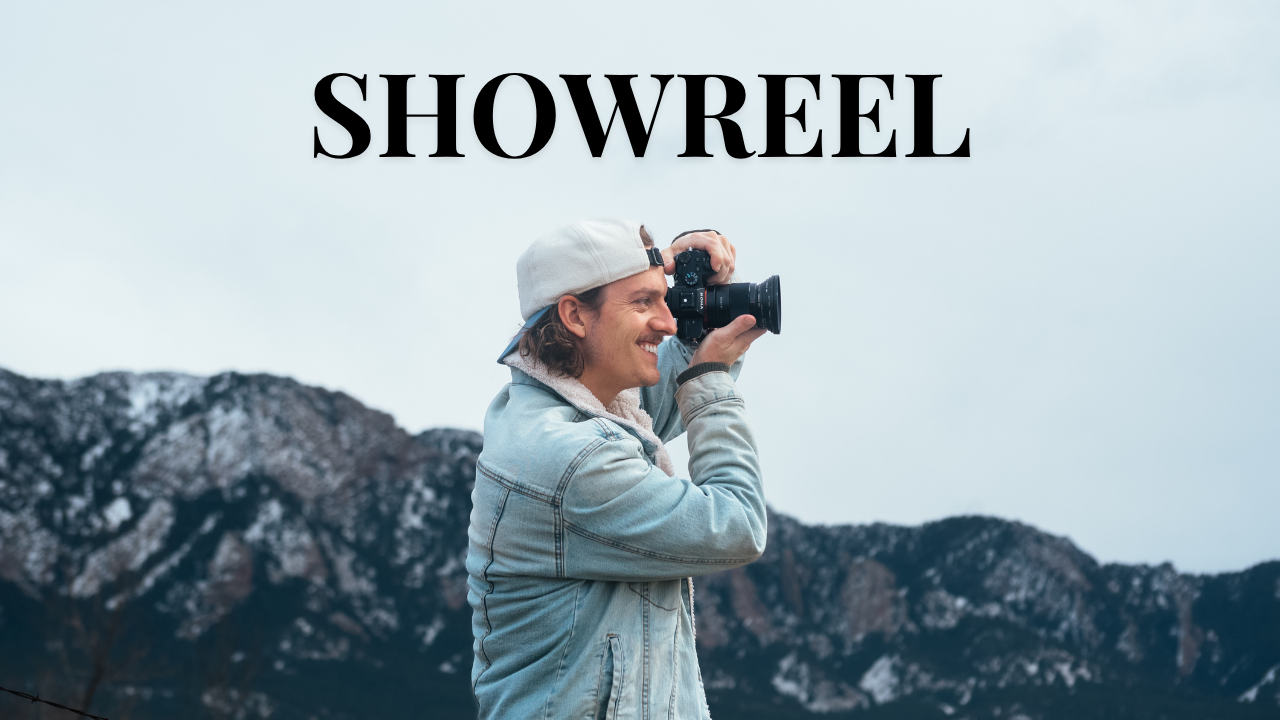
Before we begin, let me introduce myself, I’m Roo Smith, a 3x Emmy-nominated filmmaker based in Boulder, Colorado.
As a docu-style commercial director, I build documentary-style campaigns around human stakes and lived experience, often with a small footprint and a lean crew.
Here’s the directing approach I use when the “talent” is a founder, athlete, customer, guide, or community member.
Start with clarity but allow for spontaneity
The fastest path to natural moments is clarity. Explain the day in plain language so they know what you’re filming, where the footage may appear, and what “a great day” looks like. People relax when expectations feel clear.
Then I give room for spontaneity. I tell them there is no single right way to speak. If a sentence feels stiff, they can restart. If they need water, a break, or a reset, that’s part of the process. I’m trying to build a space where someone can be themselves without feeling graded.
Cast for voice and community
A documentary-style campaign can rise or fall on casting. Skill matters less than voice so I try to look for someone with a point of view, a lived relationship to the product, and a reason they care that goes deeper than features.
Stakes can be small and still feel huge. Sometimes, that’s a runner training before sunrise to keep a promise to themselves that they’re going to run everyday to get through a breakup. Other times, it’s a story about a founder creating a tool that solves a personal frustration in her life. Viewers are invited to lean in when the story has a pulse beyond just pretty footage.
Presence is the third ingredient. Some people light up when they move through their element while others come alive when they teach. A strong docu-style commercial director learns where a subject becomes most themselves, then builds scenes and moments around that.

Do a pre-call without any cameras
A short pre-call before the shoot can change everything. Treat it like a real conversation with zero pressure, because it is! Ask how their day looks, what they love, what’s hard right now, and what they wish people understood about themselves or their story.
Listen for specifics because the details they share become scene anchors later.
The pre-call also helps you identify sensitive zones. If there’s grief, trauma, or conflict in the background, you can steer with care. You’re aiming for depth, without pushing someone past what feels comfortable for them. That was a huge theme in my branded documentary about a blind ice climber because she wanted to leave why she was blind out of the film, and we did.
Design a set that feels based on reality
People perform when a set feels like a stage so if you can reduce that feeling, it might make people “perform” less and live a little more.
Keep the crew lean when possible. Fewer faces means fewer nerves. Build time buffers so nobody feels rushed. Choose locations where your subject already belongs: their kitchen, their trailhead, their garage, their gym, their shop. Familiar spaces bring natural body language.
Camera placement matters too. If an interview feels intimidating, shift it. Angle your body so it feels like a conversation, then aim the lens from a slightly offset line. Use longer lenses when it helps create space. Keep the gear footprint minimal so they don’t feel bombarded by lights and cameras.
Direct with actions and prompts

Real people rarely thrive on abstract direction. I believe they thrive on actions.
Instead of saying “be confident,” give them something to do like lace shoes, chalk hands, pour coffee, pack a bag, adjust a headlamp. Actions create natural movements and those movements create usable scenes.
When it’s time for dialogue, try to avoid scripts. Use prompts that pull real language forward.
Ask for the story of a specific day, step by step.
Ask what they felt in their body at a certain moment.
Ask what changed for them over time.
Ask what they believed before, and what they believe now.
If they say something great, ask them to say it again, slower, while doing an action. Tell them the sentence was strong and you want a second take for edit flexibility.
Keep the “why” on their side
Viewers can sense when a person is speaking for a brand instead of for themselves. Your job is to protect the subject’s language while still serving campaign goals.
Translate brand points into human questions. If the claim is durability, ask when the gear saved their day. If the claim is comfort, ask what used to hurt and what feels different. If the claim is community, ask who showed up for them and why that mattered.
Let them answer as themselves. Then weave the message through lived examples, instead of forcing taglines.
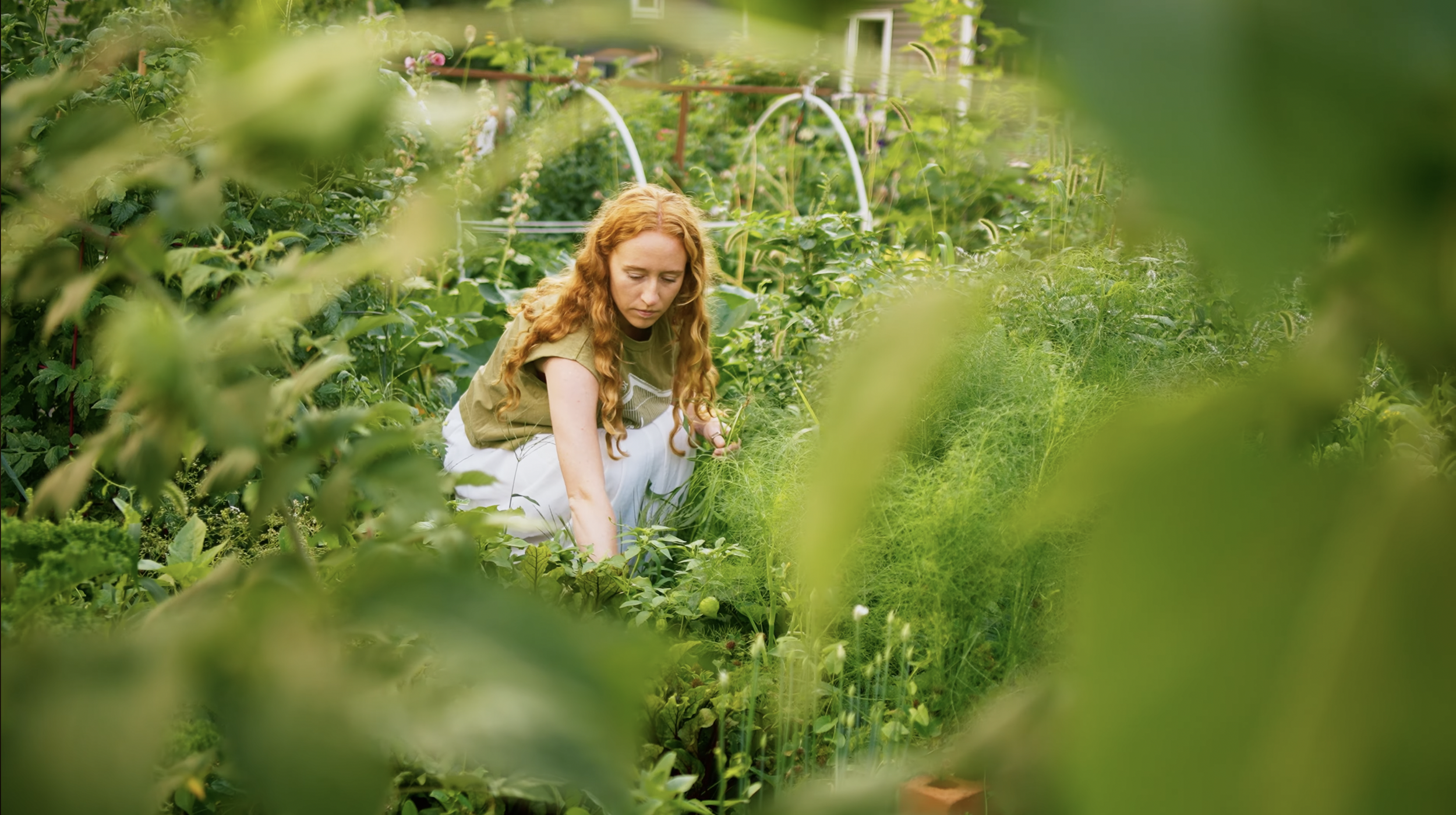
A beautiful in-between moment for my rebrand campaign with WishGarden Herbs
Capture the in-between
Some of the best footage arrives between “takes.” The laugh after a missed line, the look before effort and the exhale after a steep climb.
Build small pockets where the camera can stay rolling. Film transitions so you can document people changing layers, stretching, tightening straps, checking a route, packing up. These moments glue scenes together and make the story feel authentic, because it is!
Hold the line with kindness
Real people can spiral when they feel they’re “doing it wrong.” Your tone is the steering wheel.
Use simple direction. “That was great. Let’s do another one, just a bit slower.” “Take your time.” “We’ve got it.” If nerves spike, shift to an action scene. Movement releases pressure. Then return to dialogue later.
Care builds better films
Docu-style direction carries responsibility. Get clear consent and avoid pushing people toward vulnerability as a performance. If a moment feels too raw, ask whether they want it included. Agency creates trust, and trust creates better stories.
Why brands hire a docu-style commercial director for real people
When the subject is real, the campaign gains credibility. The film feels grounded, the story moves faster and the audience senses a human being rather than a performance.
This is why brands hire a docu-style commercial director so they can shape strategy, build scenes with real people, and capture truthful moments with high-end craft without turning the day into a production circus.
If you’re planning a documentary-style campaign in outdoors or sports, I’d love to collaborate. View my portfolio, and reach out with the subject, the goal, and where the content will live.
Why We Should Work Together…
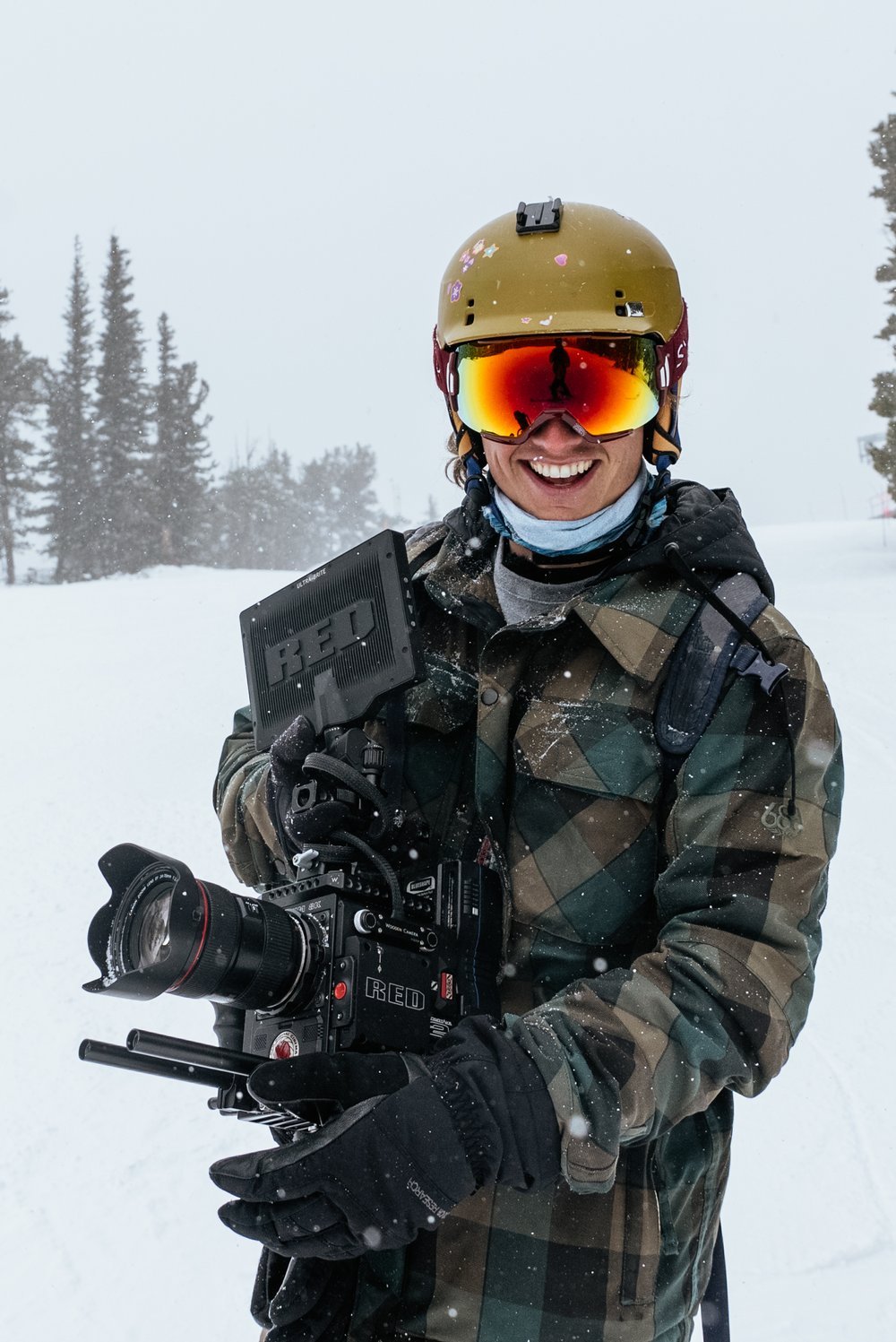
When I’m not on this website rambling on about filmmaking, I’m actually out there making films. From crafting memorable branded documentaries to capturing stories and products that move people, I’ve got you covered. Need a filmmaker who can scale mountains, brave the surf, or just tell a dang good story? Let’s chat!
In case I haven’t convinced you, here are three reasons why it might be fun to work together…
I believe in stories that stick with you - like campfire smoke on your clothes. The kind that makes you laugh, cry, or immediately want to call your mom.
I’m just as comfortable at 14,000ft as I am in front of a timeline. You get me in the mountains, in the ocean and in the editing room, making sure the magic out there really shines in the final cut.
I’ve filmed in some pretty wild places, but the best stories are the ones that bring people together. It’s those shared moments -big or small - that remind me why I love what I do.

Let’s Connect
Roo is an Emmy nominated commercial/documentary filmmaker and photographer based in Boulder, Colorado but travels all around the world for his filmmaking career. He has directed documentaries for Patagonia in California, produced films for Outside Magazine throughout Europe and Africa, camera operated for Netflix in the Rocky Mountain West, photographed among indigenous communities in South America, and has received notable recognition in the outdoor industry for his work telling uplifting stories in the outdoor space.