
One corporate shoot day can produce several useful videos when the stories, people, and final formats are planned together. Start with a small set of related messages, keep the filming locations manageable, and give every proposed edit a clear job. The output depends on the scope and the material we capture.
I’m Roo Smith, a commercial and documentary filmmaker based in Boulder, Colorado. I help companies in Denver and across the state turn a production investment into finished work their teams can keep using: company films, customer stories, interviews, photography, and short-form campaigns.
The useful starting point is your content calendar. What does your team need to explain over the next several weeks? Which people can explain it well? Which scenes could support several pieces? That is where a productive content day begins.

Choose a few connected stories
A content day works best when the proposed videos share people, locations, or a central idea. A company introduction, a founder explanation, and a short recruitment piece might all draw on interviews and footage from the same workplace.
Other ideas need their own production time. A customer story at another location, a detailed product demonstration, and a completely different visual concept each add setup and travel. They may belong in a larger campaign with more than one day of filming.
I would map the ideas before promising a number of videos. The goal is a set of complete pieces with something useful to say. The number follows the plan.
Give every finished video a destination
A website visitor, a prospective hire, and someone scrolling LinkedIn arrive with different questions. Each edit should meet the viewer where they are.
Here is an illustrative package for a company preparing its next month of content:
- A main company film introducing the people, work, and reason to get in touch.
- Two short answers to common customer questions.
- A founder clip explaining one meaningful decision.
- An employee story for recruiting or company culture.
- A selection of supporting footage for agreed future uses.
That list is a planning example, rather than a fixed package or guaranteed yield. The length and complexity of the pieces matter. So do the availability of your team and how much supporting footage each story needs.
Once the list is agreed, we can plan framing, captions, openings, graphics, and delivery around the channels where the work will live.
Build the production before the calendar fills up
Give one person on your team responsibility for arranging participants, approving access, and gathering brand materials. A clear contact makes it easier to resolve small questions before they become shoot-day delays.
Share the content goals with everyone appearing on camera. Ask them to bring examples from their actual work and tell them how the interview will run. We can prepare useful topics without turning the day into a script recital.
For a Denver office shoot, confirm loading, parking, building rules, room availability, and when the workplace is most active. Check that products, demonstrations, approved screens, and any other important materials will be ready.
I handle the creative and production planning with those details in mind. The company’s preparation gives us access to the story; the production team turns that access into a workable filming plan.
A sample schedule for one office location
The following is an example of how a focused day could be organized. The actual schedule would be built around your scope, building access, speakers, and crew.
8:00–9:30 — Arrival and setup. Load in, light the interview space, record sound tests, and prepare the first participant. Protect this time so the first interview starts with the room ready.
9:30–11:30 — Founder and leadership conversations. Capture the main story and the specific answers needed for shorter edits. Leave room for follow-up questions and breaks between speakers.
11:30–12:30 — Employee perspective and short pickups. Focus on the people who can show how the company’s ideas become everyday work.
12:30–1:15 — Lunch and reset. Give the people and the crew a real break while checking what remains on the shot list.
1:15–3:30 — Work in action. Film demonstrations, interactions, process details, and the environment. Coordinate the scenes around actual operations.
3:30–4:30 — Dedicated short-form moments and missing pieces. Capture any specific openings, vertical compositions, or details the planned edits still need.
4:30–5:00 — Final checks and wrap. Review the capture list, pack equipment, and return the workplace to your team.
Changing locations, adding complex demonstrations, or expanding the speaker list can change that whole day. The schedule is something we design, rather than something we squeeze the production into.
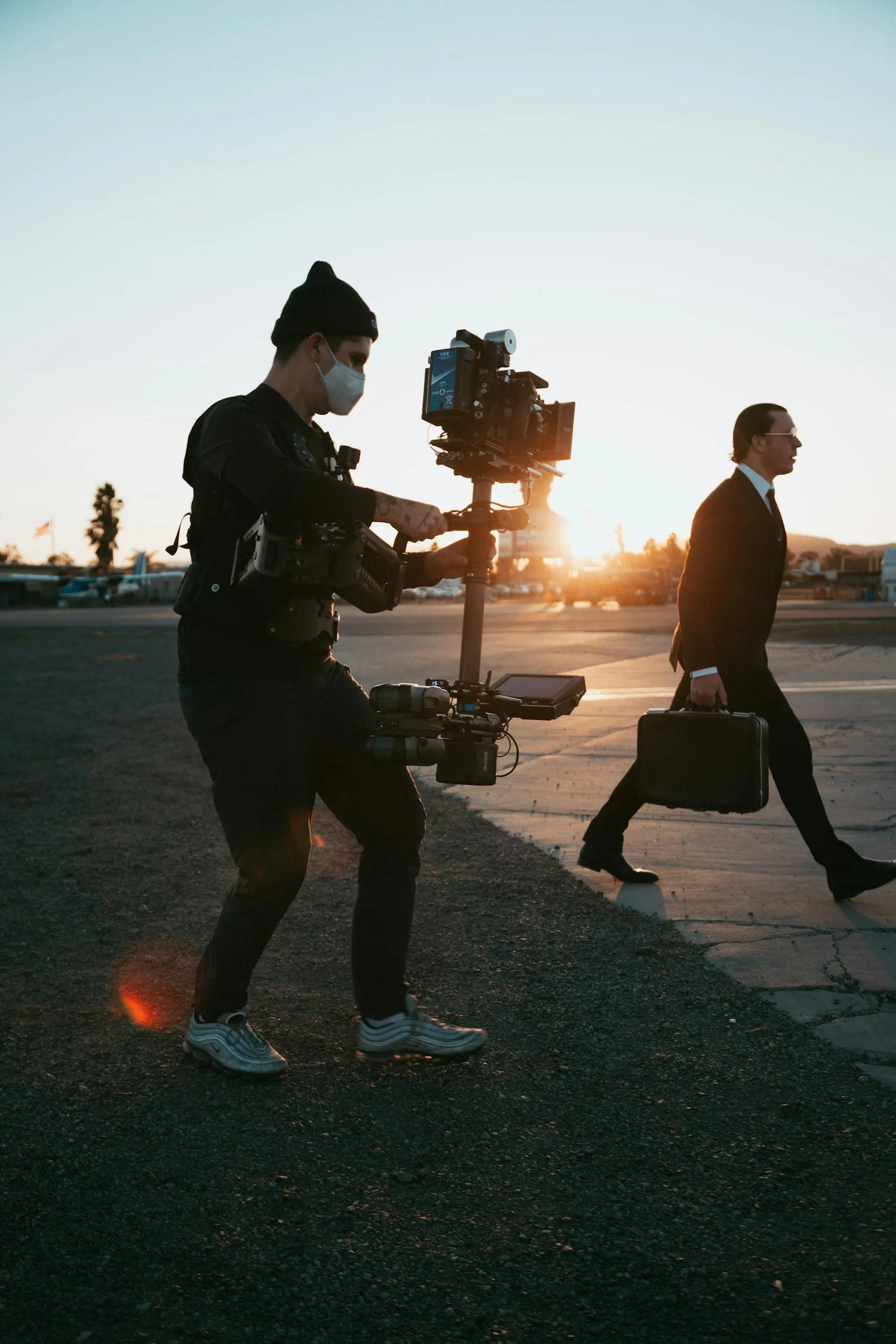
Capture enough visual variety to carry the stories
Several edits can share a shoot while still feeling different. One might follow a founder’s explanation. Another might open with a process detail. An employee story might spend more time with the person doing the work.
That requires deliberate coverage: wide views, closer details, complete actions, and moments that connect the speaker to the subject. A collection of random office clips gives the editor fewer useful options.
For high-end corporate production, the image and sound should feel considered across the entire set. Lighting, color, camera movement, and interview direction need a shared approach even when the final pieces have different lengths.
You can explore that range in my commercial filmmaking portfolio.
Plan photography as its own part of the day
A video frame can be useful for some placements, but a company may also need photographs with different compositions, expressions, and space for design. Decide what those images need to do before the crew arrives.
If still photography is important, assign it time and the right person. A website banner, a team portrait, and a social image can each need a different approach.
My WishGarden Herbs campaign is one example of planning several assets together. Across two shoot days, we produced ten short videos and hundreds of lifestyle photographs. I led creative development, production, and post-production, collaborating with the team and specialists around the project.
The lesson I bring into corporate content days is the planning behind that output. Each scene had a purpose. You can read the WishGarden campaign case study for the actual scope and process.
Give the edit a clear path to approval
Multiple videos create multiple decisions. Agree on the delivery list and review process before filming so everyone knows which assets they will see and when.
It can help to establish the look, tone, and graphic treatment with a lead edit, then carry those decisions into the shorter pieces. Your team should return combined feedback through one contact so the editor receives a clear direction.
The handoff should identify each file by its purpose and format. Confirm captions, thumbnails, clean versions, and any licensed material. Discuss which footage is retained and how future edits can be commissioned.
For the broader questions to bring into a proposal, my guide to choosing a production partner is a useful companion.
Let’s build a content day around your company
If your marketing team needs a dependable corporate video production partner in Denver, I can help shape the ideas, plan the day, assemble the right collaborators, direct the people, and lead the work through the edit.
Send me the content you need, where it will appear, your preferred timing, and the investment range you have in mind. Use the form below to start the conversation. We can decide what belongs in one focused production and build a set of films your team is excited to use.

Bring me your audience, your idea, and the deadline you are working toward. I can help shape the creative direction, assemble the right production team, and carry the project through filming and final delivery.
Use the form below to share your company, the videos you need, and your timing. I personally read every inquiry and usually respond within 24–48 hours.
Capture enough visual variety to carry the stories
Several edits can share a shoot while still feeling different. One might follow a founder’s explanation. Another might open with a process detail. An employee story might spend more time with the person doing the work.
That requires deliberate coverage: wide views, closer details, complete actions, and moments that connect the speaker to the subject. A collection of random office clips gives the editor fewer useful options.
For high-end corporate production, the image and sound should feel considered across the entire set. Lighting, color, camera movement, and interview direction need a shared approach even when the final pieces have different lengths.
You can explore that range in my commercial filmmaking portfolio.
Plan photography as its own part of the day
A video frame can be useful for some placements, but a company may also need photographs with different compositions, expressions, and space for design. Decide what those images need to do before the crew arrives.
If still photography is important, assign it time and the right person. A website banner, a team portrait, and a social image can each need a different approach.
My WishGarden Herbs campaign is one example of planning several assets together. Across two shoot days, we produced ten short videos and hundreds of lifestyle photographs. I led creative development, production, and post-production, collaborating with the team and specialists around the project.
The lesson I bring into corporate content days is the planning behind that output. Each scene had a purpose. You can read the WishGarden campaign case study for the actual scope and process.
Give the edit a clear path to approval
Multiple videos create multiple decisions. Agree on the delivery list and review process before filming so everyone knows which assets they will see and when.
It can help to establish the look, tone, and graphic treatment with a lead edit, then carry those decisions into the shorter pieces. Your team should return combined feedback through one contact so the editor receives a clear direction.
The handoff should identify each file by its purpose and format. Confirm captions, thumbnails, clean versions, and any licensed material. Discuss which footage is retained and how future edits can be commissioned.
For the broader questions to bring into a proposal, my guide to choosing a production partner is a useful companion.
Let’s build a content day around your company
If your marketing team needs a dependable corporate video production partner in Denver, I can help shape the ideas, plan the day, assemble the right collaborators, direct the people, and lead the work through the edit.
Send me the content you need, where it will appear, your preferred timing, and the investment range you have in mind. Use the form below to start the conversation. We can decide what belongs in one focused production and build a set of films your team is excited to use.